Many students find integers confusing. If you add a negative to a negative are you getting more or less??? Over the years different “rules” have been used to try to remember what should happen. Rules such as “two negatives make a plus” or “opposite signs subtract.” Whatever is used to try to remember, it interferes with a student’s ability to quickly and reliably get the answers without having to stop and puzzle it out.
 I have posted a series of free lessons online (links below) that use a vertical number line to take some of the confusion out of the process. Turns out there are a total of eight types of problems but all of them can be solved with the same process on the vertical number line. Intuitively on a vertical number line, up is more and down is less.
(1) Mixed Integers Set A1 Positive add a positive
(2) Mixed Integers Set A2 Positive subtract a positive
(3) Mixed Integers Set D Negative add a positive
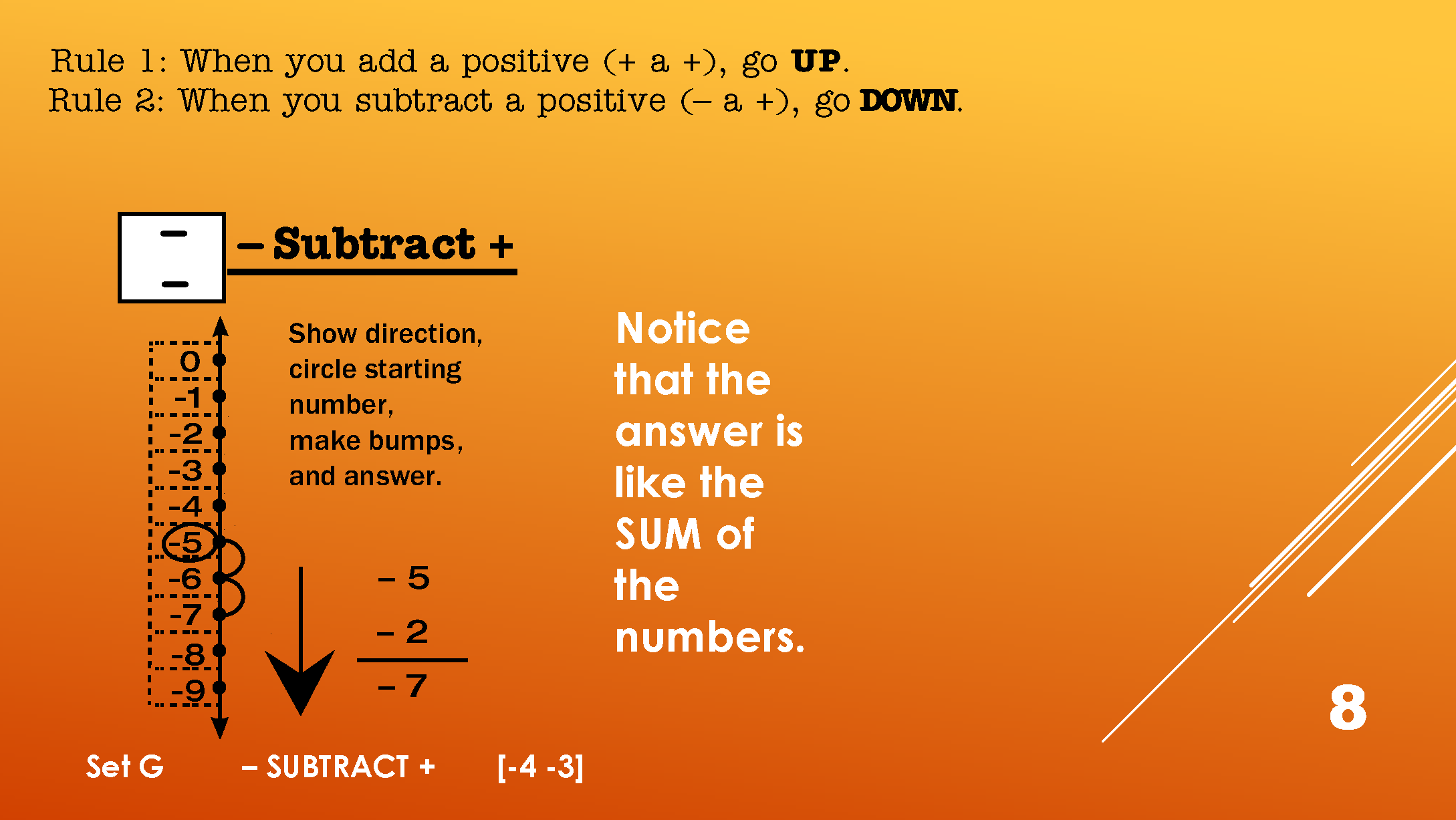
(4) Mixed Integers Set G Negative subtract a positive
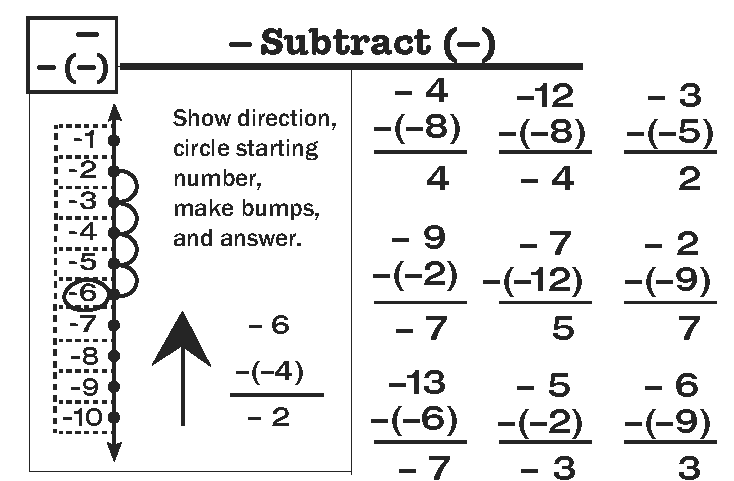
(5) Mixed Integers Set J Negative subtract a negative
(6) Mixed Integers Set M Positive subtract a negative
(7) Mixed Integers Set P Positive add a negative
(8) Mixed Integers Set S Negative add a negative
Using the vertical number line there are two rules to learn. Rule 1: When you add a positive or subtract a negative you go up on the number line. Rule 2: When you subtract a positive or add a negative you go down on the number line.
So first thing to figure out is whether you’re going up or down. Once you do that you simply make “bumps” going either up or down from where you start. That gives you the answer without any uncertainty. These lessons are quick (about 2 minutes) and identify a pattern of whether the answer is like the sum or the difference between the numbers. Once students can recognize the pattern they can begin to answer fluently and without a struggle.
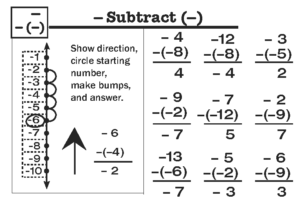 To help with the work of learning to quickly and easily recognize each pattern in Integers Rocket Math now includes a “Mixed Integers” program in our Universal Subscription. (Click here to get a 60-day trial subscription for $13 –rather than the standard $49 a year.) Students use the vertical number line to work a problem. In this example: -6 minus (-4). Then they have a set of problems with the same pattern they can orally answer without having to use the number line.
As with all Rocket Math programs there is a 3 minute practice session, with a partner. Then the two switch roles. Then the practice is followed by a one-minute test. If the student can answer the problems without hesitations the level is passed. If it is still difficult the student stays with that level a bit longer. When a new pattern is introduced the tests will have a whole row of problems that are the same pattern. When that level is passed the next test will have two types of problems in each row. The next level has 3 types, then 4 types in each row. Then the problem types are mixed. This way the student develops fluency in recognizing the type of problem and how to derive the answer quickly.
Rocket Math has a money-back satisfaction guarantee. If you try this and find it isn’t everything you hoped, in terms of helping your students become fluent with integers, I’ll gladly refund your money. I’m betting they’re going to love it.

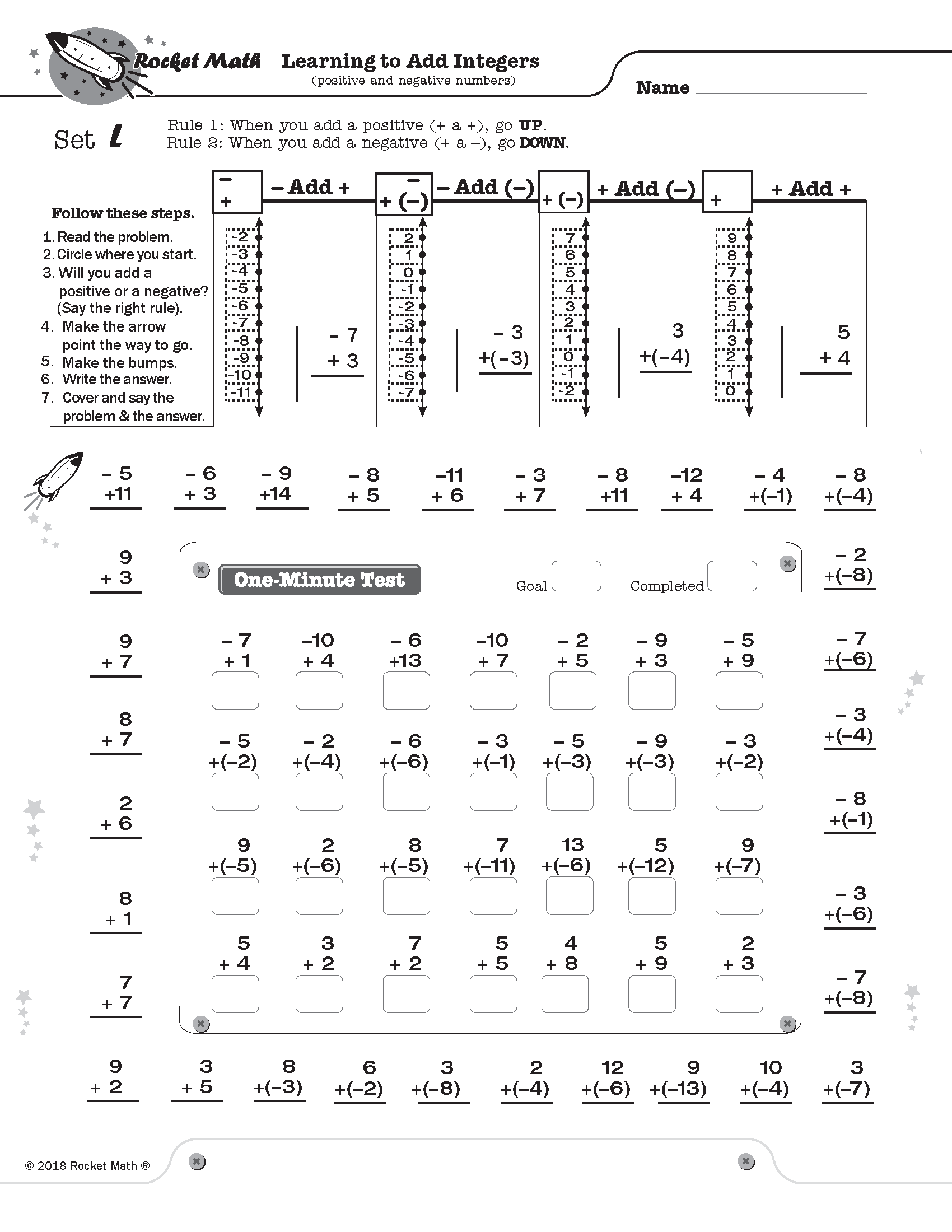
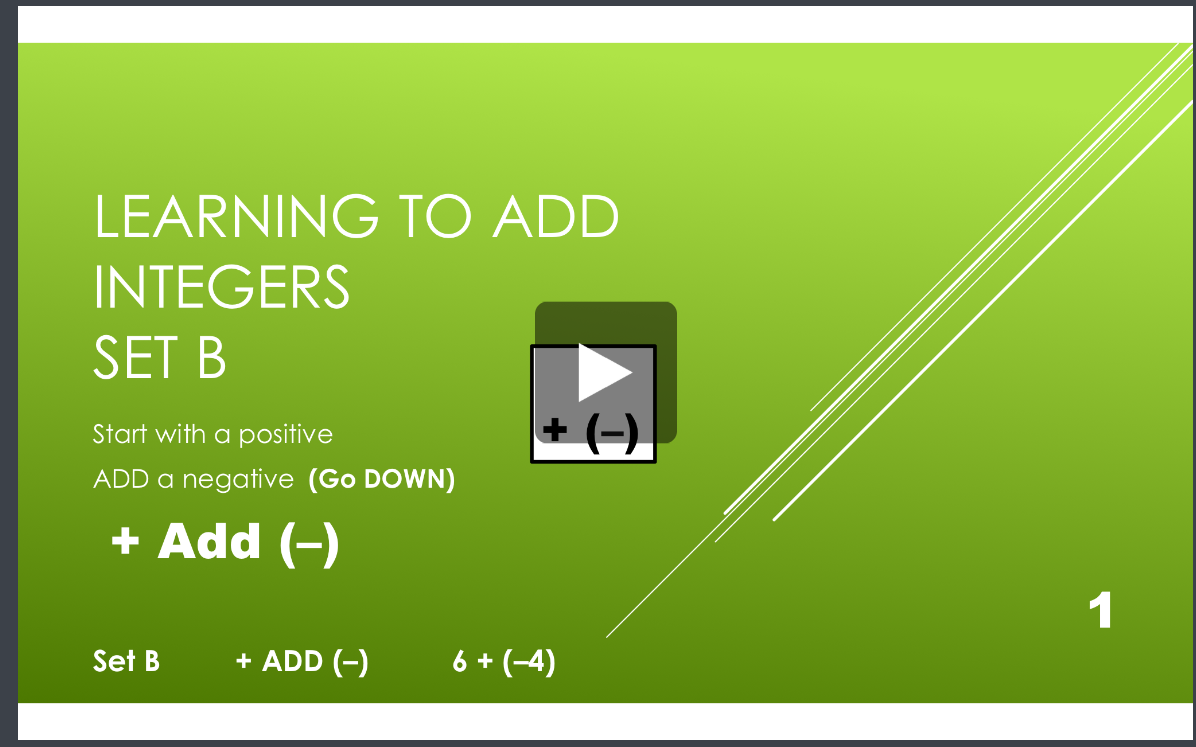 Learning to Add Integers displays problems on a vertical number line and then teaches students two rules about how to solve problems that add positive and negative numbers.