
Don’t argue, just prove it works!
Joyce asks:
How can we encourage the teacher who refuses rocket math and administration does not reinforce (or enforce) the program’s use?
Joyce,
Joyce asks:
How can we encourage the teacher who refuses rocket math and administration does not reinforce (or enforce) the program’s use?
Joyce,
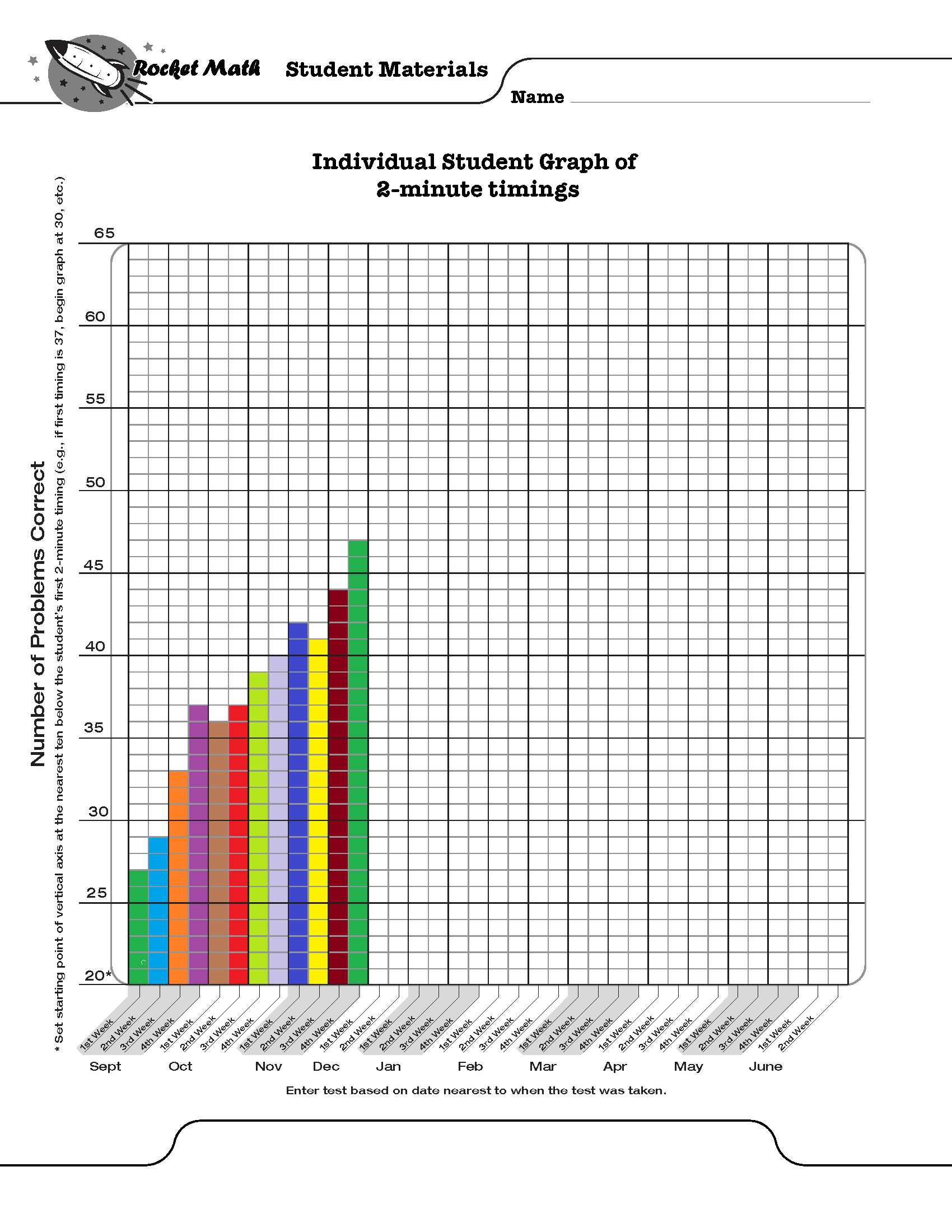
First of all, understand that the two-minute timings are NOT a teaching tool. They are an assessment tool only. Giving a two-minute timing of all the facts in an operation every week or two allows you to graph student performance. You graph student performance to see if it is improving. If the graph is going up, as in the picture above, then the student is learning. If the graph is flat, then the student is not really learning.
The individual graphs should be colored in by students allowing them to savor the evidence of their learning. The graphs should be shared with parents at conference time to prove that students are learning. 
Progress monitoring with two-minute tests are a curriculum-free method of evaluating a curriculum. If you use the same tests you can compare two methods of learning facts to see which one causes faster growth. This makes for a valid research study.
This kind of progress monitoring over time is also used in IEPs. You can draw an aimline from the starting performance on the two-minute timing to the level you expect the student to achieve by the end of the year. (Note the writing speed test gave you goals for the two-minute timing which you could use for your end-of-year goal.) The aimline on the graph, when it crosses the ending date of each quarter, will provide quarterly objectives that will enable quarterly evaluation of progress–required for an IEP.
These two minute timings are a scientifically valid method of proving whether students are learning math facts, in the same way that tests of oral reading fluency prove whether students are learning to read. They can be used to prove to a principal or a curriculum director, for example, that Rocket Math is working and is worth the time, paper and money it requires.
Here is a link to a quick, one-minute explanation of the paper-and-pencil version of Rocket Math.
Here’s where you can get started
using Rocket Math with a
(normally $49 a year).
In a previous blog I discussed What does CCSS mean by “know from memory?”
A reader asked the following question:
This topic of “know from memory” is something I have been digging into as a special educator. I wonder what your thoughts are about whether certain accommodations from these “know from memory” standards would actually be modifying the curriculum?
For example, if we used “extra time to respond” and the student had to use their fingers or some other method to count, would they then not be doing the standard?
This relates to where I’m at in middle school math, but I think that it’s reflected in the continuum of the common core maths.
Thanks.
Dr. Don’s response:
Actually, your example is very clear that it is not “knowing from memory.” You are describing “deriving from a strategy” or what I call, “figuring it out.” When you know it from memory, when you recall the answer, then you stop having to “figure it out.”
Knowing from memory and figuring something out are two very different things. I used to ask workshop participants to imagine sitting next to me in a bar and asking me for my name. What if, instead of saying, “Hi, my name is Don,” something different happened? What if, like the man pictured above, I was puzzled and said, “Wait a second, I have it here on my driver’s license.” Most people would likely turn their attention elsewhere while wondering what kind of traumatic brain injury I had sustained! They would very likely say to themselves, “OMG, that man doesn’t know his own name.”
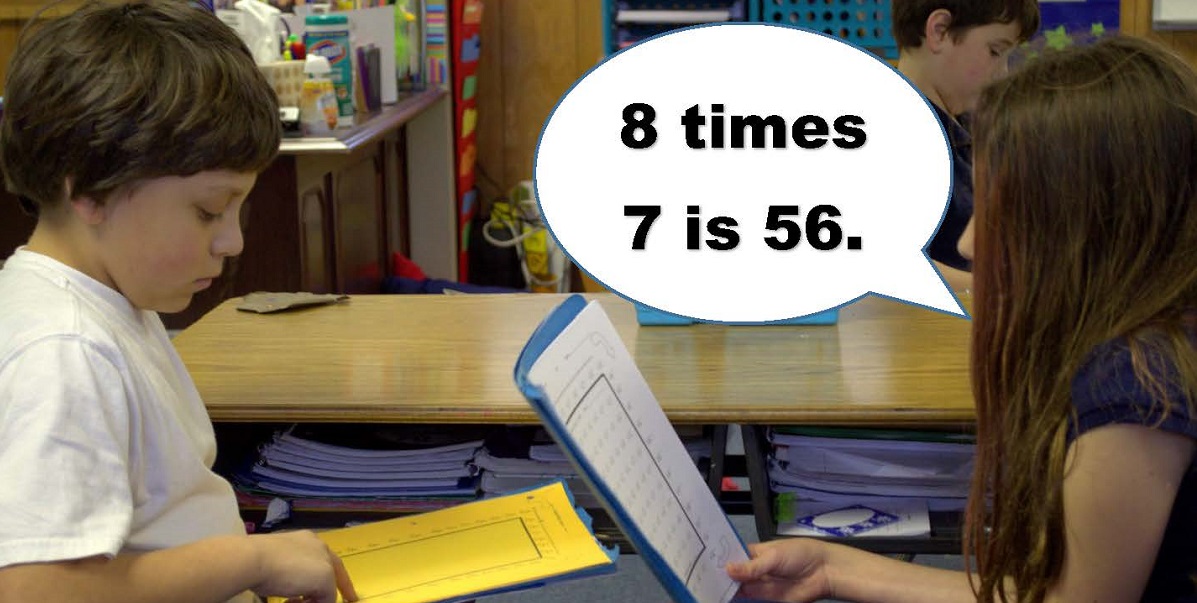
The purpose of the verbal rehearsal that is a daily part of Rocket Math is to cement these basic facts in memory. Then when a student says to themselves, “8 times 7 is,” the answer pops into their mind with no effort. It takes quite a bit of practice to achieve that. However, the ability to instantly recall the answers to basic math facts makes doing mathematical computation a relative breeze. It make seeing relationships among numbers very obvious. It makes reducing fractions and finding common denominators easy. That’s why the Common Core thinks “knowing from memory” is so worthwhile. It’s why I began promoting Rocket Math in the first place.
The “active ingredient” in the Rocket Math prescription, the thing that makes it work, is not timed tests. Timed tests don’t actually teach and often don’t really help students develop fluency. The usual timed tests of a random selection of all the facts can assess fluency in math–but they don’t work to develop it!
The “active ingredient,” the thing that makes Rocket Math effective, is verbal rehearsal. When students practice with their partner the students read the facts and RECALL the answers from memory and say them aloud. That verbal rehearsal is what cements them into memory. Reading the fact and recalling the answer from memory strengthens the neural connection.
Why do we give the daily tests in Rocket Math? Not to teach, but only to assess whether the facts introduced thus far have been learned well enough for the student to have new facts added to what they are learning. Individual students learn at different rates. Some students need only a couple of days of practice to memorize two new facts while others may need several days. The purpose of the daily tests is just to see if the student needs more practice time, or is ready to “swallow” some more facts.
As I note in my basic training presentation, “It’s like feeding mush to a baby. You have to make sure they have swallowed the last mouthful before you give them more.” See an explanation in this You Tube video in our Rocket Math channel: https://youtu.be/J8cWSDG0Di8
Over the years of helping teachers and schools implement Rocket Math I have learned that a complete laissez-faire attitude about student progress can mean that some students get stuck for weeks on the same sheet. Needless to say, students who get stuck, come to hate Rocket Math. When this happens, those students don’t get through all the operations they should learn. So we need to intervene, and give them more help. It turns out that some students need more practice, sometimes two or three times more practice, to learn the facts than their peers. To get such students through one operation a year means they have to have extra practice sessions scheduled in each day. Here’s a link to a blog about how to provide extra help.
But which students need extra practice sessions? Under Resources/Educator Resources I’ve created two versions of a tool that can help.
Whole Class Excel Rocket Math (2 operations in a year) Aimline. This is pictured to the right. It is needed for 2nd grade and 4th grade and up when students need to finish one operation and do a second one in a year. The expectations needed to pass two operations in one year are basically that students should pass two sets each week. If they have studied some the year before, they will be able to pass sets in the first operation at a quick pace. For example if they have done much of Rocket Math Addition in first grade, in second grade they should be able to pass those addition sets again in a day or two. That will put them ahead of the expectations and they should have a plus by their name most of the year. Conversely, if they are not able to pass sets quickly, (see the students highlighted in yellow) they will get a minus by their name and should start getting extra sessions scheduled daily.
Please note: The pictured EXAMPLE Rocket Math Excel Aimline is available from the link or in the Resources/Educator Resources page for you to download.
Take the blank template and save it for next year. Then fill out one for this year. Look at a calendar and on row 4 enter the month and on row 5 enter the starting day of each week in the school year. so each column numbered 1 through 36 will correspond to a week in your school year. In row 7 you see the green expected set to be passed by the end of that week. At the end of week 1 we expect that students will have at least passed Set A. By the end of week 2 they should have passed Set C to be on pace to finish two operations in a year.
Entering student names. Starting in row 10 you enter the student names in column B. This class only has ten students, but I’m guessing yours probably has more! Cool thing about excel is you only have to enter those names once. And if you’re really good you can freeze that column so you can easily see it later in the year.
Entering weekly information. Each week grab all the student folders and for each student enter the highest set they have passed. You can see that from the Rocket Chart on the outside of the folder, so you don’t even have to open the folders. If the letter they have passed is equal or higher than the green set expected at the top of the column for that week, then put a plus by the letter they have passed.
Look at Alvin Ailey at the top of my class list. Week 1 he had passed both Set A and B, so I wrote “B” in his square. I put a plus because it is exceeds the expected level for the first week. By the second week he had also passed Sets C and D. Only up to “C” is expected, so I wrote “D” and also gave him a plus. Alvin is rocking it!
Look at Cindy Crawford a little further down the class list. Week 1 she had passed Set A, so I wrote an “A” in her she got a plus because she met the expectation. But by week 2 she had only passed Set B, when C is expected to be passed, so I wrote “B” in her square, with a minus indicating she is below expectation. Now I highlighted her square yellow, but that’s kind of advanced so you don’t really have to do that. Only Excel experts can do that, although it really makes it easy to pick out who needs help. We can see that Cindy continues to make slow progress and continues to get minuses. She needs to have extra practice sessions scheduled to finish two operations this year. That pace is fine for one operation per year, but not two.
Look down at Gary Grummond. He didn’t pass even Set A by the end of the first week so I wrote “np” in the first square. He continues to make progress the next few weeks, but not fast enough to complete two operations in a year.
Row 8 Fraction of students meeting expectation. After entering all the students for the week you can see how you are doing overall in your class. Make a fraction with the numerator being the number of students who are meeting the expectation over the denominator of the number of students in the class. You want a high fraction nearer to 1.
If that fraction falls below 70%, meaning more than 30% of your class is not on track, then you should institute a class-wide intervention. Either add an extra practice session each day, or see if there is room to improve the quality of practice. See these blogs and posts about how to monitor for the quality of practice.
Whole Class Excel Rocket Math (1 operatipon per year) Aimline. In grades 1 and 3 where students are expected only to complete one operation in a year, you can use this Excel Aimline. The expectations needed to pass one operations in a year are basically that students should pass one set each week. Everything else about how you use the excel form is the same. Note that if you want students to do two operations in the year (for example both subtraction and multiplication in 3rd grade) then you would use the two operation aimline.

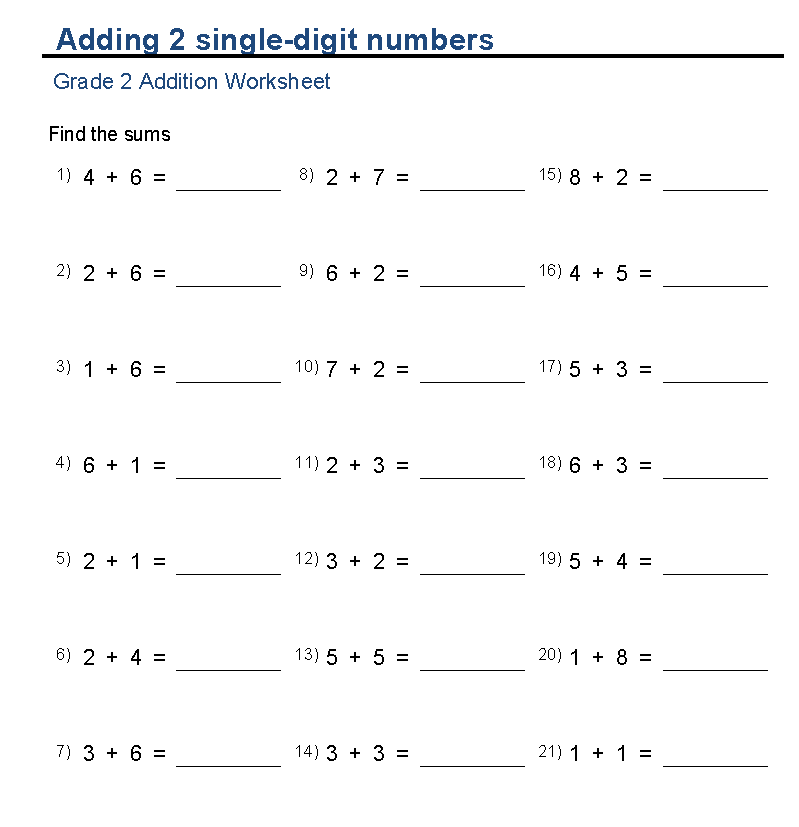
It’s critical to keep some of your students occupied in order for you to have the peace and quiet you need to teach other students. Those free math worksheets of random facts are fine for busywork, provided students already know the facts.
(and this is a big but) if you want students to actually learn facts, you need math worksheets that are more systematic than the usual fact practice worksheets. A random mix of problems (on those free math worksheets) is fine for practicing what you already know, but it is USELESS for learning new facts.
Students who don’t know their facts are left painfully counting on their fingers to do their “work.” This just wastes their time and makes them come to HATE math.
I know, because I made my students do it for years. 🙁
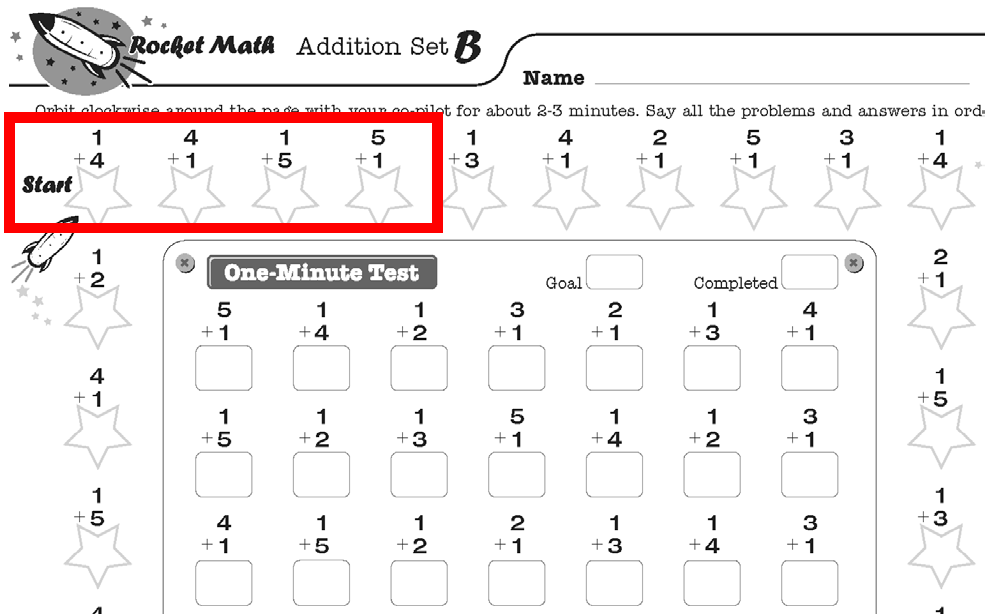
In order to learn new facts students must concentrate on a few they don’t know and practice those particular facts until they know them “by memory” without having to figure them out. After students have learned those they can then tackle a few more. That’s the only way to learn a bunch of facts. That’s what Rocket Math does. Watch this video to see it in action.

Each sheet (A-Z) adds two new facts and their reverses, making the process of learning them painless. By the time students have worked their way through the A-Z worksheets of an operation they know the facts “by heart” or as the Common Core calls it “by memory.”
If LEARNING is your goal, you’ll need something more effective than the free math worksheets.
Rocket Math has a MONEY-BACK guarantee.
If you spend the $13 to get a trial subscription and you decide Rocket Math doesn’t work or you don’t want to use the program, we’ll gladly refund your money.
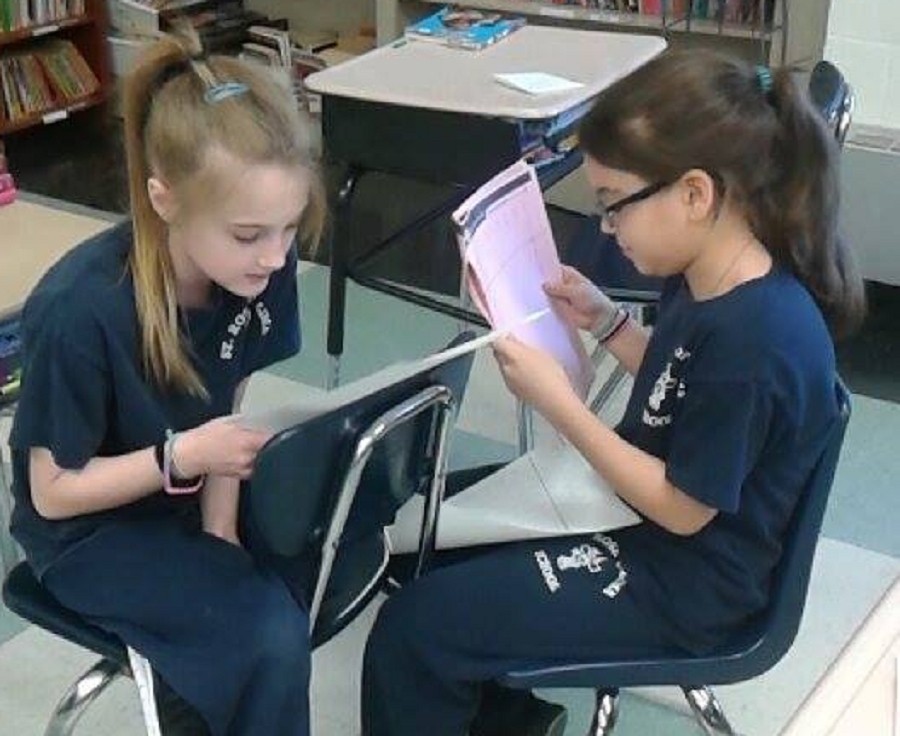
Students have more fun and learn better when they are practicing orally, with a partner so they can get corrections and extra teaching on any facts they don’t know well. That is part of how Rocket Math works. So it won’t just be busywork. Your students will actually learn the facts and be proud of it.
Jessica asks:
As I am planning my daily schedule I am looking for how long I should set aside for Rocket Math each day. What do you suggest?
Dr. Don answers:
If you allocate 15 minutes a day for Rocket Math that will be enough. You might have trouble meeting finishing that quickly in the beginning before the routine is established. But once the routine is set there is no need to take more time than that–each partner of the pair is practicing for 2 to 3 minutes and the test takes only one minute. Don’t try to have everyone correct their partners papers as that will take too long. Making sure that students practice every day with their partner is critical to success, so anything that makes you feel “we don’t have time for Rocket Math today” is harmful to student learning.
The other key is to be sure to teach students how to practice with each other. If you can train your students to correct hesitations you will accomplish a lot with your Rocket Math practicing time. Please take a look at my video on “How to teach students how to practice.” Take the time allocated to Rocket Math for the first several days of school and follow this teaching procedure. It will pay off for you all year long in improved learning during Rocket Math time.
Rocket Math adds something new: Addition—Learning Computation
After becoming fluent with addition facts the best way for students to retain the knowledge of those facts is by doing addition computation. Rocket Math has added a new program to the Universal Subscription that teaches addition computation. If students have not been taught addition computation, this program breaks it down into small, easy-to-learn steps that are numbered in a teaching sequence that leaves nothing to chance. There is an placement assessment that can be given to figure out where the student should begin in the sequence.
Note that the number for each skill gives the grade level as well as indicating the teaching sequence. Skill 2a is a 2nd grade skill and after skill 2f is learned the next in the sequence is skill 3a. The sequence of skills is drawn from M. Stein, D. Kinder, J. Silbert, and D. W. Carnine, (2006) Designing Effective Mathematics Instruction: A Direct Instruction Approach (4th Edition) Pearson Education: Columbus, OH.
(1b) Adding 1-, or 2-digit numbers; no renaming
(2a) Adding three single-digit numbers
(2b-c) Adding 3-digit numbers; no renaming
(2c) Adding 3-digits to 1 or more digits; no renaming
(2d) Adding three 1- or 2-digit numbers; no renaming
(2e) Adding two 2-digit numbers, renaming 1s to 10s
(2f) Adding 3-digit numbers, renaming 1s to 10s
(3a) Adding a 1-digit number to a teen number, under 20
(3b) Adding two 2- or 3-digit numbers; renaming 10s to 100s
(3c) Adding 3-digit numbers; renaming twice
(3d) Adding three 2-digit numbers; renaming sums under 20
(3e) Adding four multi-digit numbers; renaming, sums under 20
(4a) Adding a 1-digit number to a teen number, over 20
(4b) Adding three 2-digit numbers, sums over 20
(4c) Adding four or five multi-digit numbers, sums over 20
For each skill there is a suggested Teaching Script giving the teacher/tutor/parent consistent (across all the skills we use the same explanation) language of instruction on how to do the skill. The script helps walk the student through the computation process. For the teacher, in addition to the script, there are answer keys for the five worksheets provided for each skill.
Each worksheet is composed of two parts. The top has examples of the skill being learned that can be worked by following the script. After working through those examples with the teacher the student is then asked to work some review problems of addition problems that are already known. The student is asked to do as many as possible in 3 minutes—a kind of sprint. If all is well the student should be able to do all the problems or nearly all of them, but finishing is not required. Three minutes of review is sufficient for one day.
There are five worksheets for each skill. Gradually as the student learns the skill the teacher/tutor/parent can provide progressively less help and the student should be able to do the problems without any guidance by the end of the five worksheets. There are suggestions for how to give less help in the teaching scripts. Thumbnail previews can be found here.
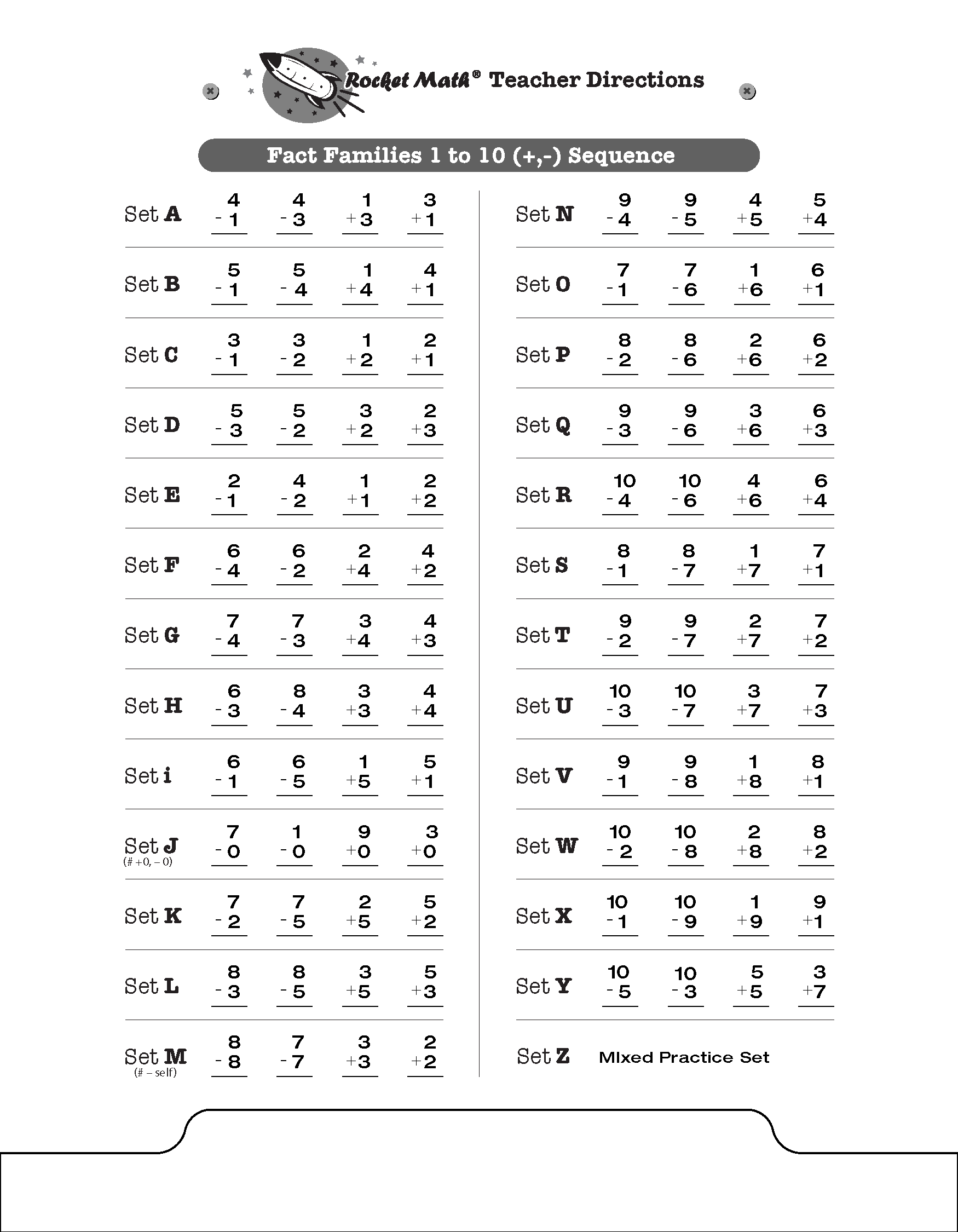
A fact family includes both addition and subtraction facts.
You can see to the right 25 examples of fact families such as Set A; 3+1, 1+3, 4-1 & 4-3. The sheet shows the sequence of learning facts in the new Rocket Math program Fact Families 1s-10s (+, -). Each set that students learn from A to Y adds just one fact family to be learned, so it isn’t too hard to remember. (That’s the Rocket Math secret ingredient!)
Learning math facts in families, is gaining in popularity these days. Logic suggests that this would be an easier way to learn. However, the research is not definitive that this is easier or a faster way to learn facts than separating the operations and learning all addition facts first and then learning all subtraction facts. But learning in fact families is a viable option, and I wanted to have it available for Rocket Math customers.
Flash news!! Someone looking for a master’s or doctoral thesis could do a comparative study of students using the fact families vs. the separated facts in Rocket Math. This could easily be a gold standard research study because you could randomly assign students to conditions within classrooms–the routine is the same for both–just the materials in their hands is different! Just sayin’…
I separated out the 1s through 10s facts from the 11s-18s, because this seemed enough for one program. It would be a good and sufficient accomplishment for first grade. I have heard that some first grades prefer to keep the numbers small but to learn both addition and subtraction–so this program accomplishes that.
I added Fact Families 1s-10s (+, -) to the Universal subscription in April of 2017 bringing the total number of programs in the Universal subscription to 14 (the basic four operations and ten more!). By the fall of the 2017 school year I should have the rest of the Fact Familes in addition and subtraction available. [In time for you to do that gold standard research study!] The rest of the addition and subtraction fact families, which students could learn in 2nd grade, would be the Fact Families 11s-18s (+, -). As always, new programs are added to the Universal subscription without additional cost as soon as they are available.
I most sincerely want students to be successful and to enjoy (as much as possible) the necessary chore of learning math facts to automaticity. Please give me feedback when you use this new program, Fact Families 1s-10s (+, -), as to how it goes for the students.