
5 easy ways to get help running Rocket Math.

Here are 5 ways to get help with the procedures for successful Rocket Math implementation.

1.) Use the ***NEW*** search function.  At the upper left of the blue navigation bar is an icon of a magnifying glass.  Click on that and a search bar opens in the middle of the page.  Click within the search bar and you can type in whatever you are looking for.  It will bring up blogs, parts of the directions, basically anything I’ve written on the subject–which is a lot.  You can get pretty specific very fast, so try this first.  I’m very excited to have added this feature this week, which is why it is top of my list!

2)  FAQs.  Look at the Rocket Math FAQs page.  Click on the linked words to the left, or navigate to it.  The FAQs page is the third Rocket Math Filing cabinet on the webitem under ABOUT in navigation.  The FAQs page displays all of the questions from the teacher directions, and my answers, so you can scroll down to the topic you need quickly.   However, all the FAQs will show up in the search function as well.

2.5) The FAQs are also available in the Rocket Math filing cabinet.  They are in the top drawer, the “Forms and Information” drawer of the filing cabinet.  There are titles of the FAQs so you can open and print any one you wish.  Good for sharing with other staff.

3) Rocket Math YouTube channel. You can go to the Rocket Math YouTube channel.  Click on the linked words to the left, or search for Rocket Math in You Tube.  If you scroll down the page you can click on “View Full Playlist” and then you’ll be able to see all the topics that are available.  Right now there are 37 videos, but that could change if we add some more.

4) DVD training.  Order the Workshop Training DVD (#2004) for $29  This is the whole training from Dr. Don filmed and broken into chapters.  It is over 3 hours and gives a lot of rationale for the procedures we recommend.  Very helpful if Rocket Math is new for your staff.  Really important to do things as recommended.  Having coached this in many schools for many years, I can promise you it will go better if you follow the directions!

5) Contact Dr. Don.  Really.  You can call me (800) 488-4854 during west coast school hours and I’ll probably be able to answer the phone directly.  It’s a joy for me to talk about implementing Rocket Math with teachers, so don’t be shy.  But if you don’t reach me, please send an email to don@rocketmath.com rather than leave your phone number because during the school day teachers are very hard to reach.  I’d rather just write an answer in an email so we don’t miss each other.  And if it is a new question I’ll probably turn my answer into a blog that can be found through the search function.

How long should I allocate for Rocket Math daily?

Jessica asks:

As I am planning my daily schedule I am looking for how long I should set aside for Rocket Math each day.  What do you suggest?

Dr. Don answers: 

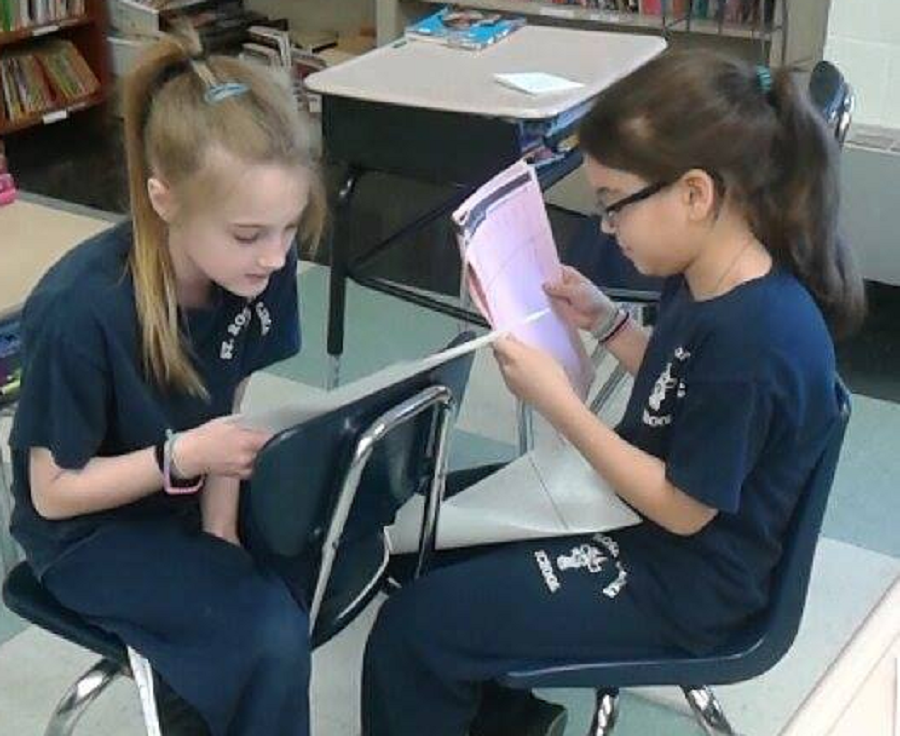
If you allocate 15 minutes a day for Rocket Math that will be enough.  You might have trouble meeting finishing that quickly in the beginning before the routine is established.  But once the routine is set there is no need to take more time than that–each partner of the pair is practicing for 2 to 3 minutes and the test takes only one minute.  Don’t try to have everyone correct their partners papers as that will take too long.  Making sure that students practice every day with their partner is critical to success, so anything that makes you feel “we don’t have time for Rocket Math today” is harmful to student learning.

The other key is to be sure to teach students how to practice with each other.  If you can train your students to correct hesitations you will accomplish a lot with your Rocket Math practicing time.  Please take a look at my video on “How to teach students how to practice.”   Take the time allocated to Rocket Math for the first several days of school and follow this teaching procedure.  It will pay off for you all year long in improved learning during Rocket Math time.

Why is a gifted student having trouble with Rocket Math?

Question: Hi, Dr. Don! Just had a question recently from a parent of a gifted child whose son is having a lot of difficulty doing Rocket Math! He understands almost everything conceptually in math (in the 99% on national testing) but he is not being successful working with a partner on his math facts. Have you had this problem in other places? I’m not sure if the problem is he really can’t focus on the facts, he’s stubborn and doesn’t like details (big picture thinker), etc. He’s a very social kid so the partnering doesn’t seem to be the problem. I would greatly appreciate any suggestions you might have that I could give this mother. She says that he is fine at home doing his facts with her without a timer. But I don’t like the idea of excusing any student from doing this valuable practice. Thanks for your thoughts. Linda

Answer: I’ve blogged a bit on some of these issues elsewhere on the Rocket Math website, but let me try to be more specific here. First, gifted kids are stunned to find out that they have to work hard to memorize math facts. They probably need three or four days of practice—which to them seems like failure.  They are like an athletic kid who excels easily at every sport but finds he needs to work out with weights as much as a klutz to get to be able to lift heavy weights—his natural talent doesn’t help in this instance. So kids who’ve never had to work to learn things before, really are annoyed by having to practice several days in a row.  But it is really good for them!

How is mom practicing with him at home? Can she video him doing the test “untimed?”  If the child is “writing facts” and “without a timer” then he may be figuring out facts over and over—but is not getting to instant recall. That’s why the oral peer practice is so critical—if there is even a slight hesitation the child is to repeat the fact three times, back up three problems and come at it again—until the answer comes with no hesitation. There is a fundamental difference between instant recall of facts from memory and strategies to come to the answer by thinking it through. My parent letter addresses how to practice.  On the other hand, if the student is able to write the answers to math facts at a fast enough rate to complete 40 problems in a minute, but only when he thinks he is not being “timed” then he needs to learn how to do the same thing when he is being timed.

If he is not learning with the daily practice, we have to ask, “Why not?”  Social kids sometimes socialize instead of practicing. Social kids also can convince their partner not to do the correction procedure. Or they just say the answers instead of the whole problem and the answer. Any of those things would result in not successfully learning the facts. The teacher would need to monitor the quality of the practice. My experience has been that when students are “stuck” or “having difficulty” even just one session of practice done the right way rigorously (with me) and they suddenly improve enough to pass or to recognize they can pass the next day with another session of rigorous practice.

Last of all, sometimes the writing goals are off because of some glitch in how you gave the writing speed test.  So the student might know the facts well enough but not be able to write them fast enough to pass the tests.  If the student can answer 40 facts in a minute in the current set (just saying the answers without having to say the problems) then the facts are learned to automaticity—and the goal in writing should be lowered to whatever the student has done to this point.

Hope this helps. You are right not to excuse this student from learning math facts to automaticity. He might be a stellar mathematician someday if he learns his facts well enough that math computation is always easy for him. If math computation remains slow or laborious he won’t like it enough to pursue it as a career.

Without the directions you may get lost!

What happens when teachers don’t have a copy of the Rocket Math Teacher Directions?  Bad things!  

When teachers don’t have the written directions to Rocket Math, the essence of the program usually gets lost.  Procedures get modified and modified over the years until they are not even close to what should be occurring. Sometimes we have found schools that are not even providing daily oral practice.  Other schools don’t give the answer keys to the peer tutors.  Other schools don’t give the writing speed test and make up impossible-to-reach goals for students.  We often see teachers implementing the “Rocket Math” program incorrectly and wondering why it doesn’t work.  We ask them if they have read the teacher directions, and they say they didn’t know there were any.  When teachers have never seen the directions, is it any wonder they don’t know what they are supposed to be doing?  Hear-say directions handed down over the years from one teacher to another just don’t convey all the important details.  Teachers need the directions!

This is why I’d like you to have my complete directions for free. Even if you purchased Rocket Math ten years ago and haven’t gotten the updated versions since then, you can have these directions for free.  I have them in three places.  I have the directions broken out into FAQs on their own web page here.  That’s easy for quick reference.

The second place I have the Teacher Directions is as a downloadable booklet you can print out and distribute.  The Rocket Math Teacher Directions for the worksheet program booklet is here.   Please print this out and give to your teachers, especially in schools that began implementing several years back.  Read them and have a discussion at a professional development time.  You will be astounded at how much your implementation differs.

The third place I have the Teacher Directions is in the “filing cabinet on the web” for those of you who have the subscription. In the “Forms and Information” drawer we have the booklet and the FAQs which can be opened and printed out.

In school-wide implementations of Rocket Math, principals or math coaches need to take a leadership role.  The Administrator and Coach Handbook gives you forms with what to “look-for” in a Rocket Math implementation.  If you use that to observe Rocket Math in your classrooms you’ll quickly see whether or not things are going the way they should.   If you have a subscription to Rocket Math you’ll find all of the chapters of the Administrator and Coach Handbook in the “Forms and Information” drawer of our filing cabinet on the web.

Please take the time to see that you or your teachers are implementing Rocket Math according to the directions.  Trust me, it works SO MUCH BETTER if you do.  I wouldn’t steer you wrong!


Developing test-taking strategies into habits.

Three important test-taking strategies that Rocket Math will turn into habits.

(1) Perseverance Pays Off

Students really need perseverance to get through today’s tests.  You want your students to really work hard and do their best! To have that kind of perseverance students need to KNOW that it pays off.  Sticking with learning and testing over and over until they win is a central lesson of Rocket Math’s daily practice and tests.  Most days, most students do NOT pass the One-Minute Daily Test.  They have to practice some more and try again the next day.  If they try hard and do their best on each day’s test, eventually they do pass.  This teaches perseverance like nothing else in the curriculum!


(2) When taking a test, work as fast as you can.  

Students doing Rocket Math learn that to be successful you have to work as fast as you can.  Their individualized goals require that they write answers as fast as they can write.  Students who pause to look at the clock or look around the room during the one-minute test simply do not pass.  This may be the only time of the day that students experience the need to work quickly and they get immediate feedback based on whether or not they do work quickly–and it is something they care about!  So they are motivated to work quickly.  It is important for students to have that kind of experience if they are to learn the general rule that you are supposed to work as fast as you can when taking a test.  


(3) Skip what you don’t know  

Have you ever watched a student waste valuable time working on a test item you knew the student wouldn’t be able to answer?  Nothing more painful.  Students need to learn to skip the items to which they don’t know the answer readily.  How are they going to learn that without practice?  Rocket Math has a progress-monitoring component–a weekly 2-minute timing you can see to the right. These weekly tests sample all the facts in the operation, including ones they haven’t memorized yet.  Therefore the strategy they should use is to skip the ones they don’t know yet, so as to answer quickly all the ones they do know.  If you explain this to the students, and they can develop this strategy while taking these weekly tests.   

If you aren’t sure that your implementation is developing these habits please feel free to download the  Teacher Directions.   If you have a school wide implementation of Rocket Math be sure you have the Administrator and Coach Handbook.

Filling testing-created gaps in your schedule.

Many schools are starting spring testing soon, and it wreaks havoc with the daily schedule. People outside education don’t really understand how much school schedules are disrupted by attempting to test everyone in the school on the available computers. Not to mention catching all the students who are absent during their assigned time. Disrupted schedules create small gaps in the schedule, which are hard to fill, even more so when not every student is present. Let me present an option to fill those small gaps–do Rocket Math! Here’s five reasons why you should.

1) By this time of the year, students know the Rocket Math routine, so it should not take more than ten to fifteen minutes to run, start to finish. So Rocket Math can fill small gaps.

2) Even if Rocket Math has been done once during the day, a second or even third session during the day will NOT harm students, it will actually help them progress faster. (As long as you have at least a half hour between sessions).

3) It is beneficial for the students in the room even when some students are out doing make-up testing. It won’t require you to re-teach a lesson.

4) In contrast to free reading or make work activities, which only fill time, students doing Rocket Math will be learning critical skills that are necessary for future success.

5) In contrast to the stress of the accountability tests, Rocket Math is something students know well and have success at. They know what they are doing and they see their growth. They know they are learning. This is a powerful antidote to the not-so-straightforward tasks, questions and expectations of the accountability tests.

I highly recommend keeping Rocket Math folders handy for filling those small gaps in the daily schedule caused by testing.