Learning to Subtract Integers (positive and negative numbers) Learning Track

List of Learning Tracks Continue to purchase

How does this Learning Track teach?

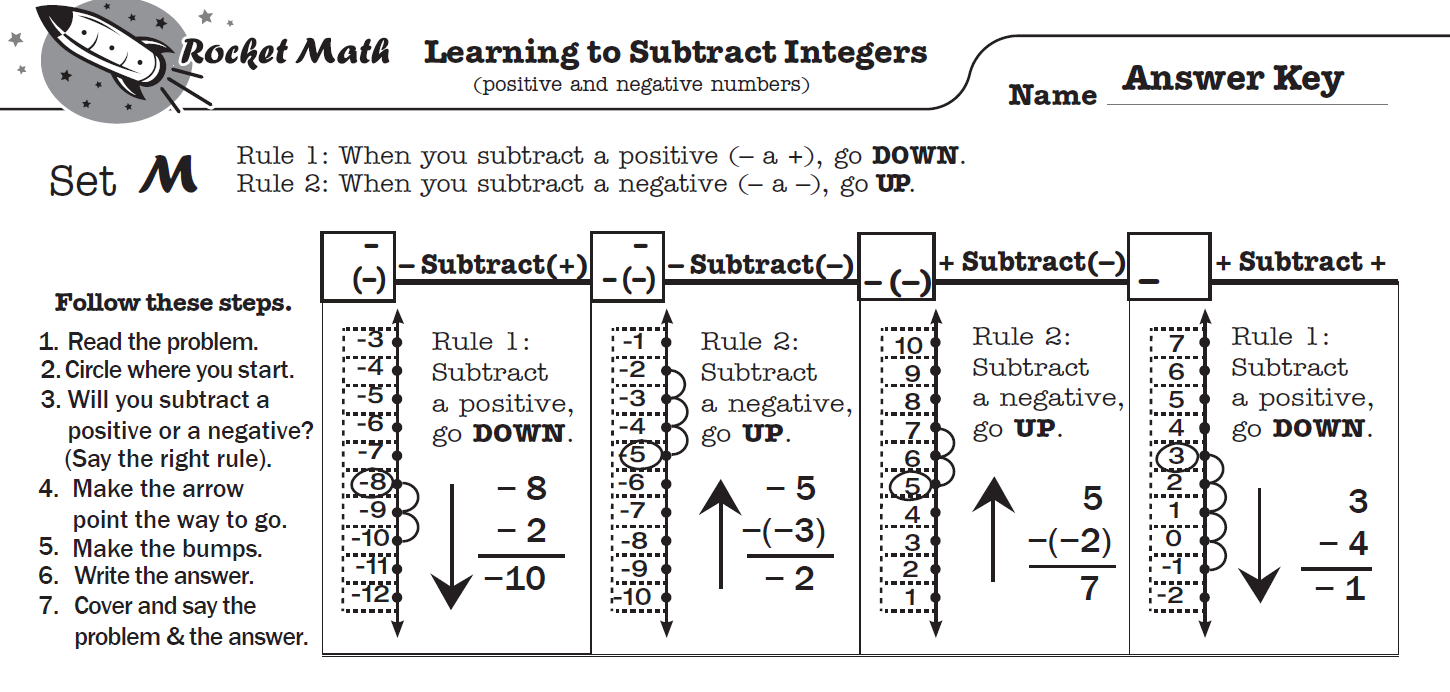
Learning to Subtract Integers displays problems on a vertical number line and then teaches students two rules about how to solve problems in which you subtract positive and negative numbers.

Rule 1:  When you subtract a positive number, go DOWN.
Rule 2:  When you subtract a negative number, go UP.

Doing problems on the vertical number line is more intuitively appealing because UP is more and DOWN is always less.  This makes crossing zero a little easier to comprehend.

Total of four problem types to learn.

Students learn how these two rules play out with two types of problems: when starting with a positive number and when starting with a negative number. Students gradually learn all four types of problems.  On each worksheet they see how to solve each problem type using the number line working with their partner.  Then students learn to recognize the pattern of each problem type by orally answering several examples of each type with their partner (going around the outside of the page).  You will probably not be surprised that there is a one-minute test on each set.   Students are to be 100% accurate and to meet or beat their goal from the special writing speed test for Learning to Subtract integers (the fastest goal is only 28 problems in a minute).

Online Video lessons can teach students the process.

Here are links to the 4 online lessons teach students how each type of problem is solved and why it is correct. These are available in the virtual filing cabinet as well.

(1) Subtract Integers Set A Positive subtract a positive

(2) Subtract Integers Set B Positive subtract a negative

(3) Subtract Integers Set G Negative subtract a negative

(4) Subtract Integers Set L Negative subtract a positive


Skip Counting Learning Track

List of Learning Tracks Continue to purchase

What is Skip Counting?

Not counting while skipping!  Learning to skip count by fours is to learn this sequence by memory: “Four, 8, 12, 16, 20, 24, 28, 32, 36, 40.” Skip counting is also known as learning the “count-by” series.

Why teach skip counting?

Skip counting is the best way for students to prepare for multiplication. It teaches the concept of successive addition which is the root of multiplication.  In addition, skip counting helps prepare the ground for memorizing the multiplication facts.  Students who have learned to skip count find the chore of memorizing multiplication facts much easier. This Learning Track is excellent for second or third grade students after learning addition and subtraction facts and before learning Multiplication facts. Skip counting is not something older students past fourth grade really need to do, and of course, it’s no longer useful once multiplication facts have been committed to memory.

Each series is broken into easy-to-learn parts

Students learn part of each sequence on a page, then the next page they learn the rest. For example: in Set O students learn to count by 3s to 12, (3, 6, 9, 12) then in Set P they learn to count by 3s to 21 (3, 6, 9, 12, 15, 18, 21), and then in Set Q they learn to count by 3s to 30 (3, 6, 9, 12, 15, 18, 21, 24, 27, 30).

How does Skip Counting teach?

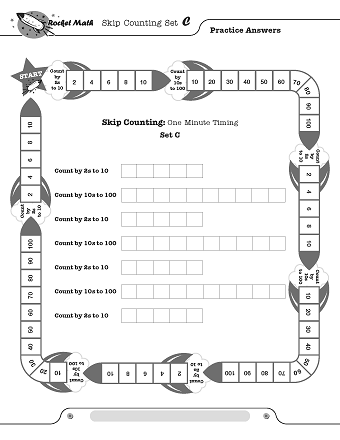
As in most Worksheet program Learning Tracks, students practice with a partner who has the answers. Because of the way the rockets go around the page (see above), students and their checkers will have to pick up the pages and turn them as they are working. You’ll be able to see if they are really engaged and they will have fun turning the page around. The test in the center has them write the count-by series they have learned for one-minute and they need to meet or beat their best–just like the rest of Rocket Math. Here is the sequence students will learn in this order: 2s, 5s, 10s, 9s, 4s, 25s (so they can count quarters), 3s, 8s, 7s, and 6s. Probably our most fun Learning Track.

Learning to Add Integers (positive and negative numbers) Learning Track

List of Learning Tracks Continue to purchase

What does this Learning Track teach?

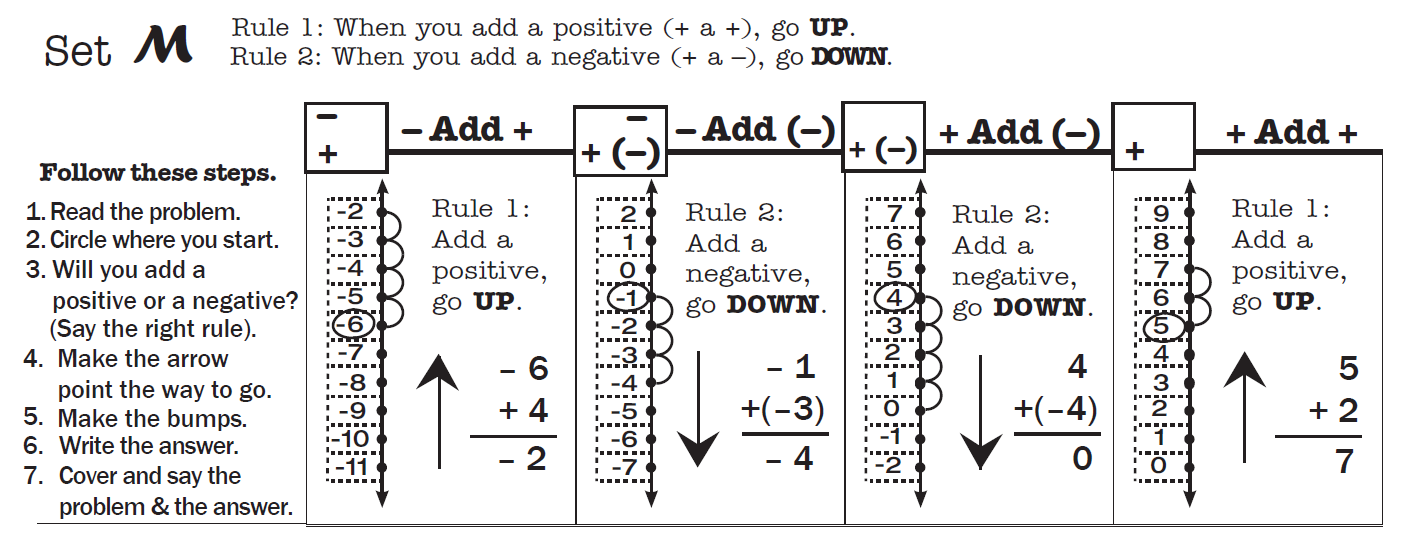
Learning to Add Integers teaches four types of problems to solve.  It displays problems on a vertical number line and then teaches students two rules about how to solve problems that add positive and negative numbers.
Rule 1:  When you add a positive number, go UP.
Rule 2:  When you add a negative number, go DOWN.

Doing problems on the vertical number line is more intuitively appealing because UP is more and DOWN is always less.  This makes crossing zero a little easier to comprehend.

Students learn how these two rules play out with two types of problems: when starting with a positive number and when starting with a negative number. Students gradually learn all four types of problems.  On each worksheet they see how to solve each problem type using the number line working with their partner.  Then students learn to recognize the pattern of each problem type by orally answering several examples of each type with their partner (going around the outside of the page).  You will probably not be surprised that there is a one-minute test on each set.   Students are to be 100% accurate and to meet or beat their goal from the special writing speed test for Learning to Add integers (the fastest goal is only 28 problems in a minute).

Video Lessons for students to learn the process.

4 online lessons teach students how each type of problem is solved and why it is correct.

(1) Add Integers Set A Positive add a positive

(2) Add Integers Set B Positive add a negative

(3) Add Integers Set G Negative add a negative

(4) Add Integers Set L Negative add a positive

Subtract from 20 (e.g., 18-15, 15-5, 19-8)

Back to Comparison Continue to Checkout 

Why teach Subtract from 20 facts?

The Common Core suggests that students be able to compute mentally facts such as 18-15, 15-5, and 19-8.  We call these the Subtract from 20 facts. These obviously build on the basic single digit facts such as 8-5, 5-5, and 9-8. Students should find these fairly easy to master but they still need some practice to commit them to memory.

Please give the special Writing Speed Test.

LOOK OUT! Because all the answers are two digits, the number of problems students can be expected to answer will go down!  You must give the special Subtract from 20 Writing Speed Test to set new, lower, goals for your students.  Above you can see the sequence of facts that will be learned in the Subtract from 20 program.  Otherwise, the program is exactly the same as the basic Subtraction Rocket Math program and uses the same forms–that can be found in the forms and information drawer.


Add-Subtract Fact Families from 11 to 18 Learning Track

List of Learning Tracks Continue to purchase

Add and Subtract Fact Families are a different way to learn facts.

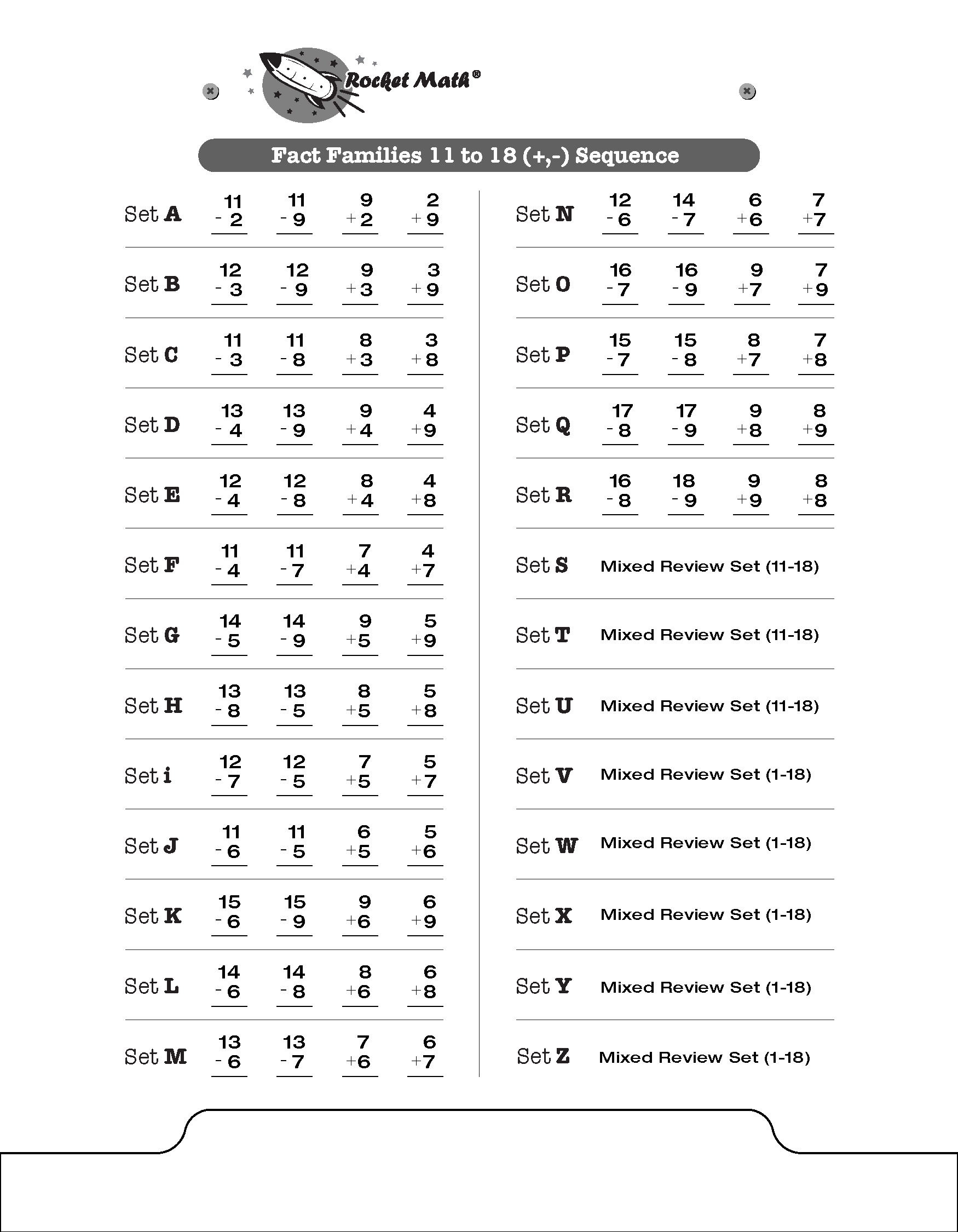
A number of math programs around the country introduce math facts in families.  Now Rocket Math does too!  A fact family includes both addition and subtraction facts. This program is Part 2 of Fact Families, coming after Fact Families 1 to 10. You can see above the 18 examples of fact families taught in this program starting with Set A; 11-2, 11-9, 9+2, & 2+9.  The sheet above shows the sequence of learning facts in the new Rocket Math  program Add-Subtract Fact Families from 11 to 18.  Each set that students learn from A to R adds just one fact family to be learned, so it isn’t too hard to remember.  (That’s the Rocket Math secret ingredient!) 

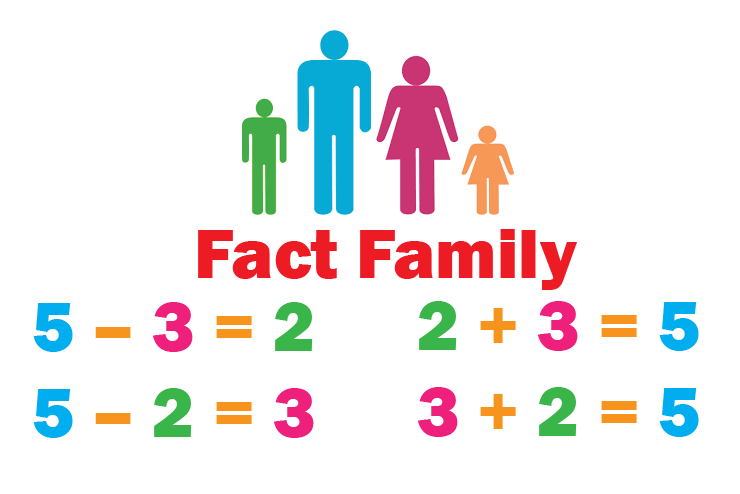
A chart that shows the set of math fact family 5, 3, and 2 in Addition and Subtraction.Learning math facts in families, is gaining in popularity these days.  Logic suggests that this would be an easier way to learn.  However, the research is not definitive that this is easier or a faster way to learn facts than separating the operations and learning all addition facts first and then learning all subtraction facts.  But learning in fact families is a viable option, and I wanted to have it available for Rocket Math customers.

Fact Families from 11 to 18 is part two and fit for second grade.

These facts come after the Add and Subtract Fact Families 10, which should be learned in first grade, so these are best for second grade.  The 25 fact families in 1s through 10s facts are just enough for one Rocket Math program.  It is a good and sufficient accomplishment for first grade.  With the 11 to 18 part for second grade there will be a lot of review.  In fact sets S through Z are all review. I have heard that some first grades prefer to keep the numbers small but to learn both addition and subtraction–so this program accomplishes that.

We  most sincerely want students to be successful and to enjoy (as much as possible) the necessary chore of learning math facts to automaticity. Please give us feedback when you use this program, Add-Subtract Fact Families 11 to 18,  letting us know how it goes for the students.


Add-Subtract Fact Families to 10 Learning Track

List of Learning Tracks Continue to purchase

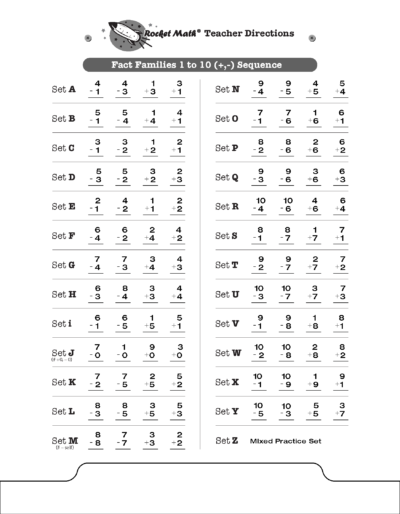
A number of math programs around the country introduce math facts in families.  Now Rocket Math does too!  A fact family includes both addition and subtraction facts. You can see below the 25 examples of fact families taught in this program starting with Set A; 3+1, 1+3, 4-1 & 4-3.  The sheet shows the sequence of learning facts in the new Rocket Math  program Add-Subtract Fact Families to 10.  Each set that students learn from A to Y adds just one fact family to be learned, so it isn’t too hard to remember.  (That’s the Rocket Math secret ingredient!) 

A chart that shows the set of math fact family 5, 3, and 2 in Addition and Subtraction.Learning math facts in families, is gaining in popularity these days.  Logic suggests that this would be an easier way to learn.  However, the research is not definitive that this is easier or a faster way to learn facts than separating the operations and learning all addition facts first and then learning all subtraction facts.  But learning in fact families is a viable option, and we wanted to have it available for Rocket Math customers.

Flash news!! Someone looking for a master’s or doctoral thesis could do a comparative study of students using the fact families vs. the separated facts in Rocket Math. This could easily be a gold standard research study because you could randomly assign students to conditions within classrooms–the routine is the same for both–just the materials in their hands is different!  Just sayin’…

Best fit for first grade.  Dr. Don separated out the facts to 10 from the 11s-18s, because these 25 families are just enough for one Rocket Math program.  It is a good and sufficient accomplishment for first grade.  Some first grades prefer to keep the numbers small but to learn both addition and subtraction–so this program accomplishes that.

Add-Subtract Fact Families to 10 is the first half.  The rest of the addition and subtraction fact families, which students could learn in 2nd grade, are the Add-Subtract Fact Families 11 to 18.  We most sincerely want students to be successful and to enjoy (as much as possible) the necessary chore of learning math facts to automaticity.

Dictating Sentences (Rocket Spelling) Learning Track

List of Learning Tracks Continue to purchase

Developing Fluency with spelling.

Dictating Sentences is spelling with a twist.  Instead of spelling one word at a time, in Dictating Sentences students are asked to write an entire sentence from memory.  They work in pairs and their tutor has the student repeat the sentence until it is learned.  Then the student has to write the whole sentence from memory.  It turns out this is considerably harder than writing words on a spelling test, so it is challenging practice, and does a lot to help students develop automaticity with spelling.

If you have to stop and think of the spelling of a word while you are trying to write, it distracts you from thinking about what you are trying to write.  Students are more successful and better able to show what they know and better able to focus on learning when their tool skills have developed to the level of automaticity.

10 minutes a day practice develops fluency and automaticity.

Developing automaticity with math facts and with spelling requires a lot of practice.  Daily practice is best and a few minutes a day is optimal.  That is why Rocket Math is designed the way it is–to provide that daily practice.  Dictating Sentences gives each member of the pair ten minutes a day of practice writing sentences composed of words they know how to spell and must spell correctly.

Working in pairs.  As you know from Rocket Math practice, students enjoy working in pairs.  And when one partner has an answer key the practice can be checked and corrected.  Sound research shows that immediate correction and editing of misspelled words is the fastest way to learn the correct spelling, so that’s what we have the student tutor do.  After each sentence is written every word is checked and practiced again until it is correct.

Mastery learning. The program is structure so that all the words are learned to the level of automaticity.  Students keep working on a sentence until it can be written without any errors.  They work on the same lesson for as many days as is needed for them to spelling every word perfectly in all three sentences.  Each sentence persists for two or three lessons, so that the student is required to write it from memory and spell every word perfectly for several days in a row.

500 Most common words.  Dictating sentences systematically practices the 500 most common words that students need in their writing.  It includes all of Rebecca Sitton’s 400 Core Words.  It also includes the 340 words that children most need for writing according to writing researchers Harris and Graham.   When students know these words to the level of automaticity, they will be able to write fluently and easily.

Earning points for being correct and going fast.  Students earn two points for every word that is spelling correctly the first time.  Every word on which there is an error is worked on until it too can be spelled correctly, earning one point.  The faster students go during their ten minutes, the more points they can earn.  Students graph the number of points earned and try to beat their own score from previous days.  Teams can be set up and competition for the glory of being on the winning team can enhance the motivation.

Individual Placement.  There is a placement test.  Students begin at the level where they first make a mistake.  Student partners do not need to be at the same level, so every student can be individually placed at the level of success.

Equivalent Fractions Learning Track

List of Learning Tracks Continue to purchase

Why commit to memory equivalent fractions?

We expect students to reduce their answers to the lowest terms, but how can they if they don’t recognize them?  To do this easily, students need to know that six-eighths is equivalent to three-fourths and that four-twelfths is equivalent to one-third.  While they can calculate these, it is very helpful to know the most common equivalent fractions by memory.  Not knowing these by memory accounts for the most common problem students have in fractions: failing to “reduce their answers to simplest form.”

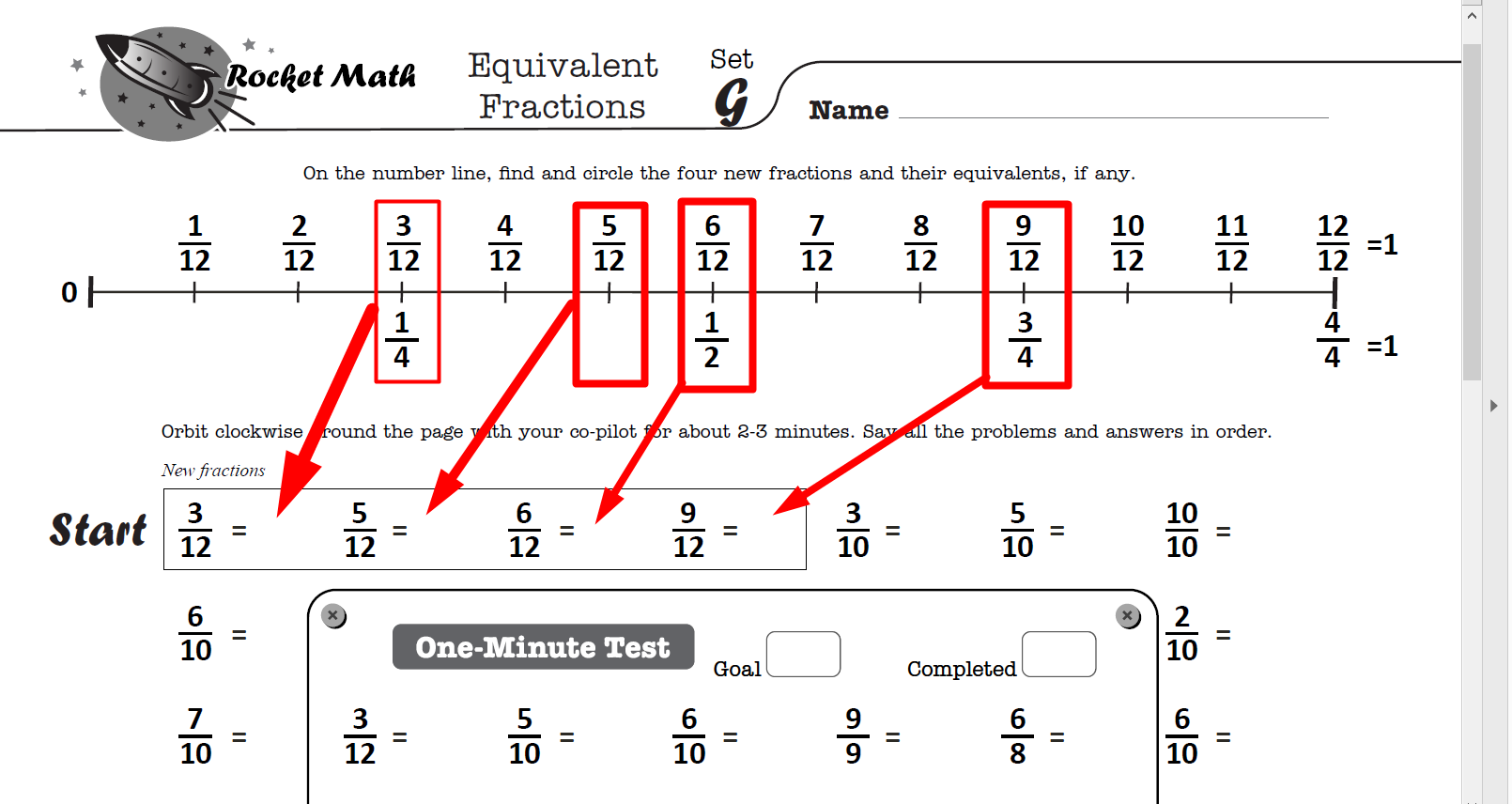
Each set (A through Z) has four fractions which are displayed on a fraction number line.  In addition to pairs of equivalent fractions, students frequently learn fractions equivalent to one, such as ten-tenths.  They also memorize fractions that can’t be reduced, for example three-fourths is only equivalent to three-fourths. Students use a number line and identify equivalent fractions by circling an equivalent pair of fractions.  They understand why they are equivalent as well as memorizing the pair.

Equivalent fractions, Factors, and Integers, are all pre-algebra programs that are recommended for upper elementary and middle school students who already know the basic facts.

5-minute Equivalent Fractions video lesson.

Dr. Don explains How the Equivalent Fractions program works.

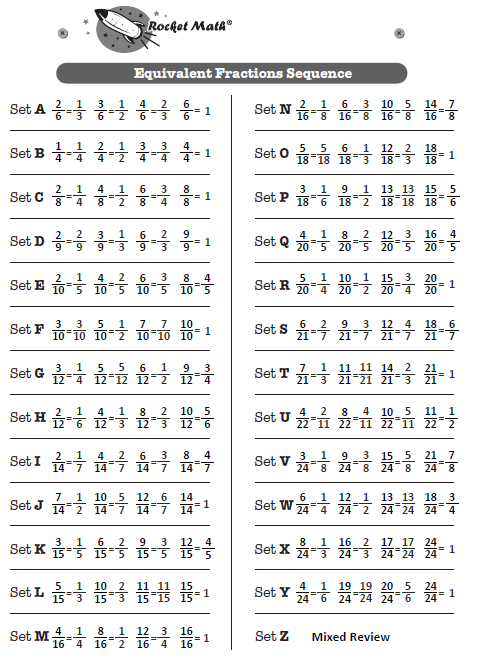
Students will commit to memory 100 common equivalent fractions.

Click here for the full sequence of equivalent fractions that students will learn in this program.


Teaching Math Fact Fluency | 6 Signs Your Class Is Failing

High-stakes state tests do not directly test fluency on math facts, although they should.  Your students can become bogged down in deriving basic facts during state testing.  When that happens they will be unable to demonstrate the higher-level math skills they have been learning.  You may have a math fact fluency problem, depressing your math achievement scores, but not even know it.  Here are six things to look for–to evaluate for yourself.

1) Finger counting during math testing shows a fact fluency problem

Students who are counting on their fingers (see above) during math testing are a definitive sign of a math fact fluency problem.  Finger counting is a bad sign in grades 3 and above, where they should have mastered math facts.  Students who don’t know the facts, need to use crutches to derive the answers to math facts.  Crutches make doing simple calculations take a long time to complete anything.  Your students may perform poorly on state tests just because they won’t complete the test for lack of time.

2) Students who lack math fact fluency need times tables available
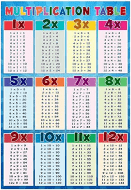
When students in grades 3 or 4 and up have to do multiplication, they either have to know their facts or have a crutch.  If you see times tables on student desks that shows that the students need these crutches, and therefore do not know the basic multiplication facts.  Student folders sometimes come with these on the inside.  Some teachers put up a large poster of the multiplication facts–even though students find it nearly impossible to use from their seats.  Others provide laminated cards to the students which appear suddenly when students are set to do their “math work.”  When you see those times tables being used by more than a couple of students during math, you can tell you have a fluency problem.

3) Students who lack math fact fluency don’t participate in math lessons
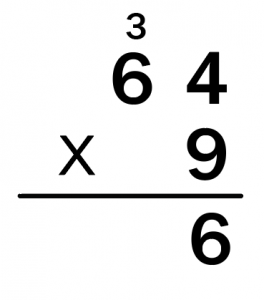
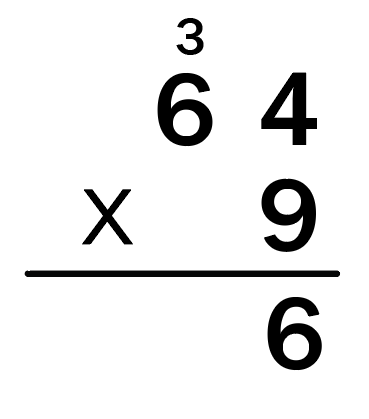
Good teachers work to engage the class.  One good way, while working a problem for the class, is to ask the class for the answers to math facts.  Watching a lesson you may be able to spot a class that lacks fact fluency.  For example, imagine you watch the teacher demonstrating this problem.

Class, we begin this problem by multiplying nine times four.  What’s nine times four, everybody?”  [Only a couple of students answer.]  Yes, 36.  Now we write down the six and carry the 3 tens up to the tens place.  Next, we multiply nine times six.  What’s nine times six, everybody?”  [After a long silence, one student answers.] Yes, 54.  And we add the three to the 54, what do we get?  [Several students call out the answer.] Yes, 57.  That’s what we write down.

That interchange tells you there’s a math facts problem in this class.  When the problem is very easy, like 54+3 you get a good response.  When the fact is a “hard” one, you get silence and then one student answering.  Medium facts get minimal response.  This is a class that does not know their math facts.

4) Over-reliance on calculators signals a lack of math fact fluency
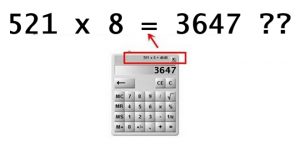
There are two kinds of over-reliance on calculators you may see in classrooms.  In the first kind, you see students who do not know facts using calculators to tell them the answer to single-digit facts they should have memorized.  Using calculators for single-digit facts is terribly slow and inefficient–and not what they are designed to do.  You can see this over-reliance on calculators when observing in a classroom.

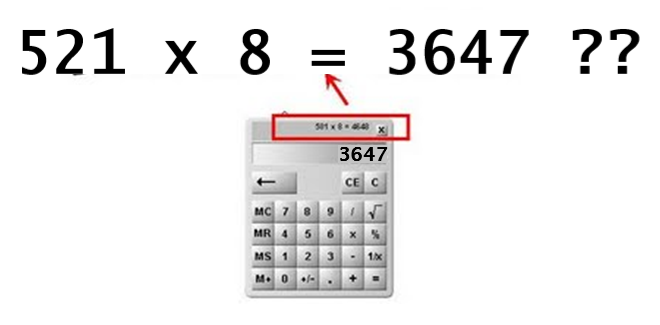
The second kind of problem is harder to spot. Using calculators without knowing math facts instantly can be dangerous.  It is easy to make a data entry error, AKA a typo.  When a user does that, they’re assumed to know math facts well enough to know when the answer is wrong, as in the example pictured here.  A student who doesn’t know that 5 times 8 is 40 and therefore knows that 521 times 8 has to be more than 4,000 will accept the answer displayed on the calculator.  Accepting incorrect answers from the calculator is a sign that students do not have an adequate mastery of facts.

5) Avoidance behaviors in math signal a lack of math fact fluency

Having to count out facts or look each fact up in a table is very slow and onerous.  Students come to hate slogging through math computation that is so hard for them.  Conversely, students who know facts instantly, hop right into assignments to get them done.  Students like going fast doing math problems, just like they run for the joy of it on the playground.  How do you know there is a fluency problem in the classroom?  Students who lack fluency start avoiding getting started on computation work by getting water or sharpening pencils or just taking a break first.

6) Really slow computation during math lessons is due to a lack of math fact fluency

Good math teachers assign, within their lessons, a few math computation problems to do independently and then be checked as a group.  If students know math facts they can do a few problems in a minute or two.  Students who do not know math facts may take ten minutes or more to do the same mini-assignment.  Students who are done and waiting with nothing to do, begin talking and distracting the others.  When there’s that big of a discrepancy between the first and the last student to do a few problems, there is a fact fluency problem in the class.

To be sure–give school-wide 1-minute tests of math fact fluency
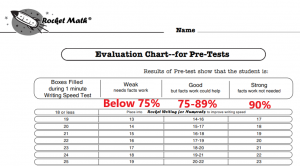
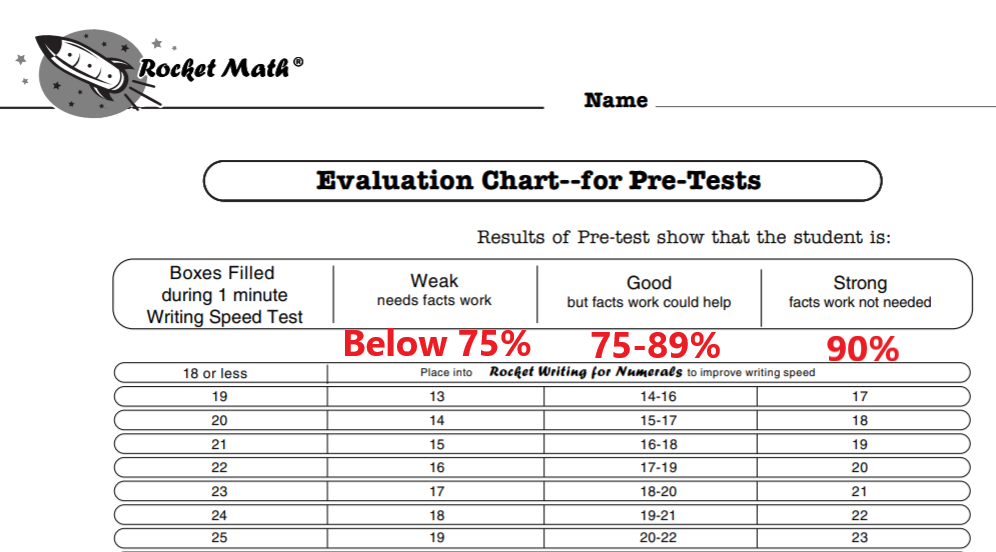
If you see hints that your school may have a math fact fluency problem, it isn’t hard to know for sure.  It only takes a couple of minutes.  You can have everyone in the school take written 1-minute tests of math facts pretty easily.  However, you’ll also need to evaluate how fast students can write.  Students can’t answer math fact problems any faster than they write.  You cannot expect a student who can write only 25 answers in a minute to answer 40 problems in a minute. Conversely, a student who can write 40 answers in a minute is not fluent with math facts if he answers only 30 problems in a minute.

You need a test of writing speed as well as a chart to evaluate their performance and the tests for the four main operations of addition, subtraction, multiplication, and division.  Print these out for free at this link.  But basically, a student who cannot answer math facts at 75% of the rate at which they can write, needs intervention.  

Learn more about teaching math fact fluency

Teaching math fact fluency is necessary, of course, for fluent computation. Math fact fluency is also required for understanding and manipulating fractions. Find out more ways of successfully teaching math fact fluency to your students and why this skill is essential.

If you would like the free use of use the Rocket Math Online Game to assess for fluency, please contact Dr. Don at don@rocketmath.com.



Division–Learning Computation–Learning Track


List of Learning Tracks Continue to purchase

How to do (compute) multi-step division problems

After becoming fluent with division facts, the best way for students to retain the knowledge of those facts is by doing division computation.  If students have not been taught division computation, this program breaks it down into small, easy-to-learn steps that are numbered in a teaching sequence that leaves nothing to chance.

Assessment to find which skill to teach first

There is an assessment available so you can test and see where to begin instruction. Find where the student first starts having troubles and begin teaching there.

Skills in this Learning Track

Note that the number for each skill gives the grade level as well as indicating the teaching sequence.  Skill 3b is a 3rd grade skill and after skill 3c is learned the next in the sequence is skill 4a.  The sequence of skills is drawn from M. Stein, D. Kinder, J. Silbert, and D. W. Carnine, (2006) Designing Effective Mathematics Instruction: A Direct Instruction Approach (4th Edition) Pearson Education: Columbus, OH.

(3b) Dividing 1-digit divisor and quotient with remainder.

(3c) Division equation with ÷ sign; facts with no remainder

(4a) 1-digit divisor; 2- or 3-digit dividend, 2-digit quotient; no remainder.

(4b) 1-digit divisor; 2- or 3-digit dividend, 2-digit quotient; remainder.

(4c) 1-digit divisor; 2- or 3-digit dividend, 2-digit quotient with zero; remainder.

not yet completed levels–to be developed upon demand–ask Dr. Don

(4d) 1-digit divisor; 3- or 4-digit dividend, 3-digit quotient.

(4e) 1-digit divisor; 3- or 4-digit dividend, 3-digit quotient with zero.

(4f) 1-digit divisor; 4- or 5-digit dividend, 4-digit quotient.

(4g) Rounding to the nearest ten.

(4h) 2-digit divisor; 1- or 2-digit quotient, all estimation yields correct quotient.

(4i) 2-digit divisor with incorrect estimated quotients.

How to teach this Learning Track

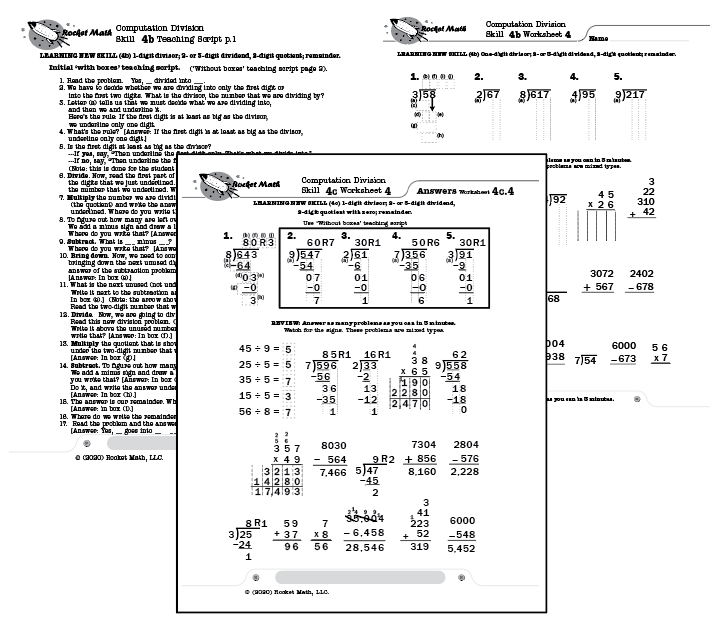
For each skill there is a suggested Teaching Script giving the teacher/tutor/parent consistent (across all the skills we use the same explanation) language of instruction on how to do the skill.  The script helps walk the student through the computation process.  For the teacher, in addition to the script, there are answer keys for the five worksheets provided for each skill.

Each worksheet is composed of two parts.  The top has examples of the skill being learned that can be worked by following the script.  After working through those examples with the teacher the student is then asked to work some review problems that are already known.  The student is asked to do as many as possible in 3 minutes—a kind of sprint.  If all is well the student should be able to do all the problems or nearly all of them, but finishing is not required.  Three minutes of review is sufficient for one day.

There are five worksheets for each skill.  Gradually as the student learns the skill the teacher/tutor/parent can provide progressively less help and the student should be able to do the problems without any guidance by the end of the five worksheets.  There are suggestions for how to give less help in the teaching scripts.