Math Teaching strategies #5: Separate the introduction of similar concepts

Teaching two similar concepts and their vocabulary terms at the same time creates confusion.

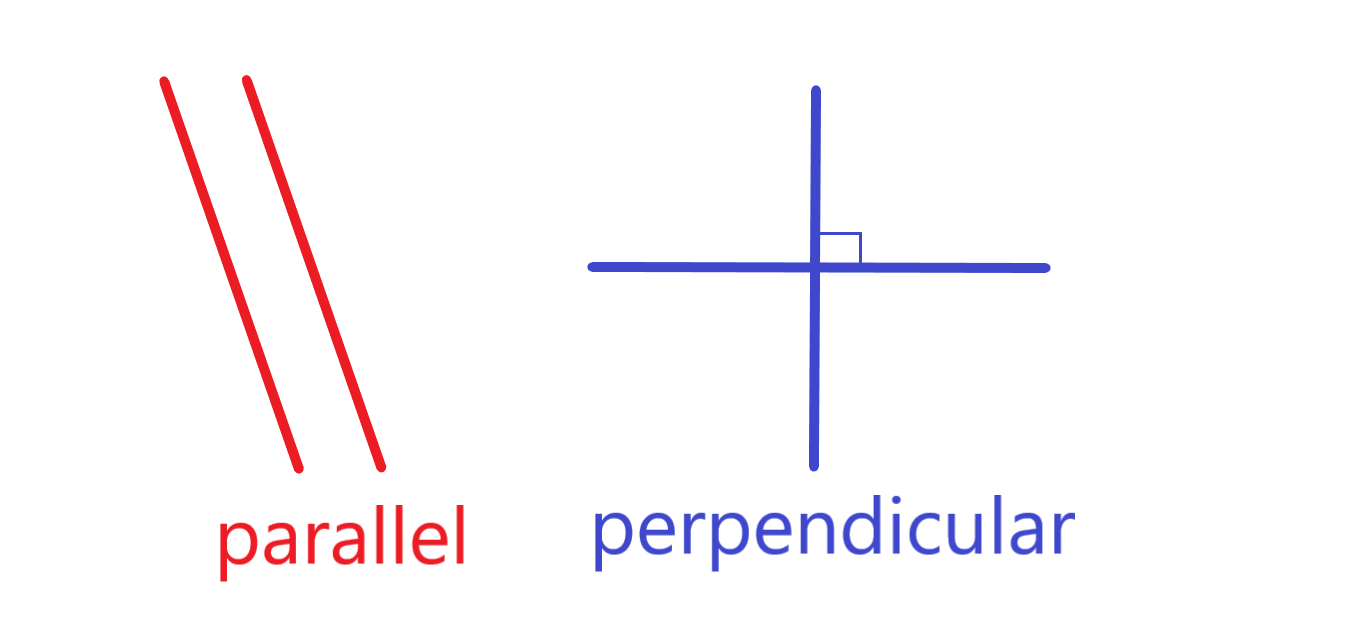
The classic example is teaching parallel and perpendicular on the same day.  The two concepts have to do with orientation of lines and the new vocabulary terms for them are similar.  So teaching them at the same time means some or many students will have the two terms confused for a long time.  That is known as a chronic confusion–possibly permanent.  They will know that orientation of lines is one of those two terms, possibly, but will be confused about which is which.  The predictable conversation with the teacher goes thusly:
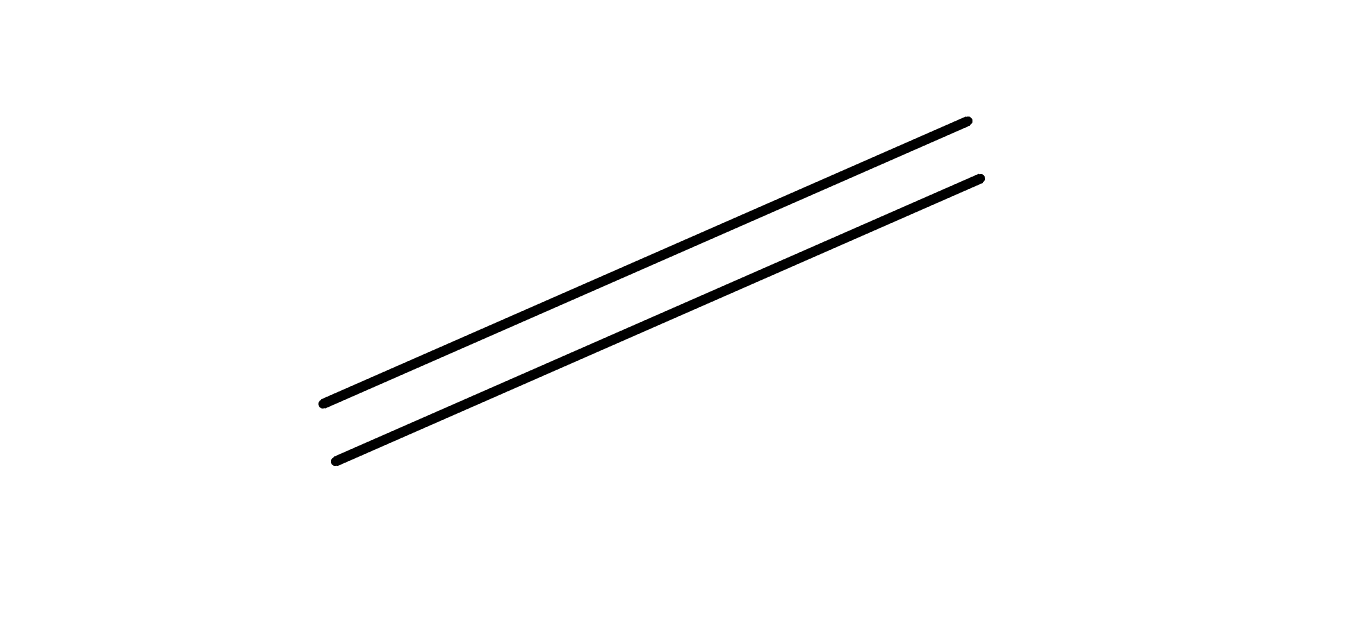
Teacher:  See these two lines lines.  Are they parallel or perpendicular?

Student: I think they’re perpendicular.

Teacher: Well…

Student: No, wait! I know.  They’re parallel.

Teacher: Yes, you’re right.  I’m glad you’ve learned that.

In case you missed it, the above student did NOT know the correct term.  The student just knew it was one of two terms, but unsure as to which one.  So the student picked one and as soon as there wasn’t confirmation by the teacher, switched to the other term.  When you’re busy teaching it is easy to get fooled by that kind of response into assuming the students really did learn it.

Other examples abound in math.  Teaching numerator and denominator in the same lesson is common.  Teaching the terms proper fractions and improper fractions on the same day is another example.  Acute and obtuse angles are yet another pair of chronically confused concepts that are introduced simultaneously.

Math teaching strategies: Separate the introduction of similar concepts in time.
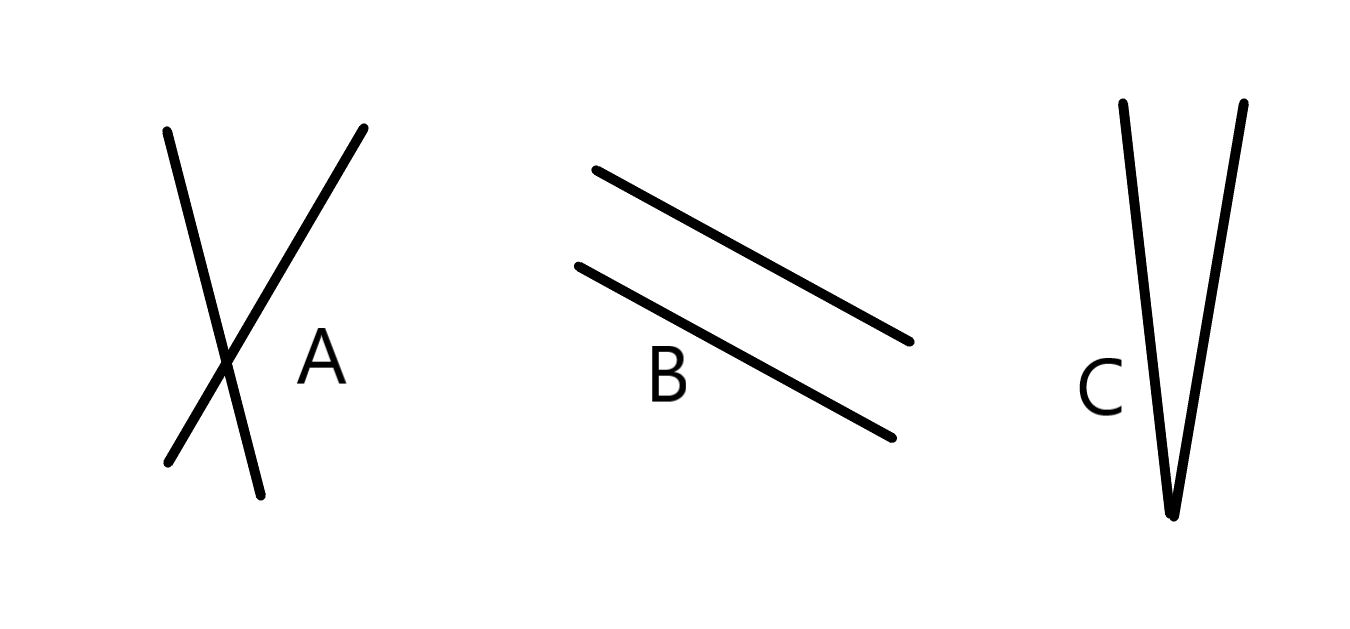
If you teach one concept and only one of the pair, there’s no cause for confusion.  It will still take a lot of repetition and practice for it to be cemented into memory, but students will be clear.  If they use the term, for example parallel a lot of times in conjunction with examples they will soon (in a couple of weeks) be able to recall.  However, you should pair the concept with non-examples of the concept.  Not the opposite necessarily but just not an example of the concept.

For example: For the picture to the right you would ask the students.

A “Are the two lines in item A parallel or not parallel?”   Ans: Not parallel.

B “Are the two lines in item B parallel or not parallel?”   Ans: Parallel.

C “Are the two lines in item C parallel or not parallel?”   Ans: Not parallel.

Then after a couple of weeks you could introduce perpendicular.  Again teach it on its own and then contrasted with non-examples until the vocabulary was clear. Probably for a couple of weeks.   Only then can you combine both terms in the same lesson.

Another advantage of this approach is that you have avoided the other common mistake.  Students sometimes come to the conclusion that all pairs of lines are either parallel or perpendicular.  This method of introducing the concepts helps them realize that there are non-examples of each concept, parallel lines and ones that aren’t as well as perpendicular lines and ones that aren’t as well.

 

Math teaching strategies #6: Teaching a new concept using a common sense name


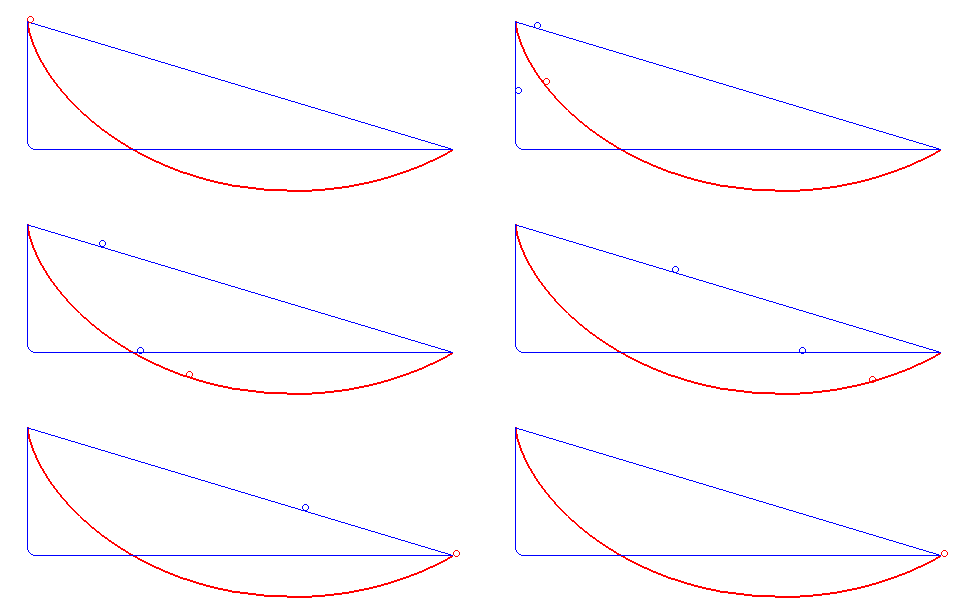
Here’s an example of the problem.   A brachistochrone (pictured above) is a curve between two points along which a body can move under gravity in a shorter time than for any other curve. It is the same curve as a cycloid, but just hanging downward.   A cycloid is the path traced by a point on a wheel as the wheel rolls, without slipping, along a flat surface. The standard parametrization is x = a(t – sin t),y = a(1 – cos t), where a is the radius of the wheel.

Introducing this concept and the term brachistochrone at the same time would be designed so the teacher can use brachistochrone and its concept in instruction.  However, because the term is new and the concept is also new, when the teacher uses the new term during later instruction, the students will have difficulty bringing the concept into their minds. “So a brachistochrone has some other cool properties. What’s the primary thing we know about the brachistochrone?”

Instruction not working.  If you watch instruction where the term and the concept have been taught simultaneously, confusion ensues when the teacher uses the term.  You’ll see students looking away as they try to bring up the explanation of that weird new term in their memory (see the pictured example?).  Sometimes the teacher will notice this and give a thumbnail definition or example of the term, and the students will then remember.  However, the teacher should then realize that the concept was not connected to the new vocabulary term.

Math teaching strategies: Teach new concepts using a common sense term at first.  

When a new vocabulary term is used to introduce a new concept, students will need a lot of practice with recalling the term and the definition before it can be used in instruction.  On the other hand, students can quickly understand and use new concepts and ideas in math if they don’t have to learn a new word for it.  Using a common sense term, the idea or concept can be worked with, the implications studied and it can be applied to real world problems almost immediately.  Students can later quite easily learn proper vocabulary terms for concepts they understand and recognize.  Here’s an example. 

The “shortest time curve.”  It is more efficient and effective to teach the concept first and use a common sense term for it.  I would call a brachistochrone the “shortest time curve.”**  Instruction would proceed with the, “Do you remember that ‘shortest time curve’ we talked about last week?”  Students would easily be able to remember it.  Instruction would go like this: “So ‘the shortest time curve’ has some other cool properties. What’s the primary thing we know about the ‘shortest time curve’?”  Students would easily be able to answer this question.

Then after students have worked with the concept of “the shortest time curve” for a couple of weeks, you can add the vocabulary term to it. “By the way, the proper mathematical name for “the shortest time curve” is called a brachistochrone. Isn’t that cool?”  Students will want to learn its proper name as a point of pride about knowing this fancy term for a concept they already “own,” rather than a point of confusion.

**Actually that’s what brachistochrone means in Greek: brakhistos, meaning shortest and khronos meaning time.


Rocket Math: Can students really learn this way? (It seems too easy.)

At first, it may seem like the way Rocket Math presents the same simple facts over and over, is so easy it must be a waste of time.

       But like anything you learn, you have to start where it seems easy and then build up to where it is hard.  Rocket Math has been effective helping students learn their math facts for over 20 years.  It is designed according to scientifically designed learning principles, which is why it works, if students will work it.  Rocket Math carefully and slowly introduces facts to learn in such a way that students can achieve fluency with each set of facts as they progress through the alphabet A through Z.  Let me explain.
         Set A begins with two facts and their reverses, e.g., 2+1, 1+2, 3+1 and 1+3.  Dead simple, huh?  But in answering those the student learns what it is like to instantly “know” an answer rather than having to figure it out.  The student says to himself or herself, “Well, I know that one.”  The student learns he or she can answer a fact instantly with no hesitation every time based on recall and not figuring it out.  The game requires the student to answer the problems at a fast rate, proving that he or she knows those facts.  Once that level is passed the game adds two more facts and their reverses,.  The same process of answering them (and still remembering Set A) instantly with no hesitation every time.  When that is achieved, the game moves the student on to Set C, two more facts and their reverses.  Eventually, every student gets to a fact on which they hesitate (maybe one they have to count on their fingers), meaning they can’t answer within the 3 seconds allowed.  Mission Control then says the problem and the correct answer, has the student answer that problem, then gives two different facts to answer and goes back to check on the fact the student hesitated on again.  If the student answers within 3 seconds then the game moves on.
 
     In the Take-Off phase the student is introduced to the two new facts and their reverses.  That’s all the student has to answer.  But the student has to answer each one instantly.  If the student is hesitant on any of those facts (or makes an error) then they have to Start Over and do the Take-Off phase over again.  They have to do 12 in a row without an error or a hesitation.  Once the Take-Off phase is passed the student goes into the Orbit phase, where there is a mix of recently introduced facts along with the new facts.  The student has to answer up to 30 facts, and is allowed only two errors or hesitations. After the third error or hesitation the student has to Start Over on the Orbit Phase.  Once the Orbit phase is passed, the student goes on to the Universe phase, which mixes up all the facts learned so far and presents them randomly.  Again the student has to do up to 30 problems and can only hesitate on 2 or them or he or she has to start over.  But once the student proves that all of those facts can be answered without hesitation, the game moves on to the next level, introducing two more facts and their reverses.
      In the Worksheet Program, students practice with a partner.  In the Online Game the student practices with the computer.  In both versions of Rocket Math the students follow the same careful sequence and slowly, but successfully build mastery of all of the facts in an operation.  It’s hard work and takes a while, but we try to make it fun along the way.  It will work for everybody, but not everybody is willing to do the work.  At least, now you understand how Rocket Math is designed so it can teach mastery of math facts.

Dictating Sentences, do students need automaticity in spelling too?

Few teachers realize how similar spelling and math facts are.

Both spelling and math facts are tool skills. Tool skills are things which one needs to do academic work, tools you use to do other things.  The tool skills of spelling and math facts (like decoding) need to become so automatic that students don’t have to think about them.

If students have to think up the answer to math facts, it makes doing computation harder.  The process of figuring out a math fact distracts from the mathematics being done.  Similarly, if you have to stop and think of the spelling of a word (like the boy pictured above) while you are trying to write, it distracts you from thinking about what you are trying to write.  Students are more successful and better able to show what they know and better able to focus on learning when their tool skills have developed to the level of automaticity.

Daily practice develops automaticity.  Developing automaticity with math facts and with spelling requires a lot of practice.  Daily practice is best and a few minutes a day is optimal.  That is why Rocket Math is designed the way it is–to provide that daily practice.  So Dictating Sentences gives each member of the pair ten minutes a day of practice writing sentences composed of words they know how to spell.

Dictating Sentences is spelling with a twist.  Instead of spelling one word at a time, in Dictating Sentences (now part of the Universal Level Rocket Math Worksheet Program) students are asked to write an entire sentence from memory.  They work in pairs and their tutor has the student repeat the sentence until it is learned.  Then the student has to write the whole sentence from memory.  It turns out this is considerably harder than writing words on a spelling test, so it is challenging practice, and does a lot to help students develop automaticity with spelling.

Working in pairs.  As you know from Rocket Math practice, students enjoy working in pairs.  And when one partner has an answer key the practice can be checked and corrected.  Sound research shows that immediate correction and editing of misspelled words is the fastest way to learn the correct spelling, so that’s what we have the student tutor do.  After each sentence is written every word is checked and practiced again until it is correct.

Mastery learning. The program is structure so that all the words are learned to the level of automaticy.  Students keep working on a sentence until it can be written without any errors.  They work on the same lesson for as many days as is needed for them to spelling every word perfectly in all three sentences.  Each sentence persists for two or three lessons, so that the student is required to write it from memory and spell every word perfectly for several days in a row.

Earning points by being correct and going fast.  Students earn two points for every word that is spelling correctly the first time.  Every word on which there is an error is worked on until it too can be spelled correctly, earning one point.  The faster students go during their ten minutes, the more points they can earn.  Students graph the amount of points earned and try to beat their own score from previous days.  Teams can be set up and competition for the glory of being on the winning team can enhance the motivation.

Individual Placement.  There is a placement test.  Students begin at the level where they first make a mistake.  Student partners do not need to be at the same level, so every student can be individually placed at the level of success.

Fact Families (+ & -) for 1st and 2nd grade

Learn Fact Families to fluency with Rocket Math!

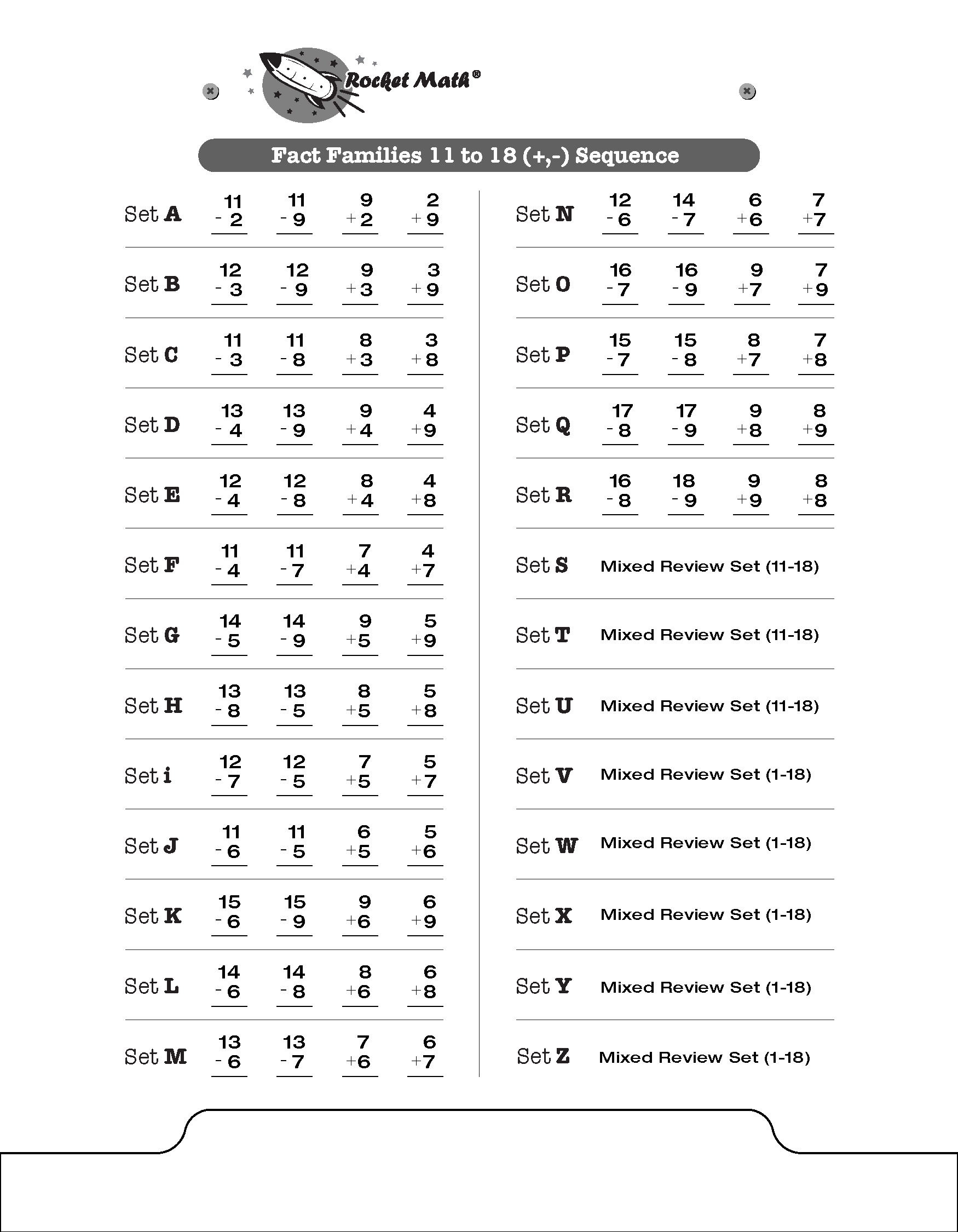
Fact Families Part Two  11 to 18 (add & subtract).  A fact family includes both addition and subtraction facts. This program is Part 2 of Fact Families, coming after Fact Families 1 to 10. You can see to the left the 18 examples of fact families taught in this program starting with Set A; 11-2, 11-9, 9+2, & 2+9.  The sheet shows the sequence of learning facts in the new Rocket Math  program Fact Families Part Two 11 to 18 (+, -).  Each set that students learn from A to R adds just one fact family to be learned, so it isn’t too hard to remember.  (That’s the Rocket Math secret ingredient!) 

Learning math facts in families, is gaining in popularity these days.  Logic suggests that this would be an easier way to learn.  However, the research is not definitive that this is easier or a faster way to learn facts than separating the operations and learning all addition facts first and then learning all subtraction facts.  But learning in fact families is a viable option, and I wanted to have it available for Rocket Math customers.

Part Two is a Best fit for second grade.  These facts come after the facts in 1 to 10, typically learned in first grade, so these are best for second grade.  The 25 fact families in 1s through 10s facts are just enough for one Rocket Math program.  It is a good and sufficient accomplishment for first grade.  With the 11 to 18 in Par Two for second grade there will be a lot of review.  In fact sets S through Z are all review. I have heard that some first grades prefer to keep the numbers small but to learn both addition and subtraction–so this program accomplishes that.

I added Fact Families Part Two 11 to 18 (+, -) to the Universal subscription in August of 2018 bringing the total number of programs in the Universal subscription to 19 (the basic four operations and 15 more!).  As always, new programs are added to the Universal subscription without additional cost as soon as they are available.

I most sincerely want students to be successful and to enjoy (as much as possible) the necessary chore of learning math facts to automaticity. Please give me feedback when you use this new program, Fact Families 11 to 18 (+, -),  as to how it goes for the students.

What if teachers won’t do Rocket Math?

Don’t argue, just prove it works! 

Joyce asks: 

How can we encourage the teacher who refuses rocket math and administration does not reinforce (or enforce) the program’s use?

Dr. Don’s response:

  Joyce,

     This is a great question.  Frankly, one of the most annoying things I found during my time as a teacher were the constant “new” fads.  I got sick and tired of being told to do things I knew would not work.  I don’t blame people for being skeptical or an administration that won’t go to bat for a new curriculum.  I think it is the responsible thing to do. Which is why schools should test everything for themselves, which isn’t that hard to do.  Prove to yourself it works with your students in your school with your staff.  Then you know it is worth doing.  Only then do you have a responsibility to reinforce the program’s use, only after it is proven.
In one of the first schools to use Rocket Math we had a veteran teacher who said she did not think Rocket Math would be any better than the things she had been doing to help her students learn math facts for years.  The principal wisely allowed as how that might be possible, but asked if she would be willing to test her assertion.  Rocket Math has 2-minute timings of all the facts which the students take every couple of weeks.  The principal asked if she would give that test to her students at the beginning and the end of the year and compare her results with that of other classes.  She agreed.  At the end of year the Rocket Math students were far higher in their fluency than her students, even though at the beginning of the year her students had been more fluent than the other students.  At that point she said, “Well this proves it to me.  I’ll be using Rocket Math next year.”
   Just use those 2-minute timings as pre and post tests and see if there is anything that will beat Rocket Math.  Any teacher worth their salt should want to use a curriculum that is effective and helps students learn.
I have the following standing offer on my website.  If any school will conduct research comparing Rocket Math to some other method of practicing math facts and share your results–I will refund half of the purchase price of the curriculum.  If a school finds some other method is more effective, I will refund 100% of your purchase price.

Why give the Two-Minute timings in Rocket Math?

To prove whether students are making progress in learning math facts.

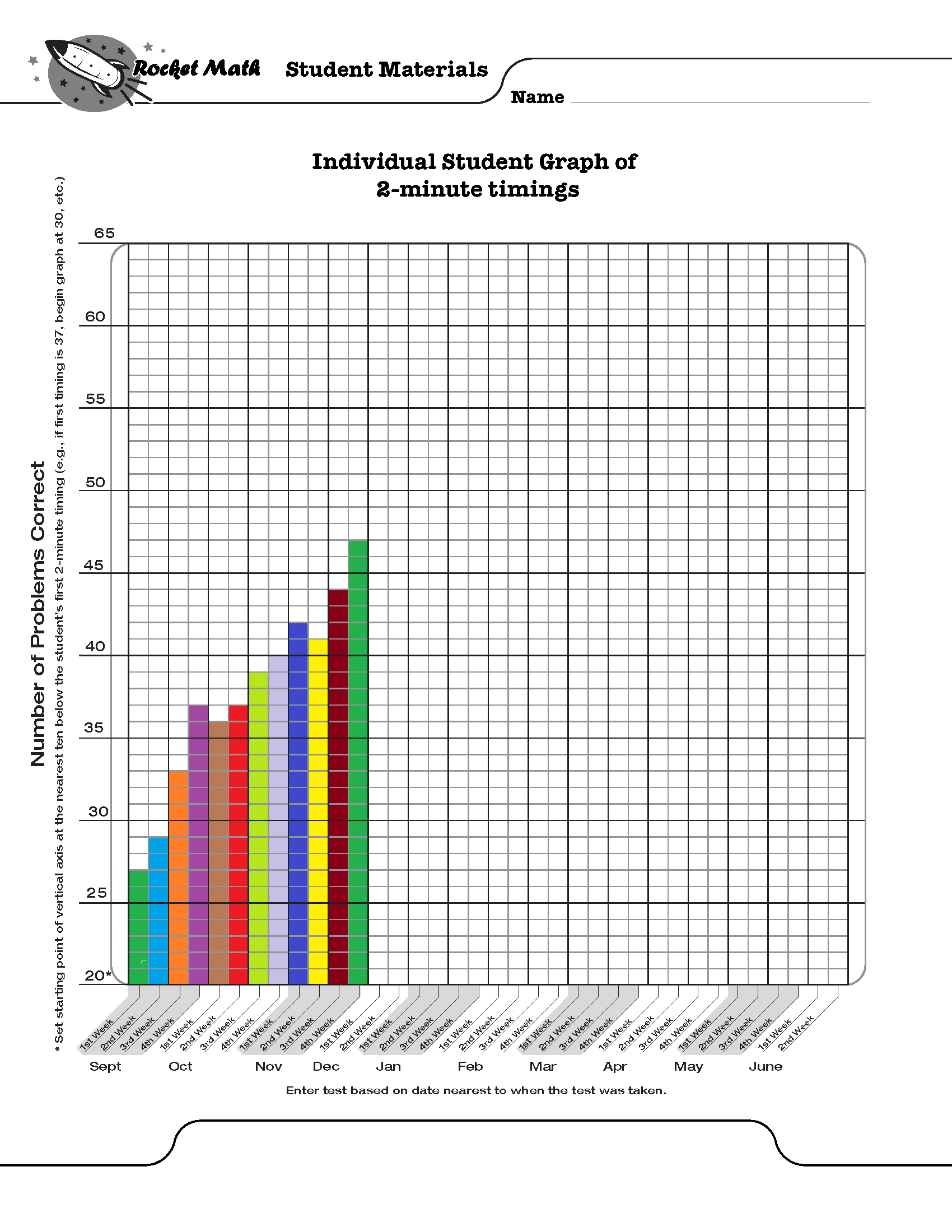
First of all, understand that the two-minute timings are NOT a teaching tool.  They are an assessment tool only.  Giving a two-minute timing of all the facts in an operation every week or two allows you to graph student performance.  You graph student performance to see if it is improving.  If the graph is going up, as in the picture above, then the student is learning.   If the graph is flat, then the student is not really learning.

The individual graphs should be colored in by students allowing them to savor the evidence of their learning.  The graphs should be shared with parents at conference time to prove that students are learning.  

Progress monitoring with two-minute tests are a curriculum-free method of evaluating a curriculum.  If you use the same tests you can compare two methods of learning facts to see which one causes faster growth.  This makes for a valid research study.

This kind of progress monitoring over time is also used in IEPs.  You can draw an aimline from the starting performance on the two-minute timing to the level you expect the student to achieve by the end of the year.  (Note the writing speed test gave you goals for the two-minute timing which you could use for your end-of-year goal.) The aimline on the graph, when it crosses the ending date of each quarter, will provide quarterly objectives that will enable quarterly evaluation of progress–required for an IEP.

These two minute timings are a scientifically valid method of proving whether students are learning math facts, in the same way that tests of oral reading fluency prove whether students are learning to read.  They can be used to prove to a principal or a curriculum director, for example, that Rocket Math is working and is worth the time, paper and money it requires.


“Knowing” means never having to figure it out

Most people, for example, know their name, by memory.

In a previous blog I discussed  What does CCSS mean by “know from memory?”    

A reader asked the following question:

This topic of “know from memory” is something I have been digging into as a special educator. I wonder what your thoughts are about whether certain accommodations from these “know from memory” standards would actually be modifying the curriculum?

For example, if we used “extra time to respond” and the student had to use their fingers or some other method to count, would they then not be doing the standard?

This relates to where I’m at in middle school math, but I think that it’s reflected in the continuum of the common core maths.

Thanks.

Dr. Don’s response: 

Actually, your example is very clear that it is not “knowing from memory.” You are describing “deriving from a strategy” or what I call, “figuring it out.” When you know it from memory, when you recall the answer, then you stop having to “figure it out.”

Knowing from memory and figuring something out are two very different things. I used to ask workshop participants to imagine sitting next to me in a bar and asking me for my name. What if, instead of saying, “Hi, my name is Don,” something different happened?  What if, like the man pictured above, I was puzzled and said, “Wait a second, I have it here on my driver’s license.” Most people would likely turn their attention elsewhere while wondering what kind of traumatic brain injury I had sustained! They would very likely say to themselves, “OMG, that man doesn’t know his own name.”

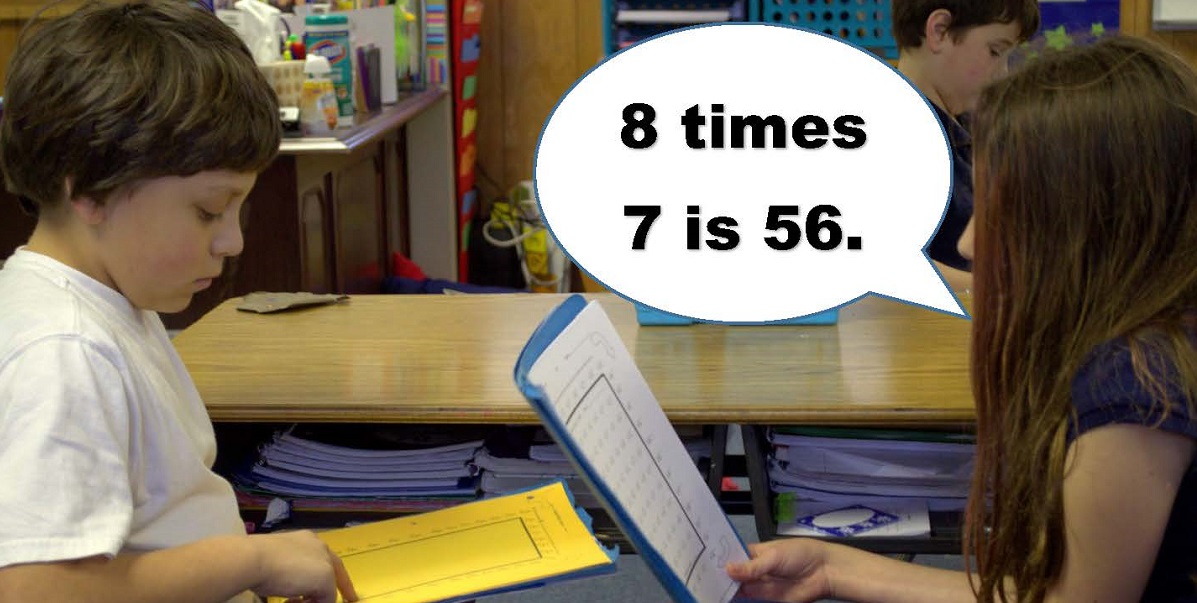
The purpose of the verbal rehearsal that is a daily part of Rocket Math is to cement these basic facts in memory. Then when a student says to themselves, “8 times 7 is,” the answer pops into their mind with no effort. It takes quite a bit of practice to achieve that. However, the ability to instantly recall the answers to basic math facts makes doing mathematical computation a relative breeze. It make seeing relationships among numbers very obvious. It makes reducing fractions and finding common denominators easy. That’s why the Common Core thinks “knowing from memory” is so worthwhile. It’s why I began promoting Rocket Math in the first place.

Do you know the active ingredient in Rocket Math?

Timed tests are not the important part of Rocket Math.

The “active ingredient” in the Rocket Math prescription, the thing that makes it work, is not timed tests.  Timed tests don’t actually teach and often don’t really help students develop fluency.  The usual timed tests of a random selection of all the facts can assess fluency in math–but they don’t work to develop it!

The “active ingredient,” the thing that makes Rocket Math effective, is verbal rehearsal.  When students practice with their partner the students read the facts and RECALL the answers from memory and say them aloud.  That verbal rehearsal is what cements them into memory.  Reading the fact and recalling the answer from memory strengthens the neural connection.

Why do we give the daily tests in Rocket Math?  Not to teach, but only to assess whether the facts introduced thus far have been learned well enough for the student to have new facts added to what they are learning.  Individual students learn at different rates.  Some students need only a couple of days of practice to memorize two new facts while others may need several days.  The purpose of the daily tests is just to see if the student needs more practice time, or is ready to “swallow” some more facts.

As I note in my basic training presentation, “It’s like feeding mush to a baby.  You have to make sure they have swallowed the last mouthful before you give them more.”   See an explanation in this You Tube video in our Rocket Math channel: https://youtu.be/J8cWSDG0Di8