Best Math Facts App Comparison: Rocket Math vs. XtraMath

A math facts app is a great tool to use for your students. There are plenty of math facts apps out there that let students practice math facts they have already learned. Few apps actually teach math facts. But apps from Rocket Math and XtraMath are exceptions. While both apps teach students math facts, one is more effective and fun.

The two best apps for actually teaching math facts

Math facts apps from Rocket Math and XtraMath effectively teach math facts because they have four essential characteristics:

  1. Both math facts apps require students to demonstrate fluency with facts. Fluency means a student can quickly answer math fact questions from recall. This is the opposite of letting a student “figure it out” slowly. Neither app considers a fact mastered until a student can answer a fact consistently within 3 seconds.
  2. Both math facts apps zero in on teaching (and bringing to mastery) a small number of facts at a time. This is the only way to teach math fact fluency. It’s impossible for students to learn and memorize a large number of facts all at once.
  3. Both math facts apps are responsive. Apps simply do not teach if they randomly present facts or do not respond differently when students take a long time to answer a fact.
  4. Both math facts apps only allow students to work for a few minutes (15 minutes or less) before taking a break. Teachers and parents may want to keep students busy practicing math facts for an hour, but students will come to hate the app if they have long sessions. A few minutes of practice in each session is the best way to learn and to avoid student burnout.
  5. Both math facts apps re-teach the fact if a student makes an error. While both Rocket Math and XtraMath re-teach facts, they re-teach them differently.

While both apps contain these important features and teach math facts, there are a few vital elements that make an effective app like Rocket Math stand out.

An effective math facts app gives a student a sense of accomplishment
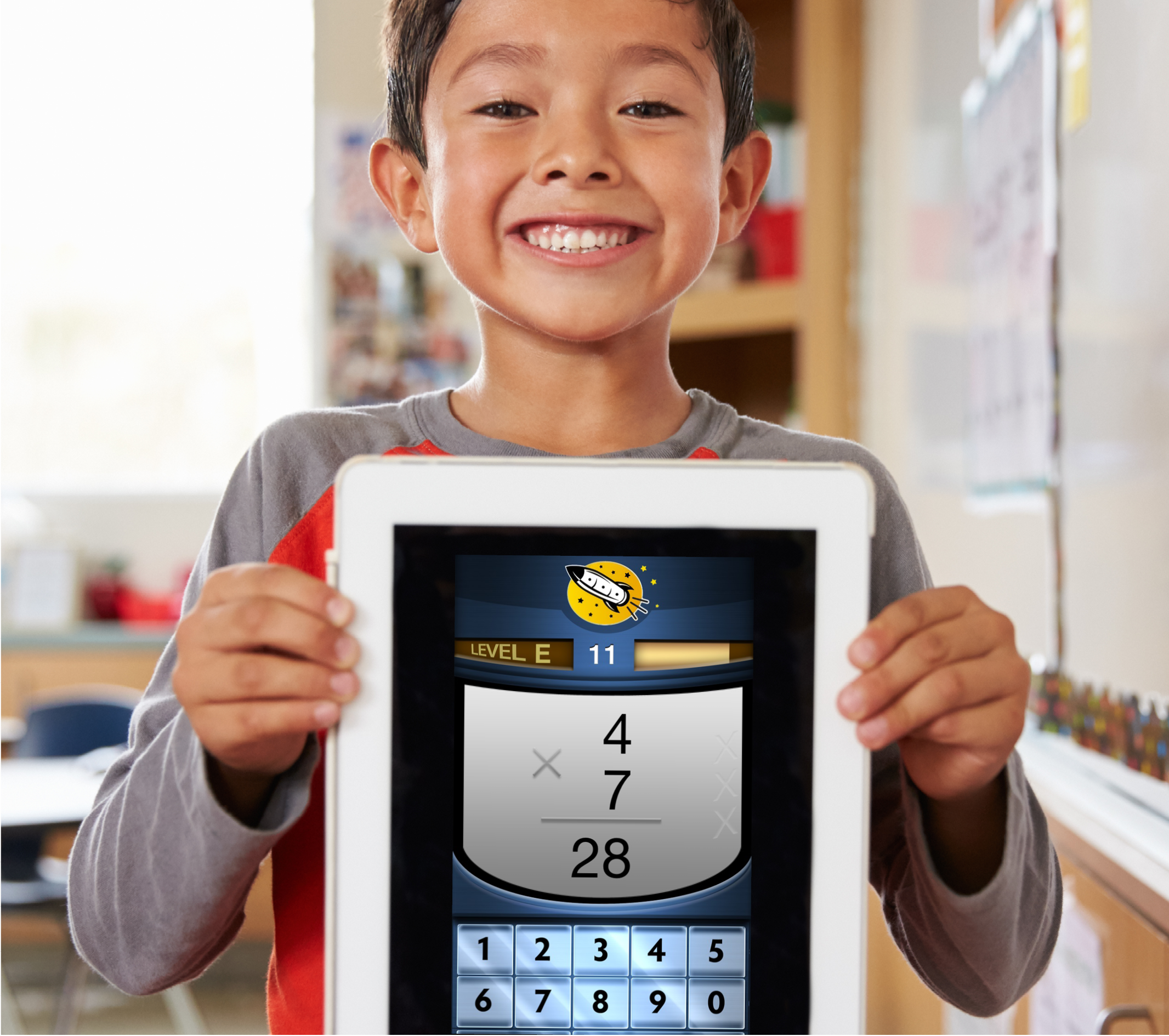
The difficult thing about learning math facts is persevering. There are so many to learn! It takes a while, and students have to persevere through boring memorization tasks. The best way to help students learn their math facts is to give them a clear sense of accomplishment as they move through each task.

How XtraMath monitors progress

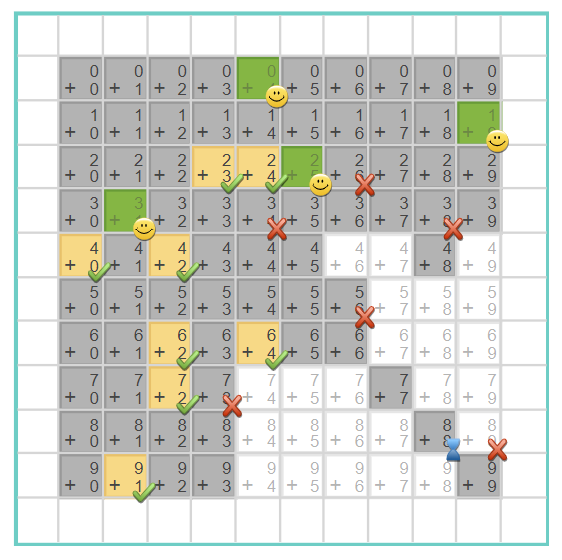
To develop a sense of accomplishment among its app users, XtraMath displays math facts on a grid. XtraMath tests the student and marks the ones that are answered quickly (within 3 seconds) with smiley faces. It takes a couple of sessions to determine what has been mastered and what hasn’t, so there isn’t a sense of accomplishment at first. This grid is displayed and explained, but it’s not easy to monitor progress. Over time, there are fewer squares with facts to learn, but there isn’t clear feedback on what’s being accomplished as students work.

How Rocket Math monitors progress

Conversely, Rocket Math begins recognizing student progress immediately and continues to celebrate progress at every step. The Rocket Math app begins with Set A and progresses up to Set Z. Each lettered set has three phases: Take-Off, Orbit, and the Universe. That means there are 78 milestones celebrated in the process of moving from Set A to Set Z.


The Take-Off phase has only 4 problems to learn. They are repeated until the student gets 12 correct in a row. When the student does that, the doors close (with appropriate sound effects) to show “Mission Accomplished.” They also are congratulated by one of a cast of voices. Something along the lines of, “Mission Control here. You did it! Mission Accomplished! You took off with Set A! Go for Orbit if you dare!” With this type of consistent (and fun!) recognition, students clearly understand that they are progressing, and they get the chance to keep learning “if they dare!”
Congratulation screen shot from Rocket Math's math facts app

In addition to the three phases, students progress through the sets from A to Z. Each time a student masters a set, by going through all three phases, the student gets congratulated and taken to their rocket picture, as shown above. When a level is completed, the tile for that level explodes (with appropriate sound effects) and drops off the picture, gradually revealing more of the picture as tiles are demolished.

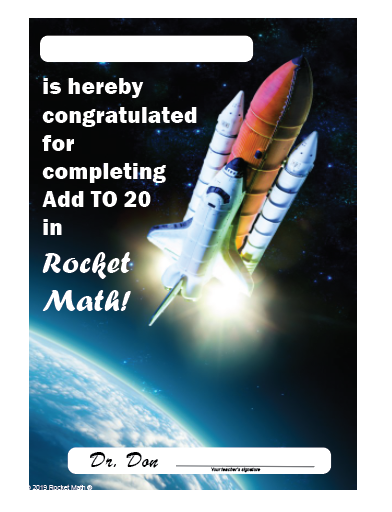
In the picture above, the tile for “I” has just exploded. After the explosion, a student is congratulated for passing Level I and encouraged to go for Level J if they dare. When you talk to students about Rocket Math, they always tell you what level they have achieved. “I’m on Level J!” a student will announce with pride. That sense of accomplishment is important for them to keep chugging along. Rocket Math also has available Learning Track certificates from Dr. Don and the teacher for completing through Level Z.

An effective math facts app corrects errors—effectively.
Neither of these math fact apps allows errors to go uncorrected. Students will never learn math facts from an app that does not correct errors. That puts these two apps head and shoulders above the competition. However, these two apps correct errors very differently.

How XtraMath corrects errors

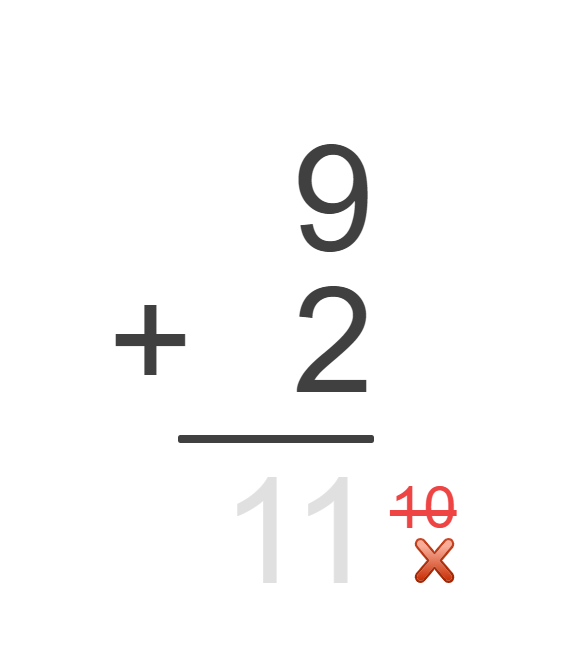
On the left, you can see the XtraMath correction is visual. If a student enters the wrong answer, the app crosses the incorrect answer out in red and displays the correct answer in gray. A student then has to enter the correct answer that they see. This is a major mistake. In this case, students don’t have to remember the answer. They just have to enter the numbers in gray.

How Rocket Math corrects errors
comparison of two screen shots from Rocket Math’s math facts app

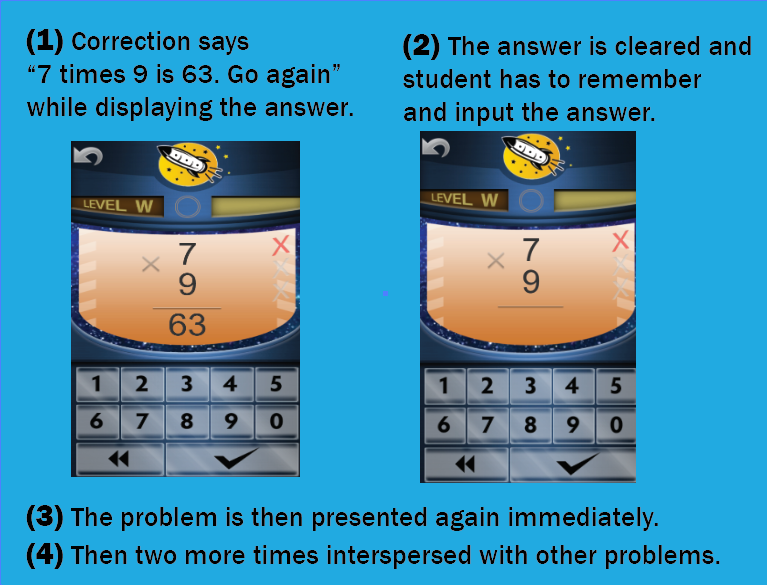
Rocket Math, however, requires the student to remember the answer. When a student answers incorrectly, the screen turns orange, and Mission Control displays and recites the correct problem and answer. In the pictured situation, Mission Control says, “Seven times nine is sixty-three. Go again.” Then the answer clears, and the game waits for the student to enter the correct answer. Under these conditions, the student has to listen to the correction and remember the answer, so they can enter it correctly.

Once the student correctly answers that target problem, the app presents the problem again. Then it presents it twice more interspersed with other problems.

If the student answers the previously missed problem correctly within the three seconds, the game notes the error, and the student continues through the phase. If the student fails to answer the problem correctly again, the correction process repeats until the student answers correctly. Having to listen to and remember the answer, rather than just copy the answer, helps students learn better.

An effective math facts app gives meaningful feedback

Without feedback, students can’t learn efficiently and get frustrated. But the feedback cannot be generic. It has to dynamically respond to different student behavior.

How XtraMath’s app gives feedback

XtraMath’s charming “Mr. C” narrates all of the transitions between parts of each day’s lesson. He welcomes students, says he is happy to see them, and updates students on their progress. He gives gentle, generic feedback about how you’re getting better and to remember to try to recall the facts instead of figuring them out. However, his feedback remains the same no matter how you do. In short, it is non-contingent feedback, which may not be very meaningful to students.

How Rocket Math’s app gives feedback
Time's up screenshot of the Rocket Math math facts app

Differing from XtraMath, Rocket Math offers students a lot of feedback that is contingent. Contingent feedback means that students will receive different types of feedback depending on their responses.

The Rocket Math app gives positive feedback for all the 78 accomplishments noted above. It also doles out corrective feedback when the student isn’t doing well.

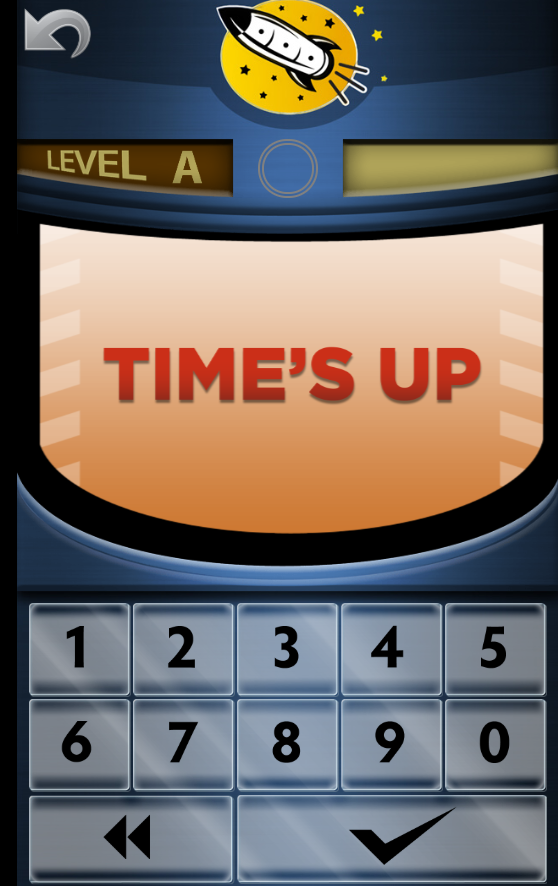
As noted above, students receive corrective feedback on all errors. They get feedback when they take longer than three seconds to answer too. The “Time’s Up” screen on the right pops up, and Mission Control says, “Oh, let’s practice to make this easier. Listen and remember the answer.”  After being told the problem and the correct answer, students get a chance to answer that fact again and redeem themselves–proving they can answer it in 3 seconds.
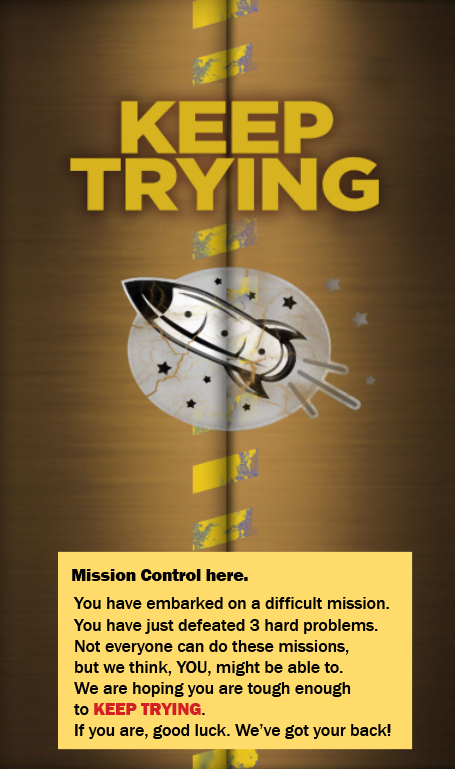
Keep Trying screen shot of Rocket Math math facts app

The app tracks errors, and three errors mean the student needs more practice on this part. The doors close (with appropriate sound effects). The student is given encouragement that they have defeated three hard problems and a challenge to “Keep Trying” if they are tough enough. At that point, the “go” screen appears, and the student has to hit “go” to open the doors (with appropriate sound effects) and try it again.

When it comes to recognizing a student’s success, the Rocket Math app holds nothing back. After a student completes a phase, one of the cast of voices gives enthusiastic congratulations, as noted above.

Typically, students don’t have to “Keep Trying” more than once or twice in a phase, but they still feel a real sense of accomplishment when they do complete the phase. The feedback students get from Rocket Math matters because they have to work hard to earn it.

How much does an effective math facts app cost?
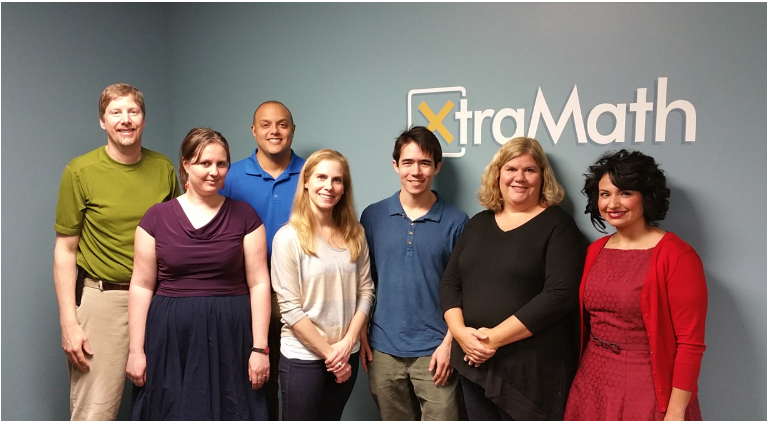
It is hard to beat the price of XtraMath, which has a free version. It is $2 per student to have a few more options and $500 per school. XtraMath is run by a non-profit based in Seattle. They have a staff of six folks in Seattle, and they do accept donations. Their product is great, and they are able to give it away.

Rocket Math is run by one person, Dr. Don, with part-time help from two friends. He supports the app, its development, and himself with the proceeds. He answers his own phone and is happy to talk with teachers about math facts. The Rocket Math Online Tutor is a good value at $6 a year per seat (when ordering 20 or more seats). The Online Tutor has price breaks at 100, 1000 and 10,000 seats. As one principal customer of Rocket Math said, “We used to have XtraMath. We’d rather pay a little bit more for Rocket Math because the kids like it a lot better.” Another teacher reported, “My students are loving this program. I was using Xtra math, but now they are in love with Rocket Math!”

Prove that students using the Rocket Math Online Game are improving in fact fluency!

Document improved fluency by assigning a 1-minute RACE.

We have a feature that will allow you to assign a fluency test to all or some of your students. We call it a “1-minute RACE.”
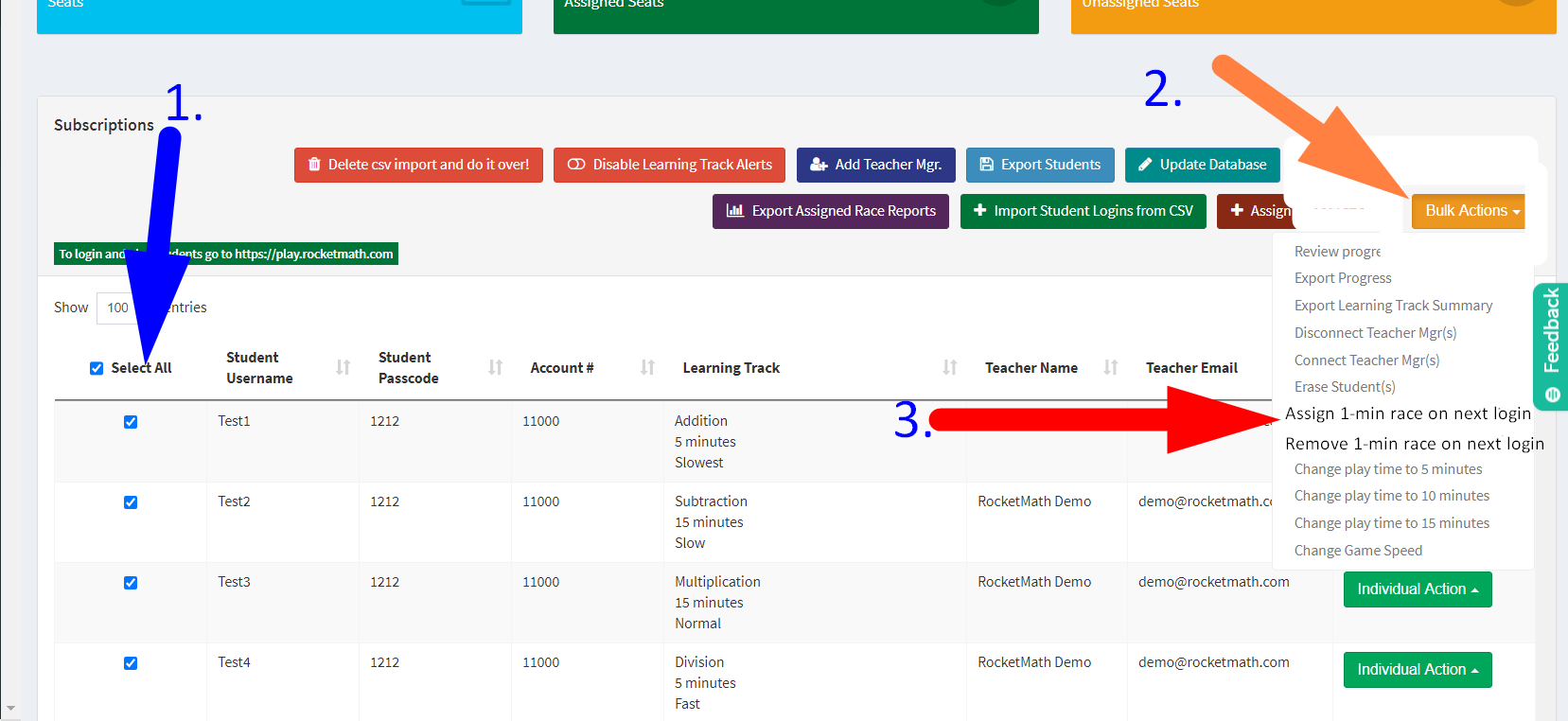
To Assign a Fluency Test 1-Minute RACE:

1) Select the students to whom you want to assign the test RACE, or Select All.

2) Click on the orange Bulk Action button.

3) Pull down to “Assign 1-min RACE on next login.”

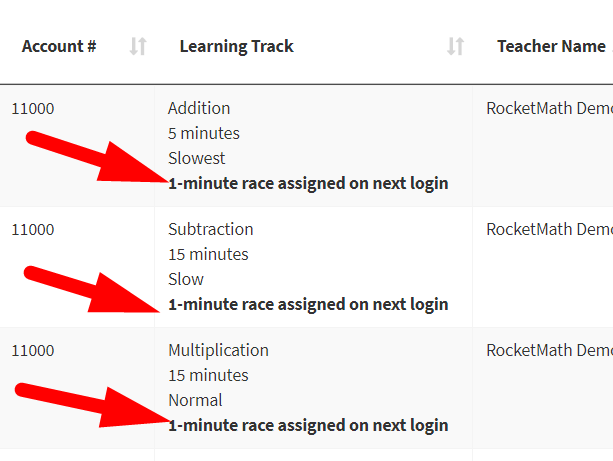
After doing that, in your dashboard you will see that the 1-minute race has been assigned on the next login. 
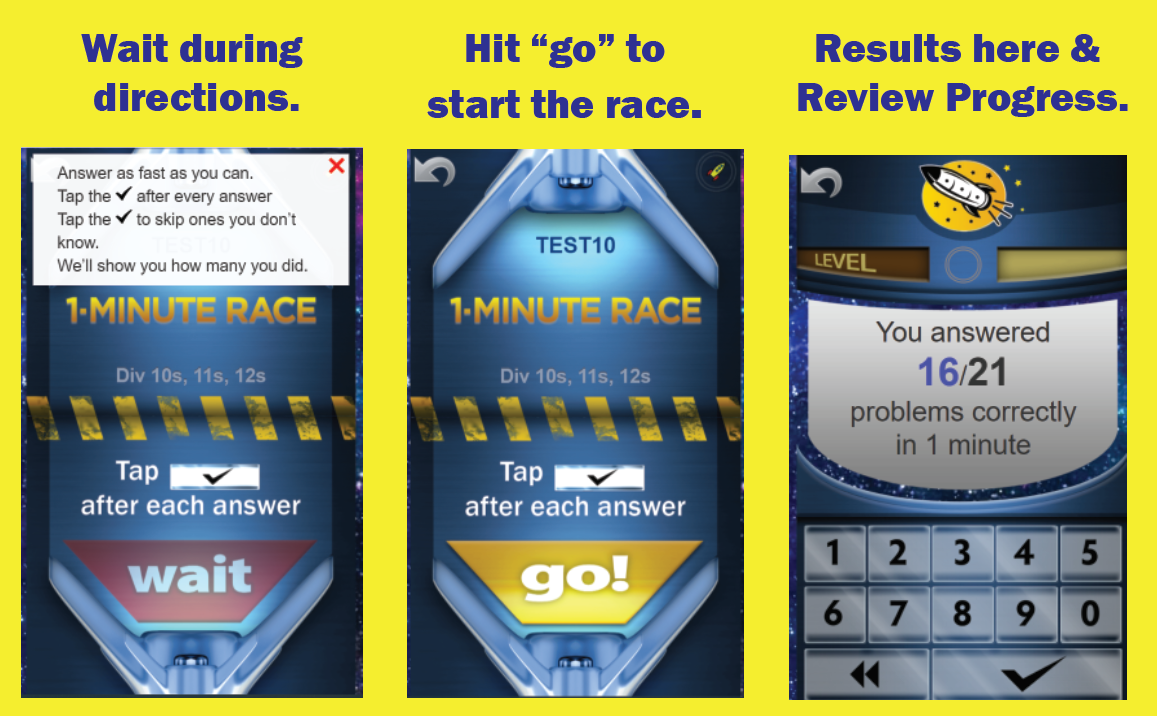
The next time those students login, they will be given the mission of doing a 1-minute race with ALL the facts in the Learning Track they are studying. They can skip facts they don’t know, by hitting the checkmark.

Here’s what the students experience.

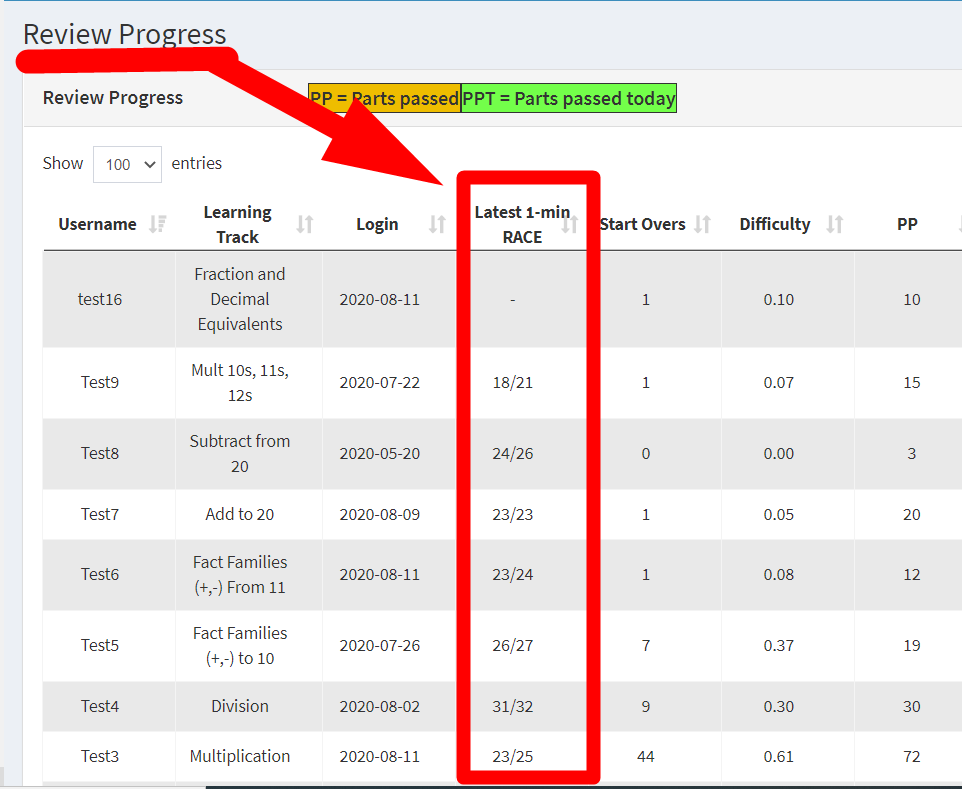
A 1-minute test RACE is also automatically SCHEDULED after Sets A, i, R, and Z. See their latest results in Review Progress!

Assign a 1-minute RACE individually also–at any time you wish.

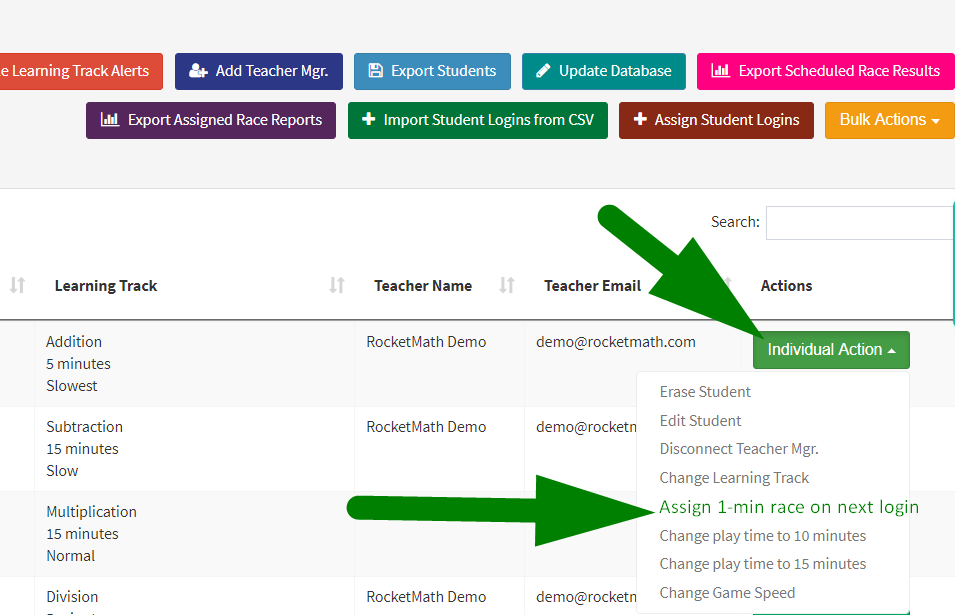
You can assign a 1-minute RACE at any time for specific individuals as well, using the green Individual Action button at the end of their row.


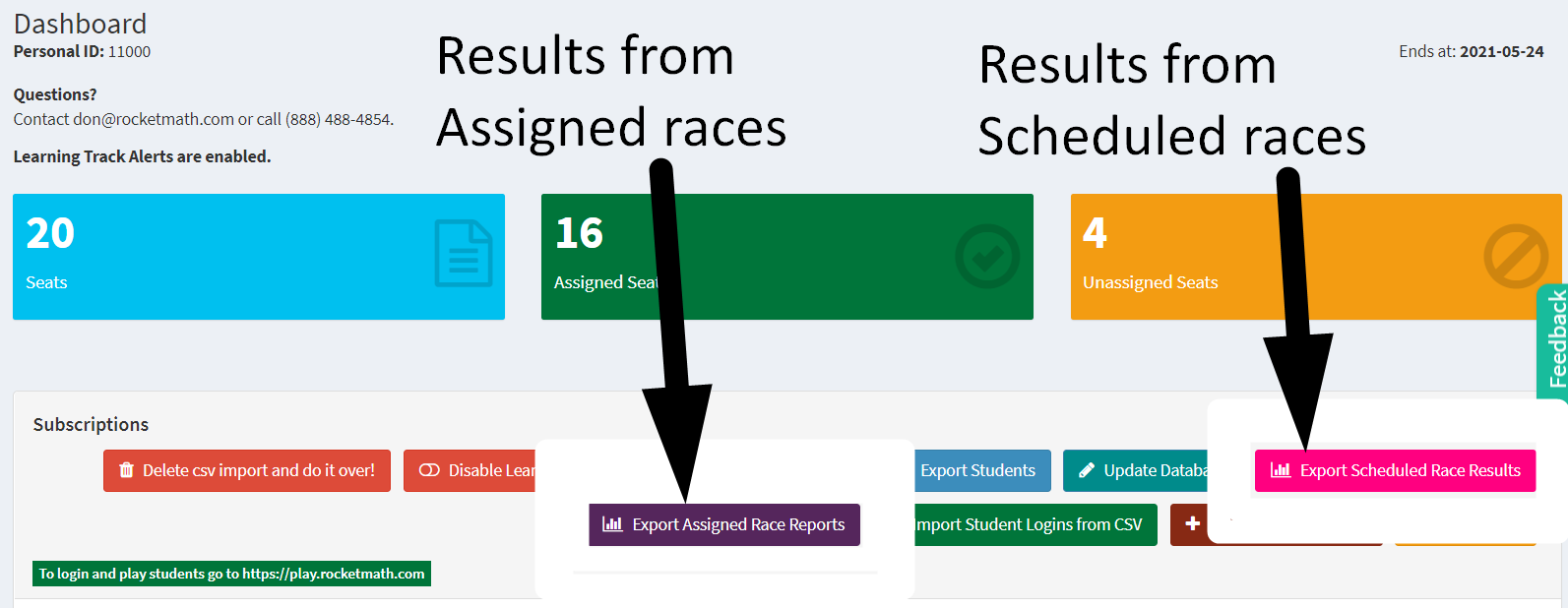
  • Export the test RACE results in spreadsheets. 

    • Separate exports for results from RACEs you Assign from the RACEs that are Scheduled after working through some levels in the Online Game (After sets A, i, R, and Z).

  • See averages across your class or school. 

    • Each spreadsheet will show the average for your class as a teacher or for the school in the account of the Subscription Manager or owner.  There are separate averages for each Learning Track.
  • See trends over time.

    • You’ll see the improvement each student makes from the beginning after Set A to each of the subsequent tests RACES.

Rocket Math Wins Editors Choice Award From All Digital School

Rocket Math Wins Editors Choice Award From All Digital School

Rocket Math - All Digital School Editors' PickRocket Math is pleased to announce that we have won the editor’s choice award in math programs from All Digital School (ADS). With so many turning to online education, Rocket Math has been uniquely positioned to grow and adapt to these changing times. Our program has helped thousands of students across the country to learn math efficiently and enjoyably. We’re glad that this hard work has paid off and are thrilled to be recognized for our efforts.

All Digital School is a digital educational resource platform that compiles educational materials and tools that students everywhere can use online. ADS was founded to help educators, parents, and students to find the best materials, websites, and tools available during the pandemic. Their goal is to help everyone receive the best possible learning experience, no matter where they live. ADS is committed to providing an accessible online community for teachers and parents, creating a space where fellow educators can compare notes and review resources. This valuable online education provider now has over 4000 active resource listings for students of all ages.

You can see the Rocket Math program page at ADS here.   

Editors at ADS regularly review their listings and choose resources that stand out in their respective fields. In the most recent review of mathematics programs, Rocket Math was selected as a standout favorite and recognized with an editor’s choice award. This distinctive honor pushes us to work even harder and demonstrates our unwavering commitment to provide every student with the opportunity to master math facts.

About Rocket Math:  For over a decade, Rocket Math has served as an educational resource that allows students to learn math quickly, thoroughly, and happily. Rocket Math stresses that all students can learn math and that students are motivated by seeing their own progress and success. 

Why Teach Multiplication Facts to Struggling Pre-Algebra Students?

You want your middle-grade students to complete the pre-algebra math topics so they are ready to begin to study algebra in 8th or 9th grade. A disheartening number of middle-grade students have not memorized basic multiplication facts (times tables). Students must know multiplication facts to follow, absorb, and implement pre-algebra topics.  How to teach multiplication facts to struggling students? How can a teacher help their struggling students learn multiplication facts when a lot of their students do not need to do that work? 

Rocket Math Online Tutor includes learning tracks for pre-algebra skills as well as basic multiplication and division facts. Within the Rocket Math Online Tutor, teachers assign students the learning tracks that they most need.


Math Strategies for Struggling Students

a student who does not know her math facts is counting on her fingers.

Students who do not know their multiplication facts are constantly distracted from learning math strategies by having to stop and “figure out” basic facts. Every time they are asked to provide the answer to a multiplication fact, they have to turn their attention to working it out or looking it up. By the time they have gone through their process, they have lost the thread of the strategy they are supposed to be learning. The most important thing a math teacher can do for struggling math students is to help them bring math facts to automaticity. Then answering math fact questions no longer interferes with learning multi-step strategies for solving math problems. 


Why Multiplication facts are Important to Learn Before Middle School Math

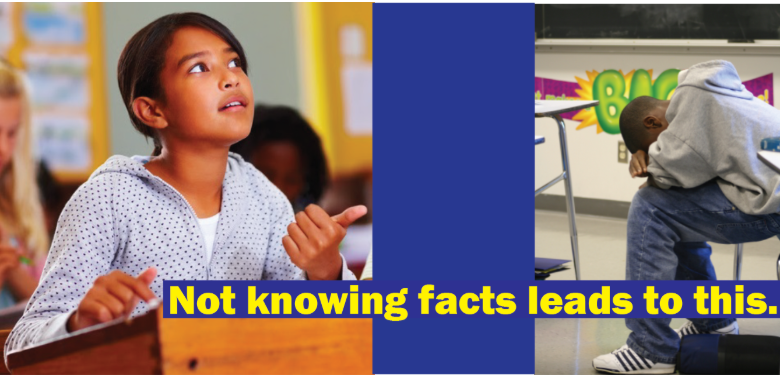
A student sits frustrated in class because he doesn't understand his basic math facts.

Many pre-algebra math topics assume students have a ready knowledge of multiplication facts to even understand. When I was a middle-grade teacher, my remedial students were unable to follow or understand topics such as Finding factor pairs, reducing fractions, equivalent fractions, converting fractions, unlike fractions, and so on. I realized that it was because they did not know basic multiplication facts. When I reduced 8/24 to ⅓ it was like magic because they did not quickly recognize the multiplication facts involved. They didn’t understand the concepts we were trying to learn because they did not see the relationships they were supposed to know. When I asked them to think of the factor pairs of 36 they were unable to find them all, no matter how much time I gave them. While students can do multi-digit multiplication problems using a times table chart, it does them no good in pre-algebra topics because it takes too long, even if they know what to look up. Now let’s look at how to teach multiplication to struggling students using Rocket Math Worksheets or Rocket Math Online Tutor. 


How to Teach Multiplication to Struggling Students Using Rocket Math

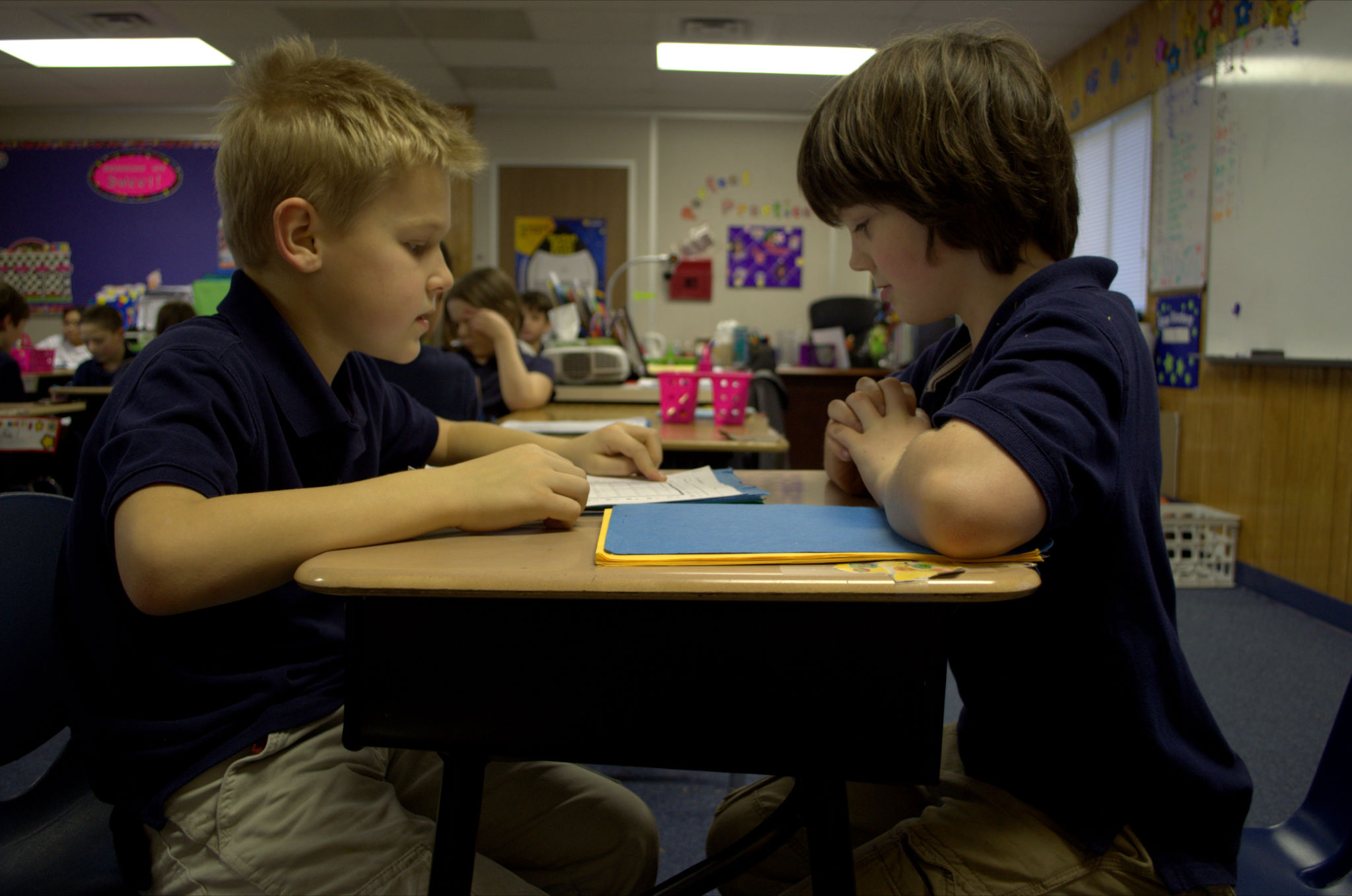
Two students use Rocket Math Worksheets to practice their math facts.

Students who have not yet mastered multiplication facts are going to require a very effective teaching methodology to learn them. The haphazard, leave-it-up-to-the-student methods have already failed them. By now, these students lack confidence in their ability to learn the facts, so you need a sure-fire system. 

Rocket Math is just such a system. Both the Worksheet Program and the Online Tutor systematically introduce students to the facts in a careful sequence that they can do. The Worksheet Program and Online Tutor ask students to memorize only two facts and their reverses at a time.  

Students demonstrate mastery of those facts by answering them without hesitation. Then Rocket Math will add two more facts and their reverses. Small steps at a time, systematically the students can memorize the facts and answer them instantly from memory. If students practice every day, within a few weeks you’ll see a dramatic improvement in their recall of multiplication facts. 

But what about the students who already know their multiplication facts? Rocket Math has something for them as well. 


Rocket Math Programs for Advanced Students 

Teachers can assign Rocket Math as a 10-minute warm-up or cool down for all their students whether they are behind or advanced. Rocket Math has several pre-algebra topics for those students who already know their multiplication facts. Each of these topics will help them do pre-algebra processes more fluently and to quickly recognize relationships that they have memorized.


Learning Track 13: Identifying Fractions

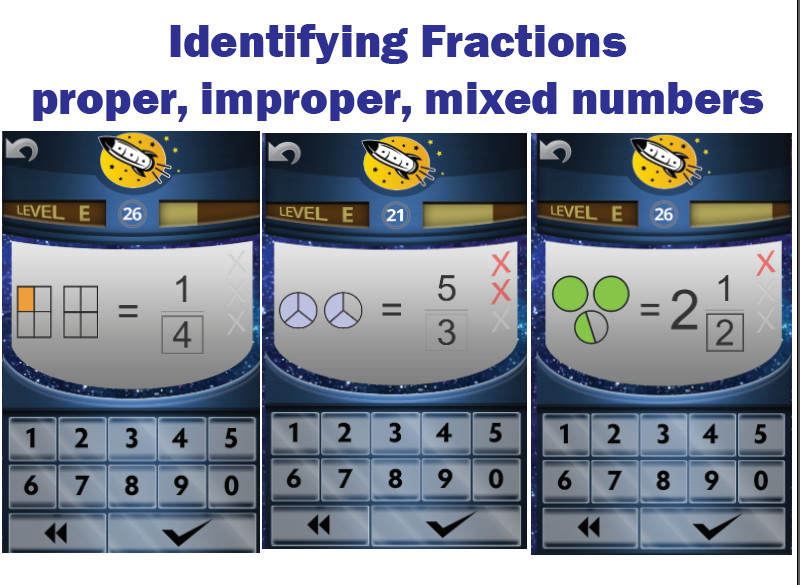
Screenshot of Rocket Math Online Game for identifying fractions.When students initially learn about fractions they are often only shown proper fractions. As a result, they have a limited understanding of fractions and can be confused by improper fractions or mixed numbers. The Rocket Math programs (both Worksheet and Online Tutor) prevent this problem.  From the start, we teach students using examples of both proper and improper fractions as well as whole numbers and mixed numbers. Students learn to identify over 90 different fractions quickly and easily by getting lots of practice. Their understanding of fractions will deepen and become more flexible as they learn to recognize many examples of fractions.


Learning Track 14: Equivalent Fractions

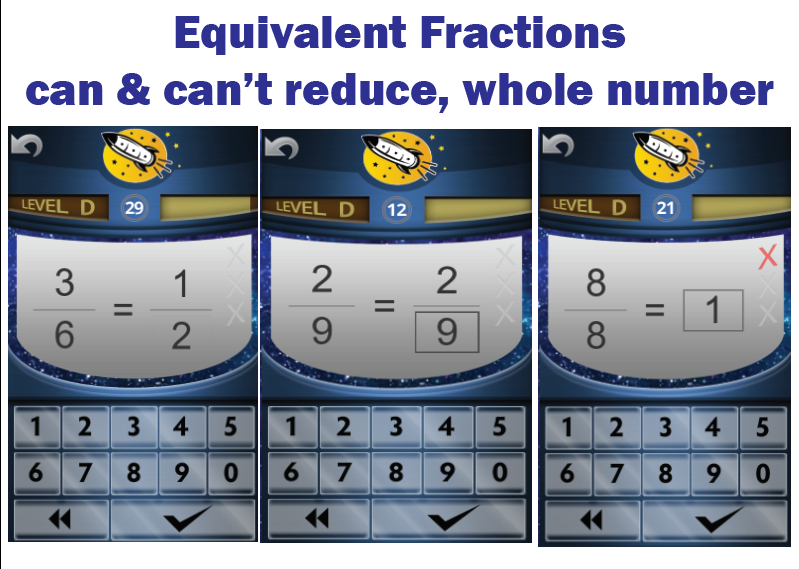
Screenshot of Rocket Math Online Game of Equivalent Fractions practice.Students will memorize the most common equivalent fractions with this Rocket Math Learning Track. They will also learn to identify a number of fractions, such as 2/9,  that do not “reduce” or for which there are no equivalent fractions in lower terms. Students also learn to recognize a fraction equal to 1 whole in its various forms. When students don’t instantly know the answer they are told the equivalent fraction and given practice on it. The computer gives help in the Online Tutor.  Their partner gives that help in the Worksheet Program. By the end of the program, students will learn over 90 equivalent fractions. This gives students an excellent start on being able to manipulate fractions quickly and easily.


Learning Track 15: Factors & Primes

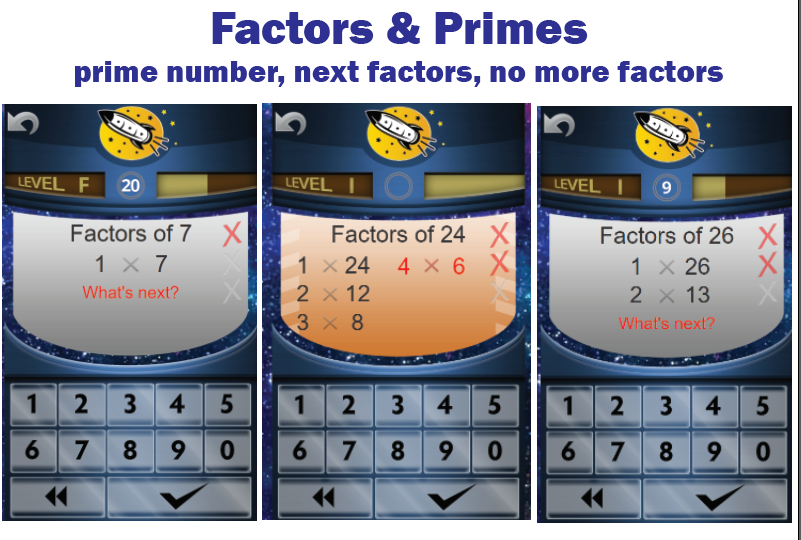
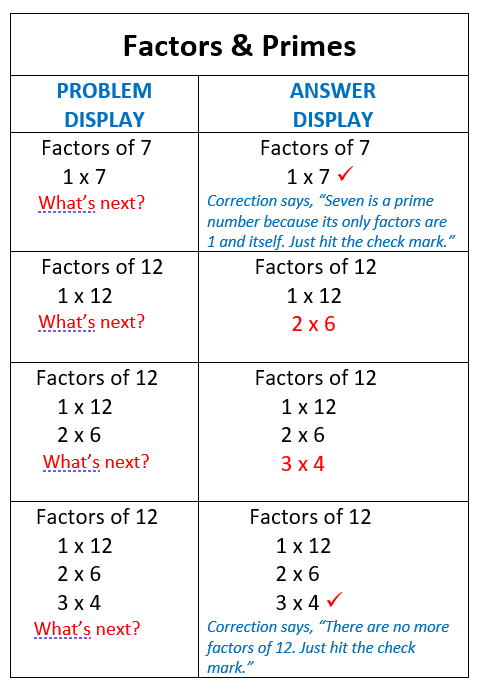
factors and primes game screensStudents are required to “find the factors” when dealing with unlike fractions and reducing fractions. Rocket Math Worksheet and Online Tutor teach students how to find factor pairs. Students learn how to find all the factor pairs and what they all are for many common numbers. They also learn to identify prime numbers and their characteristic of having only one and themselves as factors. Students learn the factor pairs in order and know the “last” factor pair when they see it. When the game asks “What’s next?” students can provide the next pair of factors or click the checkmark to indicate there are no more factors. When students go through this Learning Track they will no longer hesitate when asked for the factors of common numbers.


Learning Track 16: Fraction & Decimal Equivalents

Screenshot of Rocket Math Online Game of Fraction & Decimal Equivalents practice.

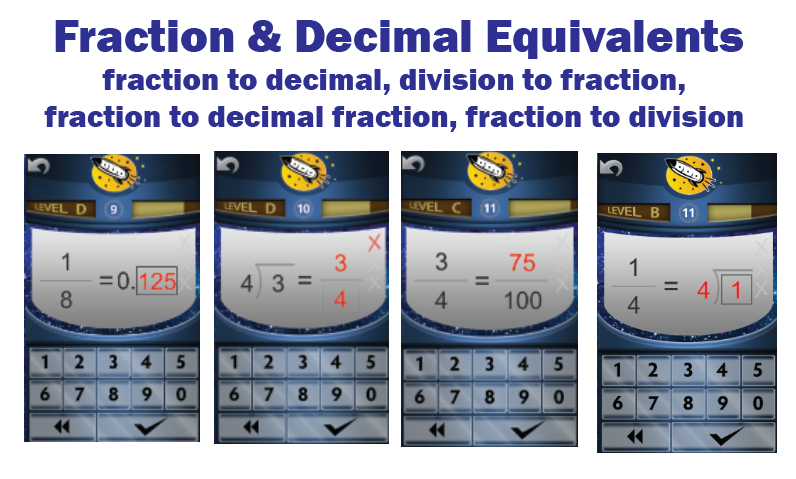
Common fraction and decimal equivalents should not require a laborious process to “figure out.” Students should just know these, so this Learning Track in the Online Tutor allows them to memorize a bunch of common decimal and fraction equivalents. Having a facility with a lot of fraction and decimal equivalents means faster computation as well as a way to check their process when manipulating fractions and decimals. Students also learn another essential pre-algebra skill that often confuses them.  They learn to correctly and fluently translate a fraction into a division problem and vice-versa.

“Test Drive” any of the 16 Learning Tracks in our Online Game demo accounts. 

Register for a 14-day free trial of Online Tutor for all your students

Explore the options for subscribing to the Worksheet Program.

Learning Math by Fact Family vs One Operation at a Time

A Fact Family is an innovative way to group the learning of math facts. Some people are die-hard advocates of this way to learn facts. Yet students successfully learned math facts for decades without ever considering them as being composed of families. This blog discusses the pros and cons of learning with fact families. 


 What is a Fact Family


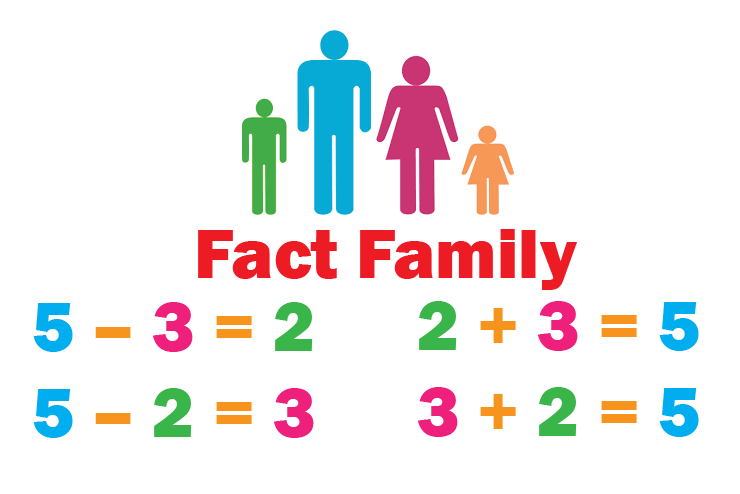
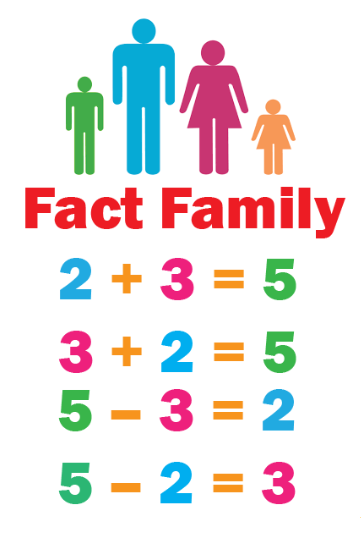
A fact family is a set of four math facts made with the same three numbers. The numbers 2, 3, and 5 can make a family of four facts: 2+3=5, 3+2=5, 5−3=2, 5−2=3. The numbers 2, 3, and 6 can make a different fact family: 2×3=6, 3×2=6, 6÷2=3, 6÷3=2.  


Why are Fact Families Important?


Fact families help children see that adding and subtracting are the opposite of each other. Multiplication and Division fact families do the same. Learning fact families may help students develop more flexibility in their number sense.   


Benefits of Thoroughly Learning a Single Operation at a Time


Rocket Math Addition Fact Family worksheet for students.

When it comes to memorizing math facts, students traditionally learn one operation at a time. They memorize only the Addition facts, typically in first grade. Not until later do students learn the concept of Subtraction, and then they begin memorizing Subtraction facts, usually in second grade. With Rocket Math, students will master Addition facts much better than most first graders. Students using Rocket Math will know Addition facts instantly without having to stop and think about them. When students have mastered Addition facts, an unusual thing happens when introduced to Subtraction. Students instantly recognize that the Subtraction facts are the opposite of those Addition facts they know so well, usually without even being told. This recognition does not typically happen in second grade with students who haven’t truly mastered Addition facts.  Therefore teachers think they need to teach in fact families to get students to recognize the reciprocal nature of Addition and Subtraction.   


Which Way is Better?


Only if students thoroughly master Addition facts, can they quickly recognize the reciprocal nature of Subtraction. Students find it easier when memorizing facts, to stick with Addition, rather than switching back and forth between adding and subtracting as is required by learning in fact families. They tend to memorize faster in single operations than they do in fact families.  However, if students memorize in fact families, they will learn the reciprocal nature of the fact families right from the beginning. They may learn it more thoroughly. That may help them develop more flexibility in their number sense. So that’s not a bad thing.


How to Learn Math with Fact Families and Single Operations


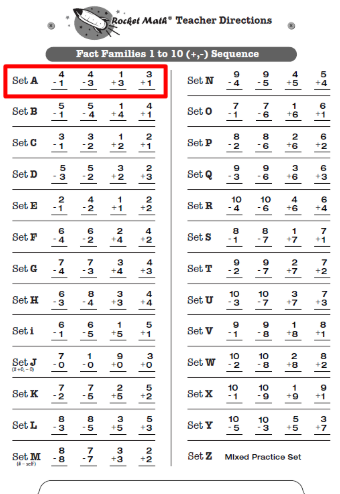
Teacher's directions worksheet for addition and subtraction fact families.Rocket Math offers separate Addition and Subtraction sequences, as well as fact family sequences. Both the Online Game and Worksheet Program provides these. If teachers (or their regular math curriculum) are wedded to fact families, they are available to use. Usually, the first fact families learned are Addition and Subtraction Fact Families through 10, then Fact Families from 11.  


I would recommend beginning with learning the operations separately: learning Addition facts (1s to 9s) first, followed by Subtraction facts (1s to 9s). For some students, this may be all they have time to learn.  If students have time, use Fact Families as a review. If the student has time, it would be beneficial and relatively easy for them to do Fact Families (+,-) to 10 and then Fact Families (+,-) from 11 afterward. Students will learn the facts more thoroughly, and the reciprocal nature of Addition and Subtraction will be deeply ingrained. This is quite simple in the Online Game, as it only involves switching the student to another Learning Track, and doesn’t require a new filing crate, as in the Worksheet Program.  


Using Rocket Math to Teach Single Operations & Fact Families


Rocket Math offers separate Addition and Subtraction sequences, as well as fact family sequences through the Online Game and the Worksheet Program. For teachers looking to teach Addition and Subtraction math fact families, Rocket Math offers two sequences of Fact Families; the first, Fact Families to10 and the second, Fact Families from 11. For teachers looking to teach in separate operations, Rocket Math offers separate sequences for learning Addition facts (1s to 9s) first, followed by Subtraction facts (1s to 9s). If the operations are learned separately, fact families can be used as a review. 


What’s the best order or sequence to do Learning Tracks?

First learn the fundamentals; add, subtract, multiply, divide (0-9s).

There are over 20 different Rocket Math Learning Tracks to help students learn math facts. A common question teachers ask is in what sequence should they teach the various Rocket Math learning tracks? The fundamental operations of Addition, Subtraction, Multiplication, and Division (0-9s) have priority and must be mastered by all students. Addition (0-9s) in the first grade. Addition and Subtraction (0-9s) in the second grade. Multiplication (0-9s) (as well as Addition and Subtraction) by the third grade. Then, all four, including Division (0-9s) by fourth grade. If a student is on track, those fundamentals have first priority.

Optional learning tracks once the basics are already mastered

The rest of the learning tracks are less critical and should be offered to students only after the basics have been mastered. The only exception would be in a school where Kindergarteners did not get a chance to learn how to quickly and easily write numerals, through using the Rocket Writing for Numerals program. In that case, you might take the first two months of the first grade year to run students through Rocket Writing for Numerals before beginning Addition (0-9s).

Here’s a link to a printable version of the graphic above.

Kindergarten Students have things to learn before beginning Addition Facts

A teacher sits with four kindergartners and is holding up her hand to count how many pencils they have on the desk.There are three Learning Tracks in the Universal Level of the Worksheet Program that can help kindergarteners get ready for memorizing Addition Facts in the first grade. These programs are not like the main part of Rocket Math, because they are not set up for peer practice.  Instead, the teacher leads instruction, because the little ones don’t really have good skills for working together yet. Using the Beginning Numerals  Learning Track, the teacher can teach students how to use their rote counting skill to count objects and identify the numeral that goes with that number of objects. Next the Rocket Writing for Numerals Learning Track will teach students how to correctly, legibly, and efficiently write the numerals 0-9.  There are 72 pages in this program, so it will take most of the school year for students to work through it.  The third teacher-led learning track is Conceptual Addition.  This learning track teaches students what addition is all about by teaching them to count objects to add them together.  Most importantly, it teaches student how to “count-on” from a number other than one, so they can add up numbers more than their ten fingers.  Click the link to see more information about that.

First-grade Students Should Learn Addition Facts


Students practicing their math facts together.If first-grade students are taking all year to get through sets A-Z in Addition, they need some extra help. You should intervene to help students who take more than a week to pass a level. Often they need to practice better or with a better partner, and some may need to practice a second time during the day or at home in the evening. 

Another intervention would be to use Rocket Math Online Tutor for Addition facts, as students seem to progress much more quickly in the online game.  The Online Tutor has an adjustable game speed for first-grade students who are having trouble (their difficulty score is over 3) moving their fingers fast enough. First-grade students who finish the 0-9s can move on to the Add to 20 programs for the remainder of the year.


Second-grade Students Must Know Both Addition & Subtraction Facts


The Rocket Math Online Game Additions fact family example page.

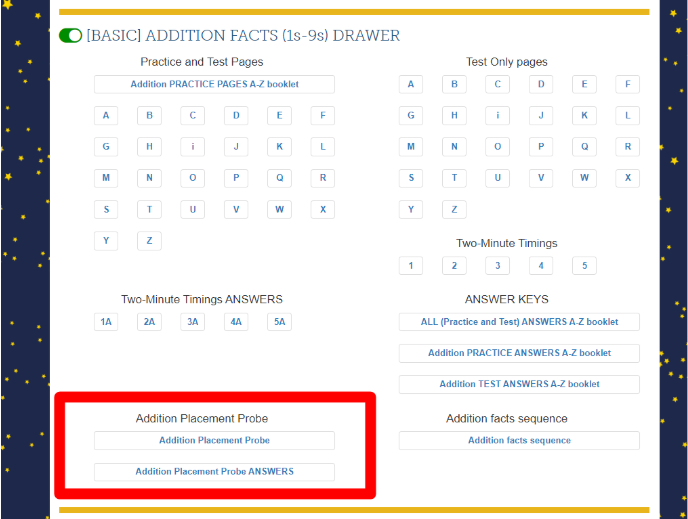
Second-grade students must have completed Addition (0-9s) before starting on Subtraction (0-9s).  They can also test out of Addition through the Placement Probes which are available within the Addition drawer in the Rocket Math Worksheet program virtual filing cabinet. Addition has priority for second graders who cannot test out of Addition in first grade or didn’t complete it in first grade. Only after getting through Set Z of Addition, should they move into Subtraction (0-9s). Second-grade students who complete Addition and Subtraction (0-9s) can move on to Skip Counting or Conceptual Multiplication, which both do a great job of preparing students to learn Multiplication facts. After that students could do the Subtract from 20 learning track.

Fact Families is Another Way to Learn Addition & Subtraction Math Facts

A chart showing the Addition and Subtraction fact family of 2, 3, and 5.There is another way to learn facts, through learning fact families. Instead of learning only Addition facts, students can learn Addition and Subtraction facts at the same time. A fact family consists of four related facts, for example: 3+2 = 5, 2 + 3 = 5, 5 – 3 = 2, 5 – 2 = 3.  


It is challenging for students to switch between Addition and Subtraction. But it does drive home the reciprocal nature of the two. There is no evidence that it is better to learn in fact families than it is to separate the operations. That’s why we offer both alternatives.  You must of course, teach the concepts of both addition and subtraction before students can learn in fact families. Students can learn Add-Subtract fact families up to 10 in first grade. Then in second grade they can learn the Addition and Subtraction upper fact families, from 11 to 18 in second grade.


Third-grade Students Must Learn concept of multiplication and then learn the facts

Third graders can begin the year working on addition and subtraction facts or reviewing them in fact families.  They should NOT begin memorizing multiplication facts until after they have learned the concept of multiplication in their math curriculum or used the Rocket Math Conceptual Multiplication learning Track.  After they have learned the concept of what multiplication is all about, then have them memorize Multiplication facts 0-9s.  Once multiplication is mastered, if there’s time, students who need to can go back to master addition and subtraction facts.

As in Addition and Subtraction, students can learn Multiplication and Division by fact families, provided you teach both concepts first. In third grade, just the Multiply-Divide Fact Families through 20 need to be mastered. Once all three of these basic operations are under their belt, I’d recommend the Identifying Fractions learning track next followed by the Equivalent Fractions, followed by the Factors learning track.


Fourth-grade Students Should Know Both Multiplication and Division Facts

Effective math teaching strategies help students of all levels be successful at math.

Fourth-grade students need to have completed Multiplication before going on to Division.  They can also do Multiply-Divide Fact Families to 20 and then Multiply-Divide fact families from 21 on. If they complete Multiplication and Division (0-9s), they should go back and do Addition and Subtraction (0-9s), if those are not mastered, either straight up by operation or in families. Then students can go on to Identifying Fractions learning track next followed by the Equivalent Fractions, followed by the Factors learning track. They can go on to 10s, 11s, 12s Division, but it is less valuable than the pre-algebra skills of factors and fractions.


Fifth-grade Students & Up Need to Know the four fundamental Operations First, Then Branch Out


Fifth-grade students should have completed all four fundamental operations (1s-9s). If students have not completed these fundamentals (and cannot test out of them with the Placement Probes), then the sequence they should follow is Multiplication, followed by Division, then go back and complete Addition followed by Subtraction. Again, as an alternative, students can learn the basic facts in families. The same recommendations hold for students in any grade after fifth.

Once students have mastered the four fundamental operations, add, subtract, multiply, divide(0-9s), the supplemental pre-algebra programs are recommended. These will help more than learning the 10s, 11s, 12s facts. I would recommend this order: Identifying Fractions, then Factors, followed by Equivalent Fractions, followed by Learning to Add Integers, Learning to Subtract Integers, then Mixed Integers.

Rocket Math Worksheet & Online Tutor

Learn more about Rocket Math: in just 2 minutes!  Rocket Math has a fun video for you to learn more about how Rocket Math works. Or check out our website at www.rocketmath.com 

Here is a quick and easy chart to help understand which operation/skill students need to learn in which grade level and which Rocket Math Worksheet and Rocket Math Online Tutor Learning Track they should be at.

Age Grade Operation/Skill Rocket Math Worksheet Rocket Math Online Tutor Learning Track
5-6 Kindergarten Writing Numerals Beginning Numerals

Rocket Writing for Numerals

Conceptual Addition

In development
6-7 First Writing Numerals

Addition

Rocket Writing for Numerals

Addition 0 through 9s

Fact Families 1 to 10 Add and Subtract

Add to 20

Addition (0-9s)

Fact Families (+, -) to 10

Add to 20

7-8 Second Addition

Subtraction

Addition 0 through 9s

Fact Families 1 to 10 Add and Subtract

Add to 20

Subtraction 1s through 9s

Add-Subtract Fact Families 11 to 18

Skip Counting

Subtract from 20

Addition (0-9s)

Subtraction (0-9s)

Add-Subtract Fact Families to 10

Add-Subtract Fact Families from 11

Add to 20

Subtract from 20 

8-9 Third Multiplication Multiplication 0 to 9s

Multiply-Divide Fact Families to 20

Multiplication 10s, 11s, 12s

Identify Fractions

Equivalent Fractions

Multiplication (0-9s)

Multiply-Divide Fact Families to 20

Multiplication 10s-11s-12s

Identify Fractions

Equivalent Fractions

9-10 Fourth Multiplication

Division

Multiplication 0 to 9s

Division 0 through 9s

Multiply-Divide Fact Families to 20

Multiply-Divide fact families from 21

Identify Fractions

Equivalent Fractions

Factors

Multiplication 10s, 11s, 12s

Division 10s, 11s, 12s

Multiplication (0-9s)

Division (0-9s)

Multiply-Divide Fact Families to 20

Fact Families from 21

Identify Fractions

Equivalent Fractions

Factors & Primes

Multiplication 10s-11s-12s

Division 10s-11s-12s

10+ Fifth and up All Basic Operations

Fractions

Positive/Negative Numbers

Basic Addition, Subtraction, Multiplication, and Division

Identify Fractions

Equivalent Fractions

Factors

Learning to Add Integers

Learning to Subtract Integers

Mixed Integers

Addition, Subtraction, Multiplication and Division (0-9s)

Identify Fractions,

Equivalent Fractions,

Factors & Primes,

Fraction & Decimal Equivalents 


Factors and Primes: Learn in Rocket Math Online Game

Learn three keys to knowing how to find factors and primes

We have added Factors and Primes to the Online Game. Learning Track #15 Factors & Primes is a dream come true for Dr. Don.  Many middle grades students find that factoring and finding the GCF (Greatest Common Factor) is quite difficult.  This learning track will make it easy.  It accomplishes three key learning objectives at the same time.

factors and primes game screens(1) Recognizing the Primes.

Instead of just working on numbers with factors this Learning Track includes many prime numbers such as 7 in the illustration above.  When a number is prime, the student is shown 1 x the number and asked “What’s next?” Then the student is to answer with the check mark indicating that number only has 1 and itself as factors–there are no more. These prime numbers appear again and again, giving the student lots of practice in remembering the primes and in remembering their key characteristic.

(2) Learning factors in order. 

The game displays the factors with the lowest factor on the left and put them in order by that factor.  (see the Factors of 12 above). The factors are always in this order, so students learn them in order.  Notice that the last factors of 12 ends with 3 on the left and 4 on the right.  The factors on the right go up from there up to 12.  The key to knowing there are no more factors is when the next number down (in this case 4) is already showing in the list going up on the right.  By seeing the factors always in this order, student can more easily learn them. 

(3) Knowing when you’re done

Sometimes we require students to indicate that all the factors have been listed. The Online Game will show all the factors and ask, “What’s next?”  Students will know that there are no more factors because they have learned them in order.  Students will then put a check mark to say this is the complete list. When figuring GCF it is essential to know when you have listed all the factors.   

16 Learning Tracks in the Online Game

1. Addition                       5. Fact Families (+, -) to 10           9. Multiplication 10s-11s-12s
2. Subtraction                 6. Fact Families (+, -) from 11     10.  Division 10s-11s-12s
3. Multiplication             7. Add to 20, example 13+6        11.  Fact Families (x, ÷) to 20 
4. Division                        8. Subtract from 20, 18-5            12 Fact Families (x, ÷) from 21      13. Identifying Fractions                                                 
14. Equivalent Fractions                   15. Primes & Factors              16. Fraction & Decimal Equivalents


Test drive the game as a student, right NOW!

If you go to https://play.rocketmath.com          Use a login below to try any of the Learning Tracks for yourself.
Username Pass code Account # Learning Track
Test1 1212 11000 Addition (slowest speed)
Test2 1212 11000 Subtraction (slow speed)
Test3 1212 11000 Multiplication
Test4 1212 11000 Division (fast speed)
Test5 1212 11000 Fact Families (+,-) to 10
Test6 1212 11000 Fact Families (+,-) From 11
Test7 1212 11000 Add to 20
Test8 1212 11000 Subtract from 20
Test9 1212 11000 Mult 10s, 11s, 12s
Test10 1212 11000 Div 10s, 11s, 12s
Test11 1212 11000 Fact Families (x, ÷) to 20
Test12 1212 11000 Fact Families (x, ÷) From 21
Test13 1212 11000 Identify Fractions
Test14 1212 11000 Equivalent Fractions
Test15 1212 11000 Factors & Primes
Test16 1212 11000 Fraction & Decimal Equivalents

Sign up for a free trial of the Online Game today!

6 Effective Math Teaching Strategies for any Classroom

These effective math teaching strategies will help your students be more successful in learning math in your classroom. These are not the “cool, pedagogically-correct things” you can brag about in the teacher’s lounge or your master’s program classes, but they will improve math for the kids.

Memorizing is a key effective math teaching strategy for all classrooms.1. Help Students Memorize Math Facts

Once students know how to count out or figure out math facts, they are ready to begin memorizing the facts. After they memorize math facts, students can do math assignments quickly and learn math easily. It’s cruel to make them continue to figure out facts over and over again for months or years. Find and use a systematic method of memorizing math facts, so they have this tool at hand. There’s no magic bullet. Whatever you use needs to be systematic because it has to build gradually as students learn more and more of the facts. Any fact is easy to learn, but there are a lot of them, so that takes time.

Helping your students memorize math facts is like buying math power tools for them. It makes everything go quicker and much better. More gets done. Attitudes will improve. You don’t have to use Rocket Math, but you should use something! You will change their trajectory in and attitude about math for years to come. Learn more about why memorization is one of the essential math teaching strategies.

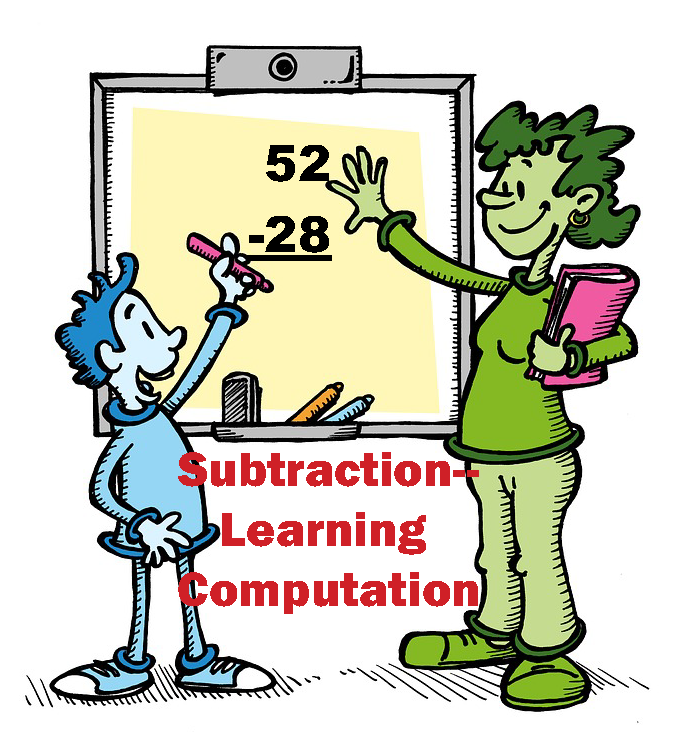
A student works through 52 minus 28, with math teaching strategies subtraction learning computation.2. Ensure Math Facts are Mastered Before Starting Computation

Kids love to go fast. They hate the drudgery of having to count out facts or look multiplication facts up in a table. Once they know facts instantly, they can rip through math computation–and enjoy math because they love to go fast.

Not knowing math facts interferes with learning computation.

Here’s another surprise. Memorizing math facts makes learning multi-digit computation easier. Students who’ve memorized math facts are not distracted by having to stop and figure out what is 14 minus 9. They know it, without having to stop and think about it. They can give more of their attention to the details of the computation process and learn them better and easier than before. Try getting all your students fluent on the operation and then teach computation AFTER they have acquired fluency. You will be astonished at how quickly they learn. Read more about how math fact memorization supports computation.

Effective math teaching strategies should help students from becoming frustrated and instead have fun learning math.3. Teach Computation Procedures With Consistent Language

Learning the procedures to do computational math processes is just like learning to follow a recipe. Eventually, you learn the key ingredients and can do it without looking and can do variations. But in the beginning, you need the written recipe to follow. You also need to do it the same way a few times to learn it. Winging it and teaching math “improv style” will only frustrate students.

Use a script or a process chart to keep the instructions consistent.

No one can remember exactly the way you said it yesterday or last week, which is why you need a script or a process chart on the wall so you can show the students that you are doing it the same way as last time. Repetition helps, but only if you’re repeating the same steps in the same order with the same wording. 

Students will become flexible in their understanding at their own rate and in their own time. You just keep being consistent, and eventually, all the students will have mastered the procedure. I know that “thinking flexibly” is very much in fashion, but your students will thank you for providing them mastery of this one method of solving this type of problem. Flexibility can come later. Read more about how consistent language is key to teaching computation procedures.

A road sign with signs pointing "this way" and and "this way" in opposite directions.4. Teach One Method and Only One Method at a Time

To solve a given type of problem, do NOT follow the advice to teach multiple solutions at one time. Teach only one way to go at a time, until that is learned, before introducing variations.  Multiple solution paths will confuse all but the most advanced students in your room. Just teach them one procedure that will work every time with that type of problem. Your students will thank you for it.

It’s far better to know only one way to get there than to get lost every time!

Learning math procedures is no different than learning how to get to someone’s house (before GPS). You want to go the same way every time, until you have learned it. If you go a different way every time you’ll just be confused. You can learn another way later, once you can get there reliably using one route, but before that, you cannot learn another route, because you’ll mix up steps from each route. Read more about why teaching one procedure at a time is one of the effective math teaching strategies.

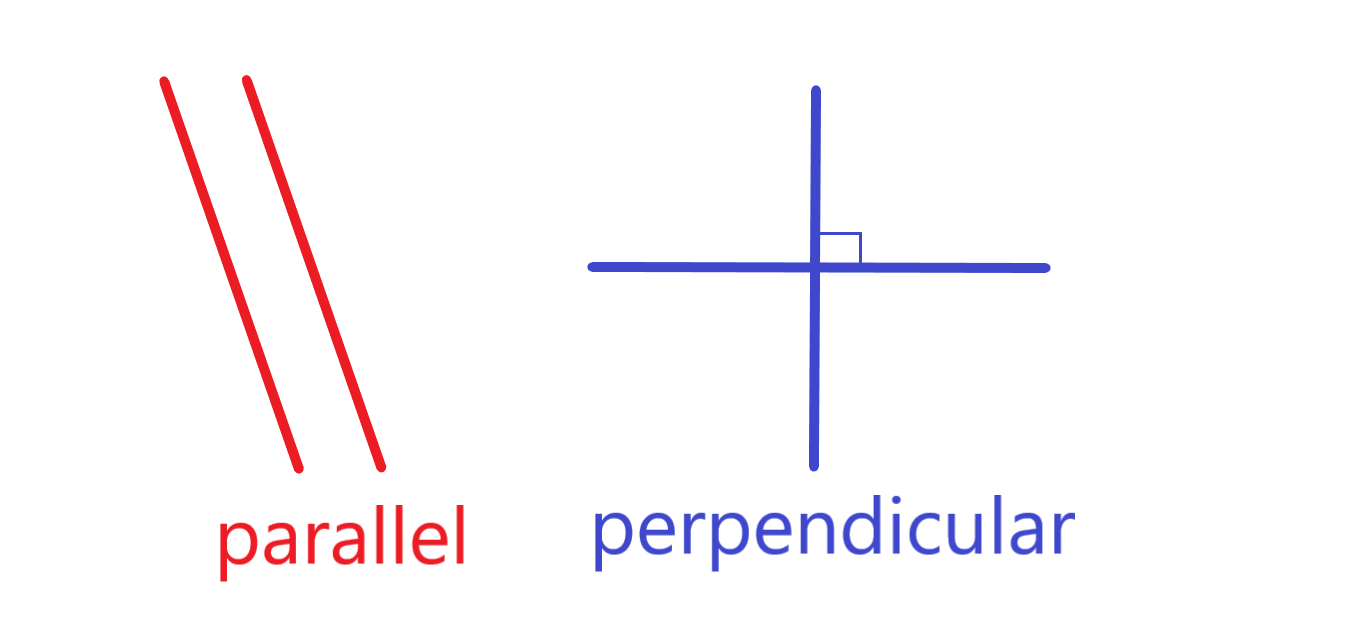
Two illustration of two lines, one explaining what parallel lines look like and the other what perpendicular looks like. 5. Separate the Introduction of Similar Concepts

The classic example is teaching parallel and perpendicular on the same day. The two concepts have to do with the orientation of lines, and the new vocabulary terms for them are similar. So teaching them at the same time means some or many students will have the two terms confused for a long time. That is known as a chronic confusion–possibly permanent. They will know that the orientation of lines is one of those two terms, but will be confused about which is which.

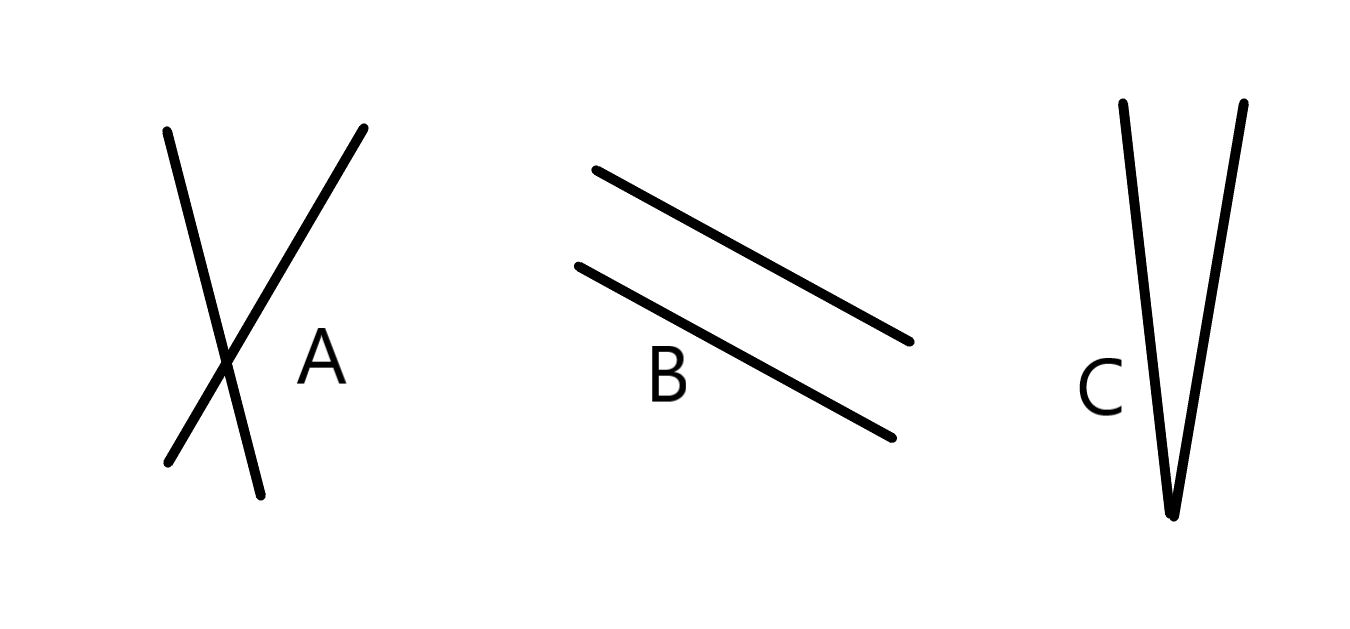
An illustration showing the differences between parallel, perpendicular, and crossing.

Parallel vs. Perpendicular

For example: For this picture, you would ask the students.

A “Are the two lines in item A parallel or not parallel?”   Ans: Not parallel.

B “Are the two lines in item B parallel or not parallel?”   Ans: Parallel.

C “Are the two lines in item C parallel or not parallel?”   Ans: Not parallel.

After a couple of weeks of this kind of practice, you could introduce perpendicular. Again teach it on its own and then contrast perpendicularly with non-examples until the vocabulary is clear.

Probably do that for a couple of weeks. Only then can you combine both terms in the same lesson.

Numerator vs. Denominators

Other examples abound in math. Teaching numerator and denominator in the same lesson is common. Teaching the terms proper fractions and improper fractions on the same day is another example. Acute and obtuse angles are yet another pair of chronically confusing concepts that are introduced simultaneously. Separate them in time, and you’ll be amazed at how much better students can learn these concepts. Learn more about how to successfully teach similar concepts separately

6. Teach  New Concepts Using Common Sense Names

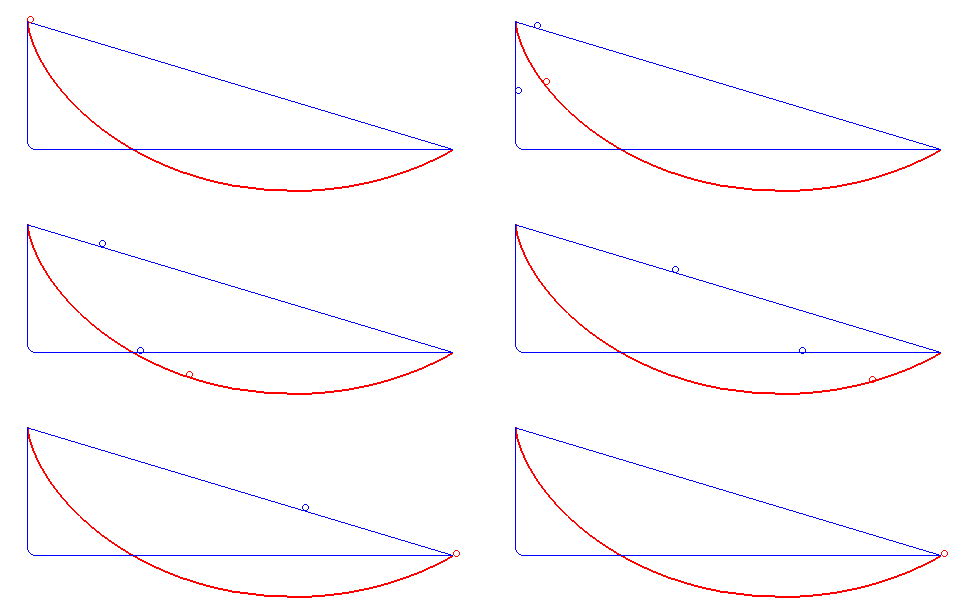
Here’s an example of the problem. A brachistochrone (pictured here) is a curve between two points along which a body can move under gravity in a shorter time than for any other curve. Introducing this concept and the term brachistochrone at the same time would cause students difficulty learning it.

When Instruction is not working

If you watch instruction where the term and the concept have been taught simultaneously, confusion ensues when the teacher uses the term. Sometimes the teacher will notice students looking confused and give a thumbnail definition or example of the term, and the students will then remember. However, the teacher should then realize that the concept was not connected to the new vocabulary term. 

Students can quickly understand and use new concepts and ideas in math if they don’t have to learn a new word for it. Using a common sense term, the idea or concept can be applied to real-world problems almost immediately. Students can later quite easily learn proper vocabulary terms for concepts they understand and recognize. Here’s an example. 

The “shortest time curve.”

I would call a brachistochrone the “shortest time curve.”**  Instruction would proceed with the, “Do you remember that ‘shortest time curve’ we talked about last week?”  Students would easily be able to remember it. Instruction would go like this: “So ‘the shortest time curve’ has some other cool properties. What’s the primary thing we know about the ‘shortest time curve’?”  Students would easily be able to answer this question.

Then after students have worked with the concept of “the shortest time curve” for a couple of weeks, you can add the vocabulary term to it. “By the way, the proper mathematical name for “the shortest time curve” is called a brachistochrone. Isn’t that cool?”  Read more on how to teach new math concepts with common sense names.

**Actually, that’s what brachistochrone means in Greek: brakhistos, meaning shortest and khronos meaning time.


Learn More Effective Math Teaching Strategies with Rocket Math

Rocket Math Online Game and Rocket Math Worksheets Program are math teaching strategies that will work for any classroom. Use the Pre-Test worksheets to understand how fast your students can answer math facts and what level they are at. The Rocket Math Online Game will help students succeed in math by creating a fun and enjoyable way for them to learn.


Teaching Math Fact Fluency | Why Rote Learning Works best

Developing math fact fluency requires memorization and enables success in math

In case you have any doubt, every set of official recommendations about elementary math recognizes that children need to “know facts from memory,” which is to say recall. Memorization is required to develop math fact fluency or easy, automatic recall. Teaching math fact fluency is necessary, of course, for fluent computation. Math fact fluency is also required for understanding and manipulating fractions. Instant recall of math facts is required to be able to recognize when the calculator is not showing the right answer. How students should learn facts, and when they should begin the process is not as well understood.

What Students must know before beginning to memorize math facts

Students need to understand the operation, whether it is addition, subtraction, multiplication, or division, before they begin to memorize the math facts in that operation. What does it mean to say a student “understands” an operation? It means that given some time, they can figure out the answer to a math fact problem in that operation. A student who can add 8 and 7 and get the answer of 15 by drawing lines or counting on their fingers understands the operation. A student who can add 6 five times to get 30 understands multiplication well enough to begin learning answers. Really if you think about math facts, there are only two things to know: how to figure it out and what the answer is. Once students can “figure it out,” then all that’s left is memorizing the answer, so they don’t have to keep figuring it out over and over!

What students do NOT need to know before beginning memorization

There is a very widespread belief that students must play around with math facts before they begin memorization. That they need to experience a variety of ways of figuring out facts. Or that they need to first learn relationships among facts, like the doubles or doubles plus one. It is believed they need to do these before they begin memorization. Yes, done poorly, timed tests of ALL the facts without a program of instruction, is bad for students. Timed tests without learning results in students reconfirming their worst fears, that they are “bad at math.” That is counter-productive. We want students to develop confidence in their ability to learn and do the math. But do they need to play a lot of games or spend a lot of time figuring out math facts?  Maybe not.

Experimental Research has NEVER Shown the Necessity of Games.

Some advocates suggest that students must learn how to figure out facts “efficiently” before beginning memorization. But there is no cognitive difference between being able to figure out a fact efficiently or inefficiently. John A. Van de Walle, an author of “developmental” and “student-centered” math textbooks, is quite emphatic. He says,”Do not subject any student to fact drills unless the student has developed an efficient strategy for the facts included in the drill. … Drill prior to development of efficient methods is simply a waste of precious instructional time,” (Van de Walle, John A. Elementary and Middle School Math).

It is a bold claim, but not one that is backed up by any experimental evidence. Proponents like Van de Walle often cite “research” to “prove” that students must explore and play with numbers before memorization can begin. The “research”  citations are not experimental studies with control groups. They are simply recommendations or observations of what students do when they try to memorize on their own. 

It is true that if there is no systematic instruction, students will start finding ways to remember facts on their own. These little techniques are not bad in themselves but are abandoned when students finally learn the facts. When you can instantly recall the answer to a fact, you know it without going through any intervening thought. In fact, there’s no time for that. If you know that 8 plus 9 is 17 in a straight recall, instantly, you don’t need anything else. You no longer benefit from thinking through that “8 plus 8 is 16 and since 8 plus 9 is one more, the answer is one more than 16 or 17.”


Real research into teaching math fact fluency is desperately needed.  

An interesting experiment, that has never been done, would be to put randomly selected students into two groups after they had learned how to figure out an operation. One group could do these various non-rote, playing with numbers activities. That play-time would be followed with a program of memorization of math facts. The second group would go ahead with the program of memorization without bothering with all exploratory activities. Rocket Math would gladly fund such a research study and provide the math facts practice materials to do it. Seriously, which group do you think would have learned the facts soonest?

Common Non-Rote Activities that Just Waste Time

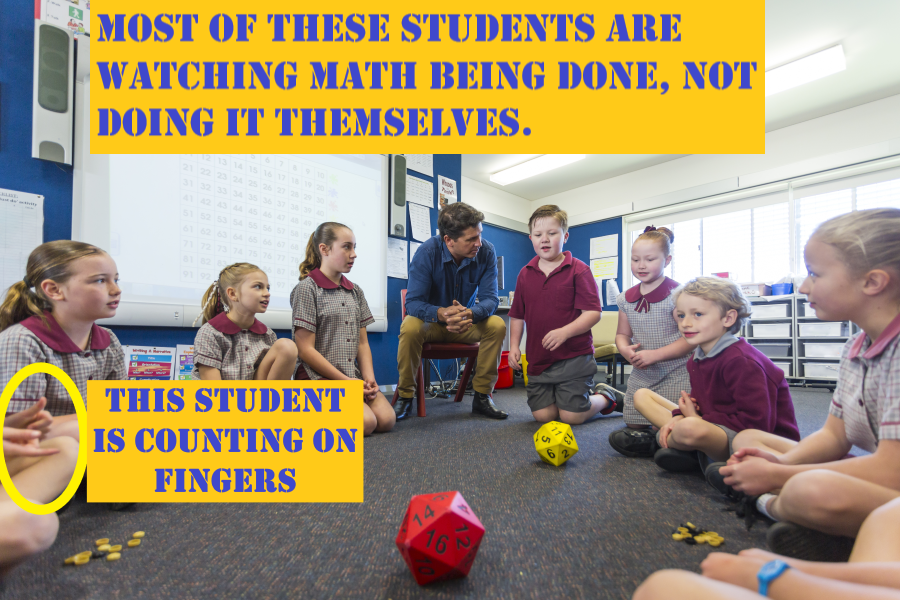
Students and teacher playing multiplication games with dice sitting in a circle in a classroom, to learn math facts.

Dice. 

The various types of activities that have students roll dice and add numbers together are usually a waste of time. Generally, most of the students are not doing math at all; they are just watching. The ones who are doing math, are just practicing figuring out the facts–but that’s something they already knew.

Cards.

Some recommendations include having children play cards–hoping they will learn more about numbers by doing that.  If you don’t know math facts, you will find playing most card games that involve combinations to be difficult.  You might start trying to remember some common combinations on your own.  That does not help you memorize facts any faster, however.

Combinations.  

One popular idea is having students make up combinations of numbers that add up to ten. Here’s an example of one version. Use a large dice and a whiteboard with a blank number bond drawn on it. Put the number 10 in the middle circle, and tell the students that you are going to make a number bond that equals 10. Roll the dice, and whatever number comes up, it goes into the top circle. The students then have to decide what number goes in the bottom circle to complete the bond.

Here is another variation of the same thing.  Set up three hula hoops in the yard. Take ten students at a time and roll the dice. Four of them moved into one hula hoop and the other six crowded into the other. Then have them get back together as a group of ten. Roll the dice again, and then have them split into two pairs again. It may take several rounds of this moving in variations of 10 before the students “get it.”

No time left to teach math fact fluency.

These activities take up a lot of valuable instructional time, to no clear end. The real result of these recommended activities is that teachers NEVER get enough time to work on memorization of facts. In the United States, a huge percentage of our children are not fluent in math facts or computation or the prerequisite skills for algebra. These games and activities waste the time needed to actually develop math fact fluency.

How to Improve Math Fact Fluency with Rote Learning

Students can only memorize a few facts at a time.  Almost no one can memorize ten similar facts at the same time.  Instruction must introduce a careful sequence of a few facts at a time, followed by plenty of practice.  Well-designed instruction makes memorization easy.  Students can instantly recall the answers to facts they have committed to long-term memory.  Facts introduced too quickly can overwhelm a student’s memory capacity.  The task requires a steady process of accumulating these facts over several weeks.  Students learn at a pace based on their ability.  Everyone can memorize the facts, but just not all at the same speed.  Everyone can do rote learning, but it takes time and patient practice.

How to Get Kids to Memorize Math Facts (And Love Doing It!)

A student holds up their Rocket Math score sheet, which teaches math fact fluency to students.

There isn’t anything less intrinsically interesting than learning math facts. However, students and teachers commonly tell me that “doing Rocket Math” is their favorite time of the day. Why is that?  Both the Rocket Math worksheets and the new Online Game are designed to carefully introduce facts at a rate based on student learning. Students are continuously successful and are not overwhelmed.

A second reason students love Rocket Math are its built-in milestones.  As they achieve them, students can recognize the progress they are making. Students love feeling themselves achieving mastery–it is fun. They know they are in school to learn, and they love it when they can tell that they are learning. Far from being harmful, learning math facts can help build the self-esteem of all students. Not to mention making math easier in the long run. Don’t let anyone tell you that you have to postpone this important aspect of your students’ education.

**Nor do the proponents of these various math activities and games say which grades should do these and which ones should stop playing games and get to memorizing. Consequently, many teachers keep doing these games all the way through elementary school and never do get around to the memorization part.


20 years of Rocket Math shows that going straight to memorization works fine

Teachers have been using, and students have been learning from Rocket Math for over 20 years, without first doing these games, and not having any problems. You can too. Try it for yourself and see. We have a 60-day free trial of Rocket Math Online Game. Call us if you need an extension.  

Why can’t you extend play time over ten minutes?

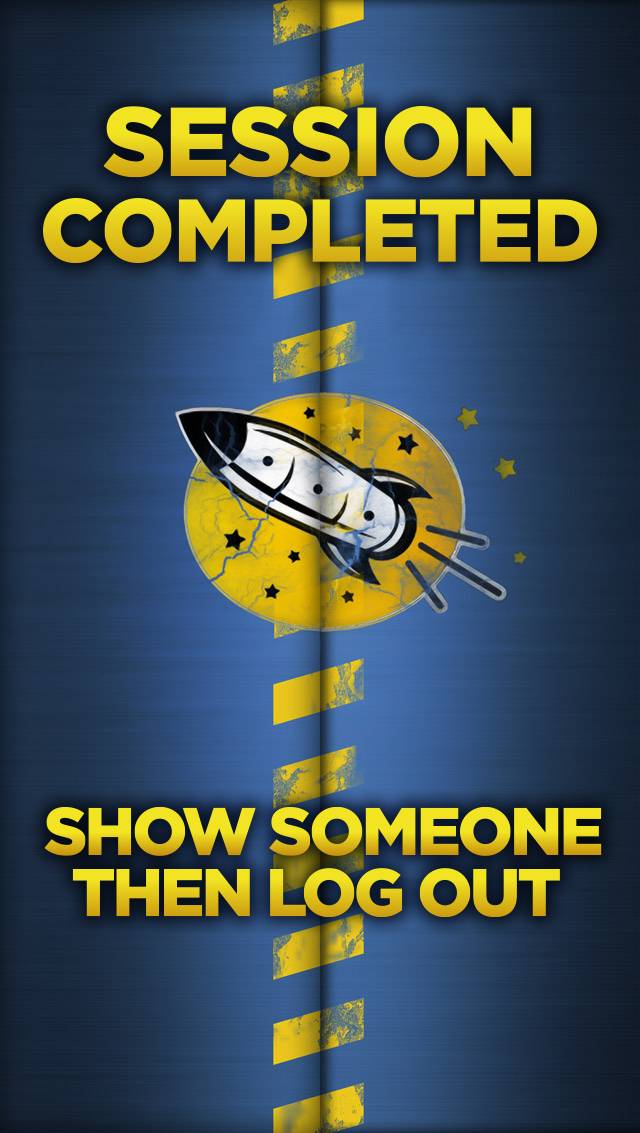
Students can only play for ten minutes and then they get the session completed screen.  The game will not let them play anymore.  Please encourage them to show you this screen to prove they completed the session.

Why no more than ten minutes?

Slamming through these facts at the rate of 3 seconds apiece (or less as they go faster) is very INTENSE.   Students will do this game for a couple of hours at a time if you let them.  But, here’s the problem.  They will only do it for a couple of days, and then they will just wear out.  They just won’t want to do it anymore. We don’t want them to lose their enthusiasm, so……. we don’t let them continue for more than ten minutes. 

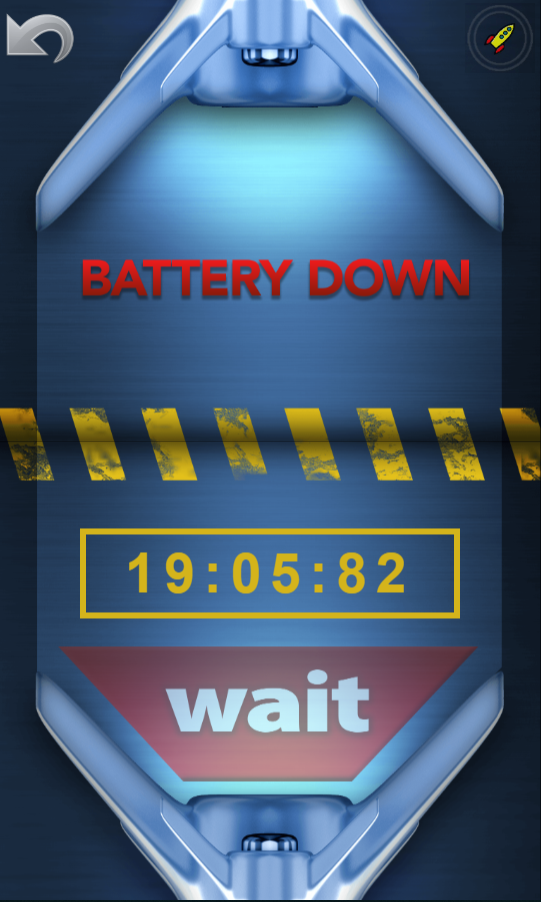
Battery down feature

After completing a session, if they try to log back on too soon they get this “Battery Down” screen. This is a feature not a bug! We say the battery is down and will need at least 20 minutes to “recharge.” The countdown timer shows the amount of time left until the student’s break is over.  The student has to take at least a 20 minute break.  We want them to do a little practice a couple of times a day, but spaced out over several weeks to complete a learning track (an operation).  The longer the time it takes for them to get through a learning track, (the longer this is spaced out) the longer they will retain the information.  And they need to know these facts for a lifetime!  So a little bit each day is far better than sitting down for long periods of time until they are sick of it.


We purposely planned for your students to end a session anxious to play again.

Yes, they may complain that they have to stop, but that ensures that they will want to come back again later.  You want them to end their sessions wanting to play more.  That’s how you can get them to play and practice, time after time, day after day until they reach Level Z.  That’s how we win and that’s how they win! before the forced break.

Remember, you want them to practice at home also, which they won’t do if they are getting sick of it.  You want them to practice the whole time they are assigned to do it–and they won’t do that if they aren’t motivated to keep going.